
























AI development pivots to simulated worlds as chatbot limitations become apparent
By
Matthew Hutson
Summary
The article explores how AI development is shifting from training chatbots on static text data to building AI agents that learn by interacting within simulated 3D worlds. It profiles General Intuition, a startup creating real-time generated virtual environments where AI agents can learn through embodied experience, and examines the broader industry trend toward using game-like simulations to develop more capable, human-level artificial intelligence. The piece discusses the limitations of current large language models and argues that true intelligence requires learning through action and feedback in dynamic environments.
Source

 bskyAI development pivots to simulated worlds as chatbot limitations become apparentscience.org
Key quotes
· 3 pulledAn AI playing in the mind of another AI
The real world is too slow, too expensive, and too dangerous for AI to learn in
We've hit a wall with just feeding models more text — they need to interact, to act, to fail, and to learn from that failure
You might also wanna read

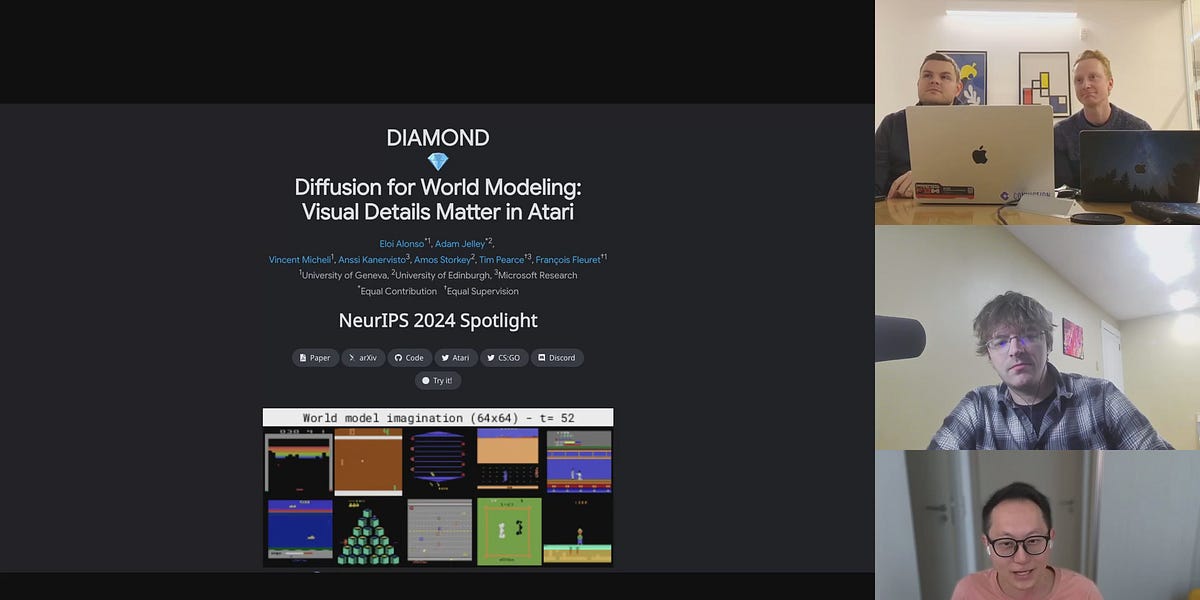
General Intuition's Approach to Training AI World Models Using Video Game Data
This article covers a podcast episode (Ep#42) featuring Pim de Witte and Adam Jelley from General Intuition. The discussion focuses on how A
 robopapers.substack.com·1d ago
AI Labs Compete for Video Game Data to Train World Models and Agents
The article discusses the growing interest in AI world models and agents that can interact with the real world. It highlights how Medal, a v
 The Verge·8mo ago
Examining the Limitations of Transformer Models and the Gap to Human-Level AI
The article presents a skeptical perspective on claims about imminent Artificial General Intelligence (AGI), arguing that current transforme
dlants.me·4mo ago
Designing Command-Line Interfaces for AI Agents: A New Paradigm
The article discusses the need to redesign command-line interfaces (CLIs) specifically for AI agents rather than humans. The author shares t
 justin.poehnelt.com·3mo ago
The Limitations of Generative AI for Creating Video Game Worlds
The article examines the limitations of generative AI in creating compelling video game worlds, contrasting it with traditional procedural g
The Verge·4mo ago
The frustration of AI-generated responses replacing genuine human expertise
The article describes the author's frustrating experiences with AI-generated content replacing genuine human interaction and expertise. Two
orchidfiles.com·1mo agoThe frustration of AI-generated responses replacing genuine human expertise
The article describes the author's frustrating experiences with AI-generated content replacing genuine human interaction and expertise. Two
orchidfiles.com·1mo ago
Comments
Sign in to join the conversation.
No comments yet. Be the first.