
























Arrow-First Thinking: Applying Category Theory to API and System Architecture
Stop designing services. Start designing contracts. Part 2 of applying category theory to Solutions Architecture—where we learn that the arrows, not the boxes, are the architecture.
Read the full articleYou might also wanna read


Building the Brain of the Agentic Lakehouse: Designing an Open Catalog Architecture
> **Cross-posted.** This article's canonical home is [Data Lakehouse Hub](

Navigating API Design Challenges in the MCP and AI Client Era
I've been slipping into the API design rabbit hole of MCP the last couple of weeks, as I work to refine the APIs.io MCP server, which is mea
 buttondown.com·17d ago
Building the Brain of the Agentic Lakehouse: Designing an Open Catalog Architecture
> **Cross-posted.** This article's canonical home is [Iceberg Lakehouse](

Ideas Are Cheap, Judgment Is Expensive: How Design Moved to Systems and Code
Pavel Bukengolts on connected stacks, the 48-hour operating loop, and why patterns got cheap while judgment did not.
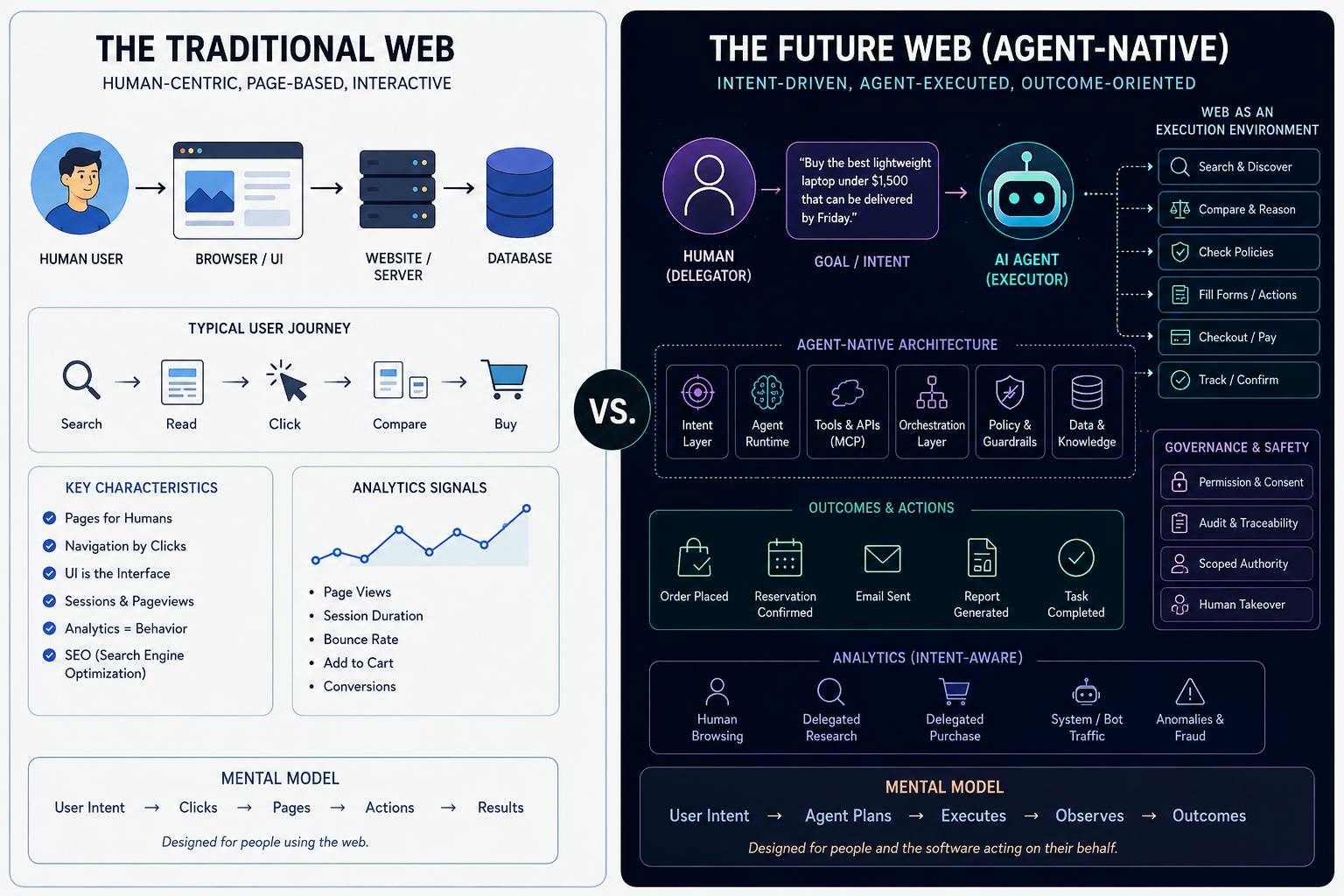
The Web's Shift to Agent-Native Architecture: Why Most Teams Are Unprepared
Explore how the web is evolving from human-driven browsing and click-based journeys to an agent-native ecosystem where AI systems execute in

AI's Impact on Software Engineering: Evolution or Replacement?
With vibe-coding, what I find most useful isn’t even writing code but understanding it.
 The Verge·10mo ago
Comments
Sign in to join the conversation.
No comments yet. Be the first.