





















Architecting Slim Servers: Deferring Async Tasks to PostgreSQL Tables
By
ostler

Pure flour-power. Hearty enough to carry you through lunch.
Summary
The article presents a software architecture approach where web servers remain "slim and stupid" by handling only simple database queries in endpoints, while deferring complex asynchronous tasks to a PostgreSQL task table. The author advocates for keeping server endpoints fast and simple to maintain responsive user experiences, while pushing background work like email sending, notifications, and data processing into a task queue system managed within the database itself. The approach emphasizes performance, simplicity, and maintaining smooth user interactions by separating immediate response requirements from background processing.
Key quotes
· 4 pulledI like slim and stupid servers, where each endpoint wraps a very dumb DB query.
Dumb queries are fast. Fast queries make websites smooth and snappy. Keep those click/render loops sacred.
Sweep complexity under a task table.
The server stays slim and stupid, the database does the heavy lifting, and the user gets a fast response.
You might also wanna read
Analyzing the Challenges and Alternatives to Soft Delete Patterns in Software Development
The article examines the challenges and complexities of implementing soft delete patterns in software development, particularly focusing on

Optimizing .NET APIs for High Throughput: Techniques for 1M Requests Per Minute
Article discusses techniques for designing high-throughput .NET APIs capable of handling 1M requests per minute. It covers horizontal scalin
 blog.elmah.io·16h ago
SQLite as a Viable Alternative for Durable Workflow Execution
The article argues that SQLite can replace complex orchestration systems for durable workflow execution in many cases. It builds on DBOS's a

JWT vs Opaque Tokens: A Technical Comparison for API Security Architecture
This article compares JWT (JSON Web Tokens) and opaque tokens for API security, clarifying the common confusion between bearer tokens and JW
 nordicapis.com·2d ago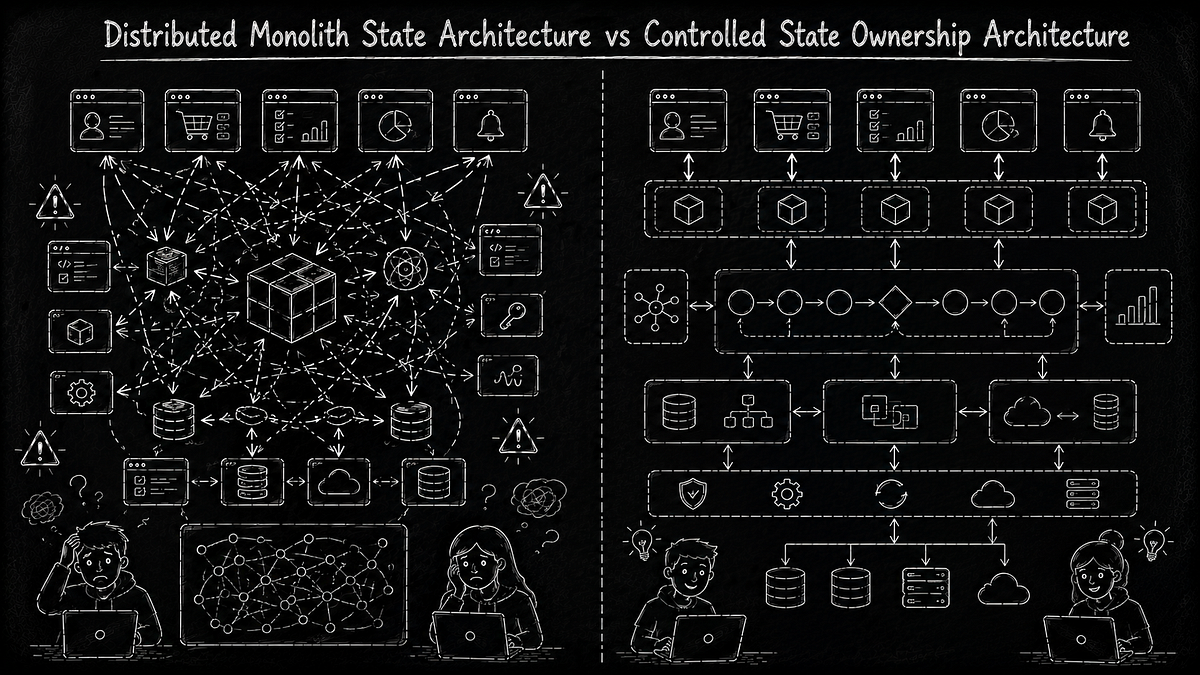
How Frontend State Management Becomes a Distributed Monolith as Apps Scale
This article discusses how frontend state management in growing applications can evolve into a "distributed monolith" — where state becomes
 medium.com·4d ago
A Field Guide to Production-Ready AI Agents: Context Windows, Security, and Drift Monitoring
Karl Mehta presents a field guide for building production-ready AI agents, focusing on four key engineering challenges: context-window disci