





















Analyzing the Challenges and Alternatives to Soft Delete Patterns in Software Development
By
buchanae

Crisped on the outside, thoughtful enough on the inside.
Summary
The article examines the challenges and complexities of implementing soft delete patterns in software development, particularly focusing on the issues with using archived_at timestamp columns. It discusses how soft delete designs can complicate queries, operations, and applications, while acknowledging their benefits for data recovery and compliance. The author explores alternative approaches including triggers, application events, and WAL-based change data capture as potential solutions to the problems inherent in traditional soft delete implementations.
Key quotes
· 5 pulledAdding an archived_at column seems to ooze complexity out into queries, operations, and applications.
If customers accidentally delete their data, they can recover it, which makes work easier for customer support teams.
Perhaps archived records are even required for compliance or audit reasons.
I've run into some trouble with soft delete designs. I'll cover those, and ponder ideas for how I'd build this in the future.
Exploring alternatives to the archived_at column pattern: triggers, application events, and WAL-based change data capture.
You might also wanna read

Architecting Slim Servers: Deferring Async Tasks to PostgreSQL Tables
The article presents a software architecture approach where web servers remain "slim and stupid" by handling only simple database queries in
 taylor.town·6mo ago
Optimizing .NET APIs for High Throughput: Techniques for 1M Requests Per Minute
Article discusses techniques for designing high-throughput .NET APIs capable of handling 1M requests per minute. It covers horizontal scalin
 blog.elmah.io·16h ago
SQLite as a Viable Alternative for Durable Workflow Execution
The article argues that SQLite can replace complex orchestration systems for durable workflow execution in many cases. It builds on DBOS's a

JWT vs Opaque Tokens: A Technical Comparison for API Security Architecture
This article compares JWT (JSON Web Tokens) and opaque tokens for API security, clarifying the common confusion between bearer tokens and JW
 nordicapis.com·2d ago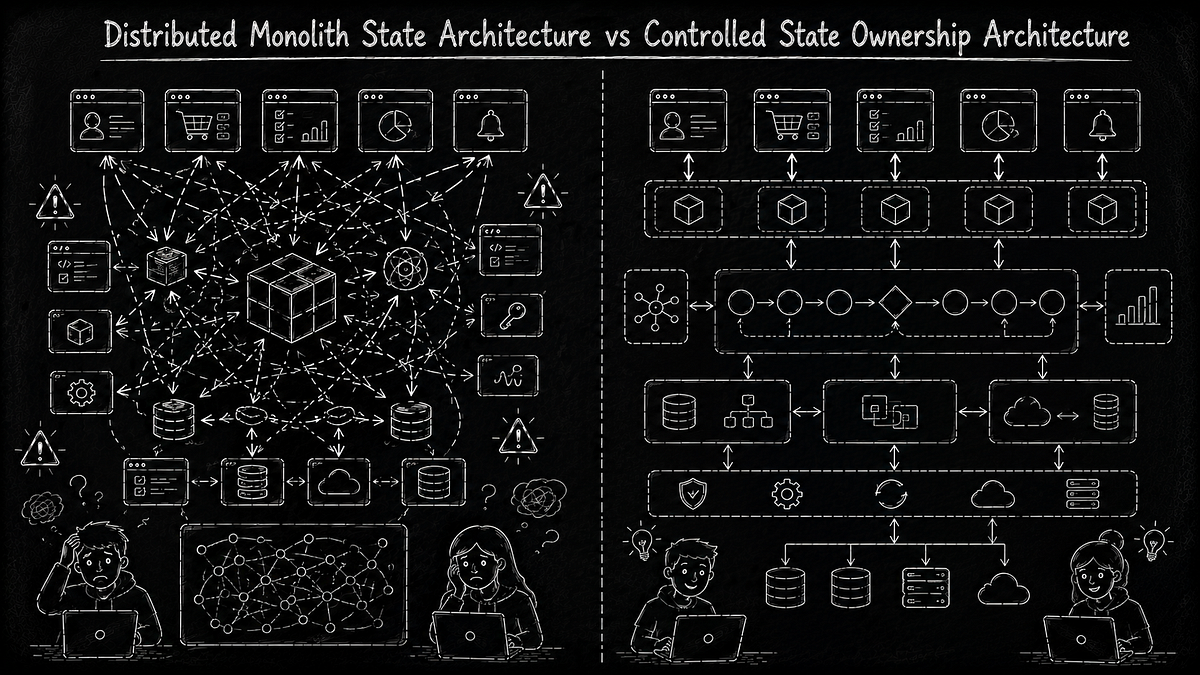
How Frontend State Management Becomes a Distributed Monolith as Apps Scale
This article discusses how frontend state management in growing applications can evolve into a "distributed monolith" — where state becomes
 medium.com·4d ago
A Field Guide to Production-Ready AI Agents: Context Windows, Security, and Drift Monitoring
Karl Mehta presents a field guide for building production-ready AI agents, focusing on four key engineering challenges: context-window disci