
























Why Karpathy, Google, and Garry Tan all chose Markdown for AI agent memory
Karpathy, Google, and Garry Tan all landed on Markdown for agent memory this quarter — and the real moat is shifting from models to files.
Read the full articleYou might also wanna read


Why plain markdown beats vector databases for feeding knowledge to LLMs
For years we locked context behind vector databases, SDKs, and proprietary catalogs. Then we noticed LLMs are happiest reading plain markdow
 formaly.io·5d ago
Why plain markdown beats vector databases for feeding knowledge to LLMs
For years we locked context behind vector databases, SDKs, and proprietary catalogs. Then we noticed LLMs are happiest reading plain markdow
formaly.io·5d agoGoogle's Open Knowledge Format: The Markdown Standard That Could Replace Your Wiki
Google just formalized the digital brain pattern — plain markdown files that AI agents can read, write, and share. Here's what OKF means for

AI-First Content Management: Rethinking CMS vs Markdown for Agentic Applications
Do we still need a CMS in an AI-first world? A look into markdown, agents, and simpler content systems for building and managing agentic app
 Prototypr·6mo ago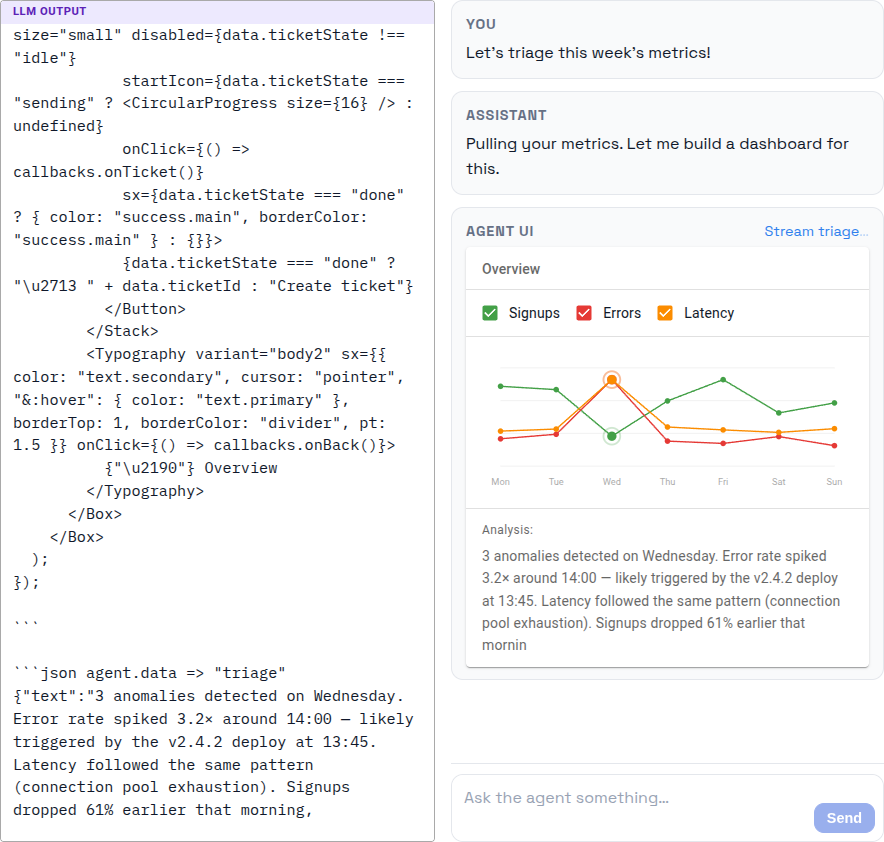
Using Markdown as a Protocol for AI-Generated User Interfaces
An AI assistant that builds reactive UIs mid-conversation — forms, streaming data, callbacks — using markdown code fences and a mount() UI p
 fabian-kuebler.com·3mo ago
Knowledge-Memory-Management v0.0.2 Adds Unified Ingestion and Portable Agent Paths
Version 0.0.2 of the Knowledge-and-Memory-Management library introduces a unified ingestion pipeline that supports web, video, and article s

Building Production AI Agents: A Multi-Tiered Memory Architecture with Zep, Mem0, and ContextNest
Building production AI agents requires a multi-tiered persistent memory architecture. Learn how Zep, Mem0, and ContextNest work together to
 promptowl.ai·7d ago
Comments
Sign in to join the conversation.
No comments yet. Be the first.