
























Analysis: Only Three Types of AI Products Are Currently Effective
The very first LLM-based product, ChatGPT, was just1 the ability to talk with the model itself: in other words, a pure chatbot. This is still the most popular LLM product by a large margin.
Read the full articleYou might also wanna read


Beyond the chatbot or AI sparkle: a seamless AI integration
When I talk about Generative AI , whether it’s with developers at conferences or with customers, I often find myself saying the same thing:

A Tour of Specialized AI Tools: Music, Video, Images, and More
The first three parts of this series covered general purpose AI assistants: the chatbots and writing tools that handle text based tasks. But
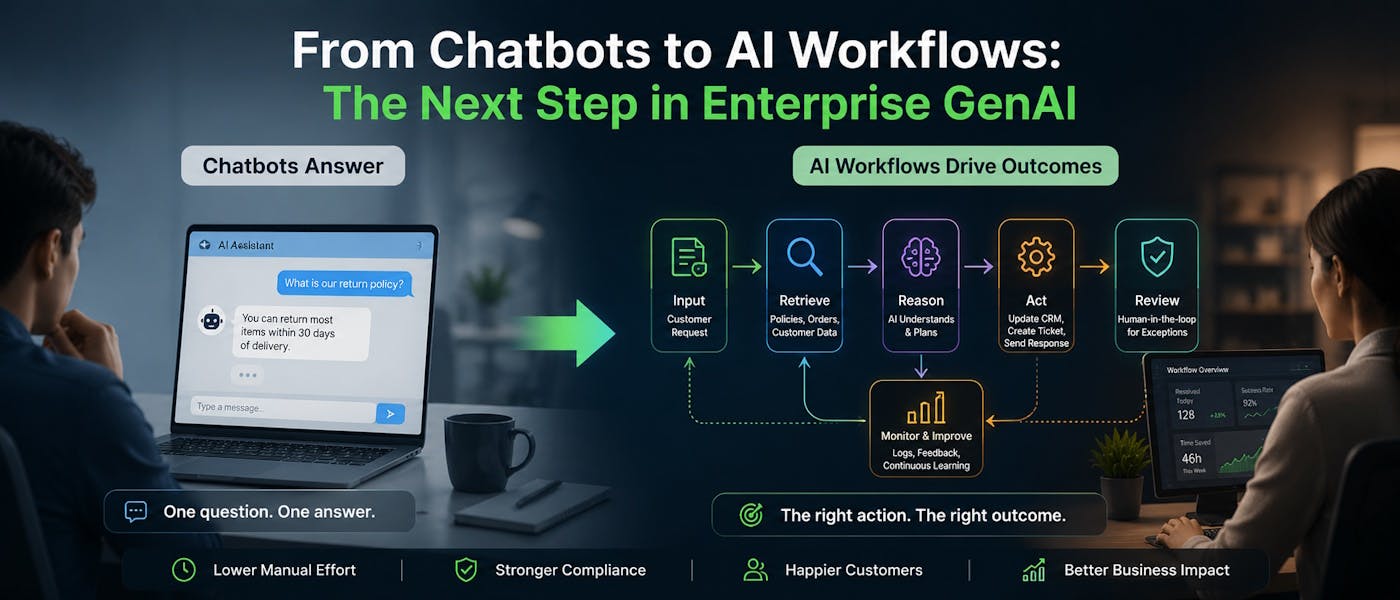
Enterprise AI shifts from chatbots to integrated workflows for business value
AI chatbots are useful, but real enterprise value comes from workflows that connect data, actions, guardrails, and human review loops at sca

Ecommerce Platforms for AI Agents: Which Tools Support Machine Customers
AI agents are starting to shop on behalf of users, but most ecommerce platforms weren’t built for them. Here are some of the options that ac
 Ecomm.design·1mo ago
AI Agents vs Chatbots: Key Differences Businesses Need to Understand in 2026
While AI chatbots are designed to respond reactively to user prompts for tasks like customer support and content writing, AI agents can auto

Frame-Checking Generative AI’s Role in Transmitting News
Shealeigh Voitl and Andy Lee Roth As large language models (LLMs), a new generation of AI chatbots, and other forms of generative AI (artifi
Comments
Sign in to join the conversation.
No comments yet. Be the first.