
























Analysis: Inflation expectations offer Central Bank some relief despite rising pessimism
2d agopt
From the article
Inflation expectations for 2028 remained stable at 3.7% for the second consecutive week in the Focus report—a noteworthy development as, during this period, the Central Bank faced criticism from market sectors for cutting interest rates in June without signaling in advance the end of the monetary easing cycle. Oil drop gives little room for more Selic cuts Strong El Niño raises inflation, fiscal concerns in Brazil Today, the Central Bank also released the distribution of inflation expectations from the financial market, offering a slightly more detailed insight into the deterioration of expectations since the beginning of the conflict involving the United States and Israel against Iran. The conclusion from these figures is that a still limited, albeit growing, number of economic analysts are becoming more pessimistic about long-term inflation, predicting it will hover near the upper limit of the target, at 4.5%, rather than the target’s center of 3%. Inflation expectations for 2028 serve as a key barometer of the Central Bank’s credibility. It is a time horizon so distant that, by then, all shocks currently pressuring prices in the economy are assumed to dissipate, such as the fluctuations in oil prices caused by the war and the effects of El Niño on agricultural products. During this period, high interest rates would have ample time to cool the economy and exert maximum influence in reducing inflation. Before the conflict, inflation expectations were already at 3.5%, above the 3% target. Given the high interest rates of 15% per annum, it’s assumed that a significant portion of this detachment was due to fiscal concerns—without orderly public accounts, the Central Bank’s task of controlling inflation becomes much more challenging. However, expectations worsened slightly after the conflict, rising to 3.7%. In the last two weeks, expectations have ceased to deteriorate, which is a positive sign for the Monetary Policy Committee (Copom), although it remains too early to conclude that they have stabilized. This break in the worsening trend in expectations may be attributed to somewhat more favorable data for combating inflation released in recent weeks, such as the better-than-expected June IPCA-15 and signs of weakening in Brazil’s formal labor market. These data, in a way, endorsed the Central Bank’s strategy of keeping its course open for the August meeting, depending on data developments—and weakened the position of market participants advocating for an early signal of a pause in the monetary easing cycle. The distribution of inflation expectations released Monday (6) shows a group of analysts concerned about the Central Bank’s strategy—the proportion is small but has grown. At the end of May, 5.6% of analysts projected 2028 inflation around the upper target limit, in the range between 4.16% and 4.56%. By the end of June, this more pessimistic group had increased to 10.8%. This is a warning sign. The other ranges, from which the more pessimistic emerged, have slightly reduced. Those predicting inflation between 3.76% and 4.16% decreased from 33.1% to 31.7%. Those anticipating inflation between 3.36% and 3.76% in 2028 shrank from 40.3% to 38.3%. And the group believing inflation will be closer to the target, between 2.96% and 3.36%, reduced from 18.5% to 16.7%. How much of this worsening in expectations is due to the Central Bank? A relevant piece of data is that the market is predicting that the real interest rate will be significantly higher in 2026 and 2027. In other words, inflation worsens, but market analysts expect the Central Bank to respond with an even greater adjustment in the Selic rate, currently at 14.25%. In market forecasts made at the end of June, interest rates were expected to close the year at 14%, substantially higher than the 13.25% anticipated at the end of May. For 2027, the expected rate increased from 11.25% to 12%. Thus, the question is not so much whether Copom will maintain higher interest rates to combat inflationary pressures—but whether the additional measure will be sufficient to align inflation with the target amid numerous supply shocks and the fiscal expansion promoted by the government this year.
Continue reading on Extra OnlineYou might also wanna read
Mercado financeiro reduz expectativa de inflação de 2026 para 5,3%
agenciabrasil.ebc.com.br·2d ago
FOMC Minutes Show 'A Few' Fed Members Wanted To Hike In June, 'Majority' Fear Higher Inflation
ZeroHedge·17h ago


A cuánto llegarán el dólar y la inflación a fines de 2026, según los principales analistas de mercado
Infobae·2d ago

Brazil's Finance Ministry to raise 2026 inflation forecast due to strong El Niño impact, says secretary
The Brazilian Ministry of Finance is expected to raise its official inflation projection for 2026 from the current 4.5%, due to the strong i
 www1.folha.uol.com.br·7d ago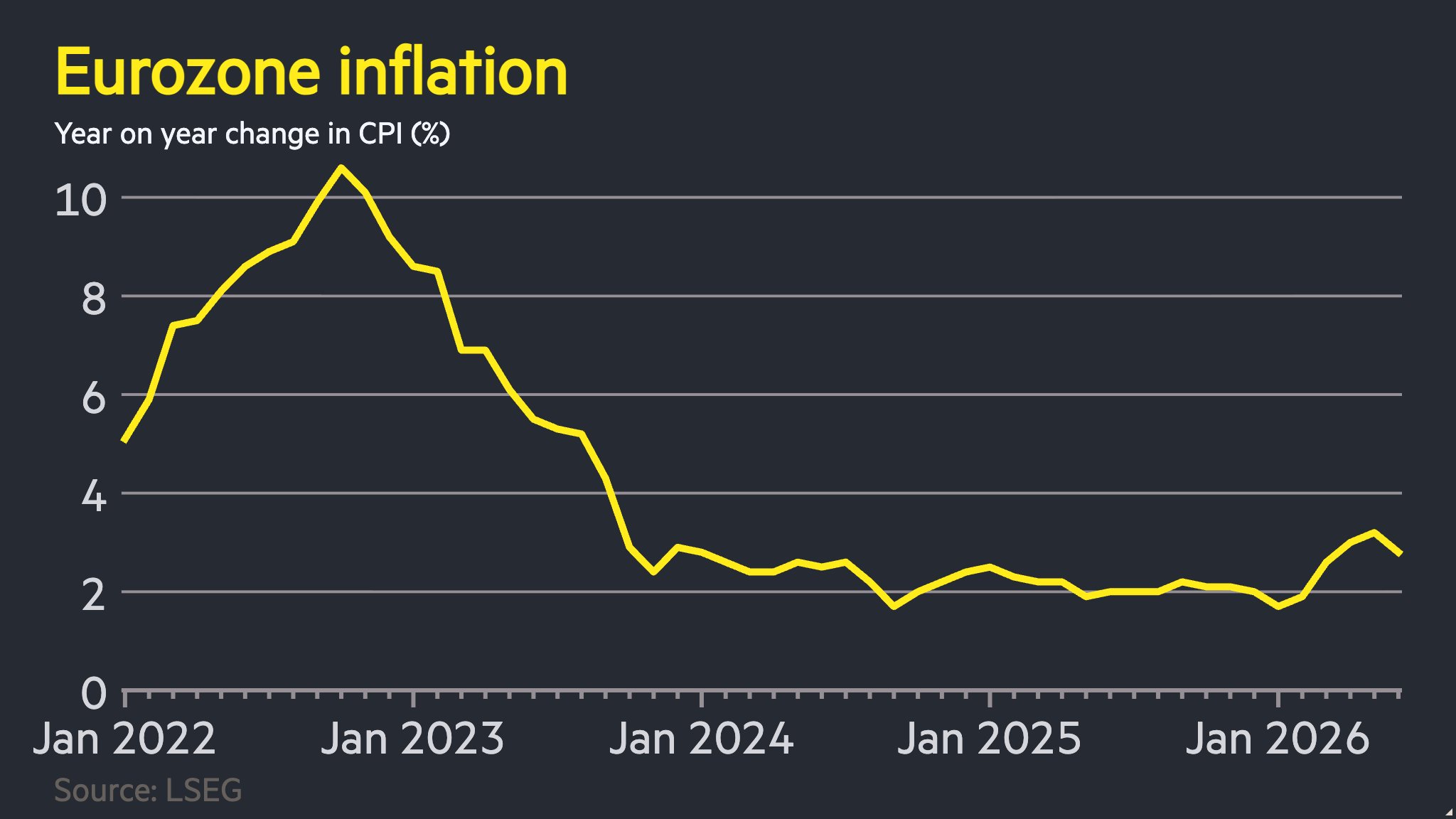
Eurozone inflation falls more than expected to 2.8% in June
 ft.trib.al·8d ago
Seeing Through the Shutdown’s Missing Inflation Data
libertystreeteconomics.newyorkfed.org·4mo ago
Comments
Sign in to join the conversation.
No comments yet. Be the first.