
























An Analysis of Active Galactic Nucleus Feedback in the Compact Galaxy Group Stephan’s Quintet
Maura Kathleen Shea et al 2026 ApJ 997 208 Modeling of outflows from the galaxies of Stephan’s Quintet shows the transition from active galactic nucleus–powered outflows at small radii to tidal flow…
Read the full articleYou might also wanna read

AGN outflows accelerate after escaping galactic bulge, new study proposes
There's drama in the extragalactic astronomy community today. Some strange accretion-driven outflows in nearby active galaxies have been obs
 astrobites.org·7d ago
AGN outflows accelerate after escaping galactic bulge, new study proposes
There's drama in the extragalactic astronomy community today. Some strange accretion-driven outflows in nearby active galaxies have been obs
astrobites·7d ago
NSF VLA Reveals Supermassive Black Holes Emit Radio "Burps" Years After Destroying Stars
Astronomers using the U.S. National Science Foundation Very Large Array (NSF VLA) have found that when a supermassive black hole tears apart
 public.nrao.edu·24d ago
Echo mapping technique reveals hints of dark matter clusters around supermassive black holes
"These galaxies are definitely showing a hint that there is extra material that cannot be explained by just the supermassive black hole."
 space.com·19d ago
DGCE SIG Seminar, 23 July 2026
From Micro to Macro: Connecting the Physics of Galaxy Formation Across Scales. Speaker: Drummond Fielding, New York University The post DGCE
DGCE SIG Seminar, 23 July 2026
From Micro to Macro: Connecting the Physics of Galaxy Formation Across Scales. Speaker: Drummond Fielding, New York University The post DGCE
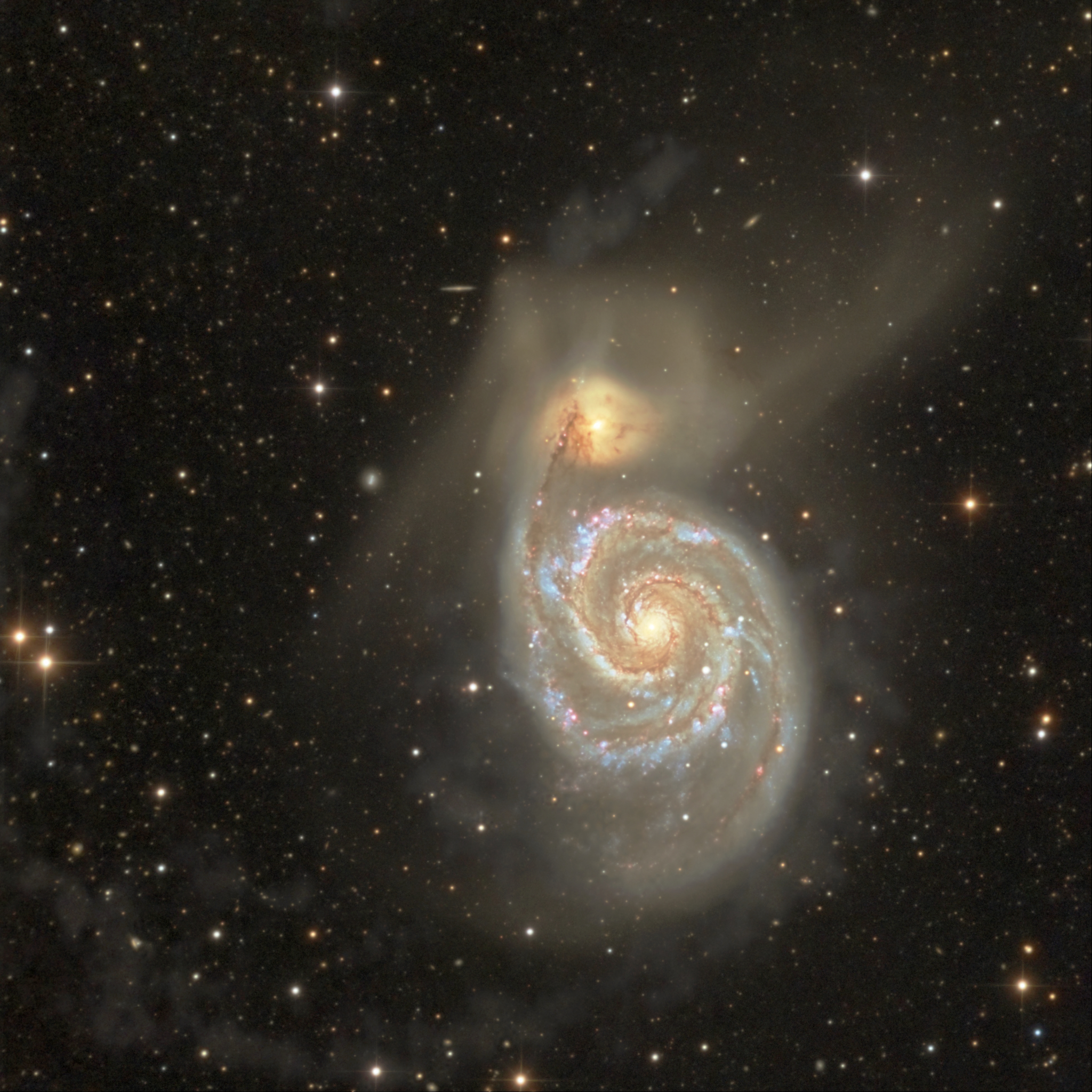
Study reveals how dark matter halo shape creates illusions in galactic tidal structures
Stream in to today’s paper to understand how tearing apart dwarf galaxies can reveal the shape of the dark matter haloes of hungry galaxies.
astrobites.org·17d ago
XMM-Newton and Chandra data reveal Milky Way's outer spiral arms are 10% farther than previously thought
The European Space Agency’s XMM-Newton and NASA’s Chandra X-ray space telescopes have spotted the aftermath of three bright explosions echoi
XMM-Newton and Chandra data reveal Milky Way's outer spiral arms are 10% farther than previously thought
The European Space Agency’s XMM-Newton and NASA’s Chandra X-ray space telescopes have spotted the aftermath of three bright explosions echoi
Comments
Sign in to join the conversation.
No comments yet. Be the first.