
























ams-osram LIDAR and Time-of-Flight Sensor Technologies Overview
Fully integrated dToF modules and iToF VCSEL illuminators for short range applications. Laser sources for long range LIDAR systems.
Read the full articleYou might also wanna read


EPFL researchers demonstrate first on-chip ultrafast laser using silicon nitride photonics
Yes—finally! Generation of intense ultrafast pulses directly on chip brings a new capability to photonic integrated circuits (PICs) and enab
 laserfocusworld.com·1mo ago
Scanning-free laser reflective tomography achieves 3.3 km non-line-of-sight imaging with 3 cm resolution
Non-line-of-sight (NLOS) imaging, which allows the recovery of hidden scenes outside the direct view, holds immense potential across numerou
 oejournal.org·7d ago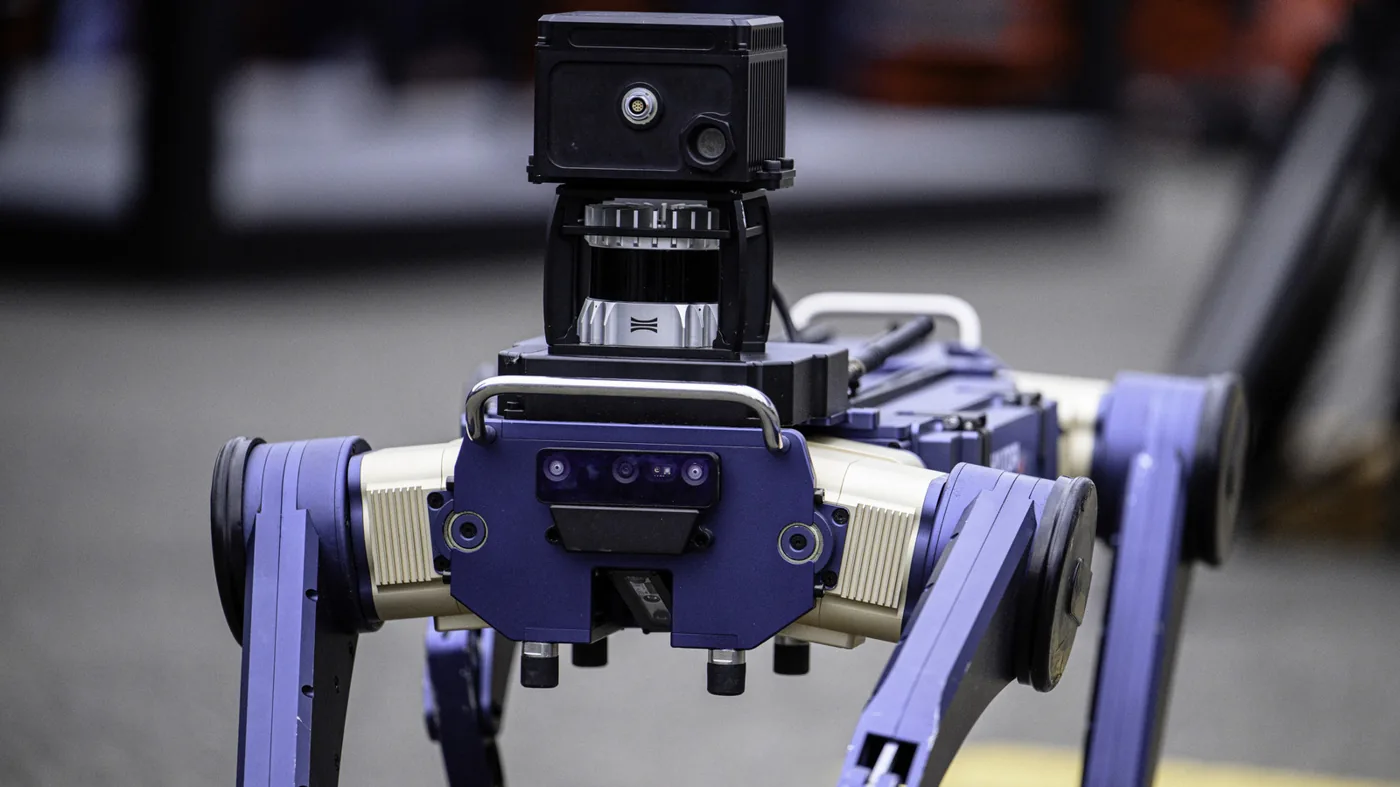
Ouster's New 3D LiDAR Sensor Adds Color Vision for Robots
Using cutting-edge LiDAR technology, this 3D sensor from Ouster offers human-like color vision to robots, promising to dramatically alter th
 bgr.com·10d ago
Design Issues for Optical Channel Monitoring Inside Pluggable Optical Modules
Design Issues for Optical Channel Monitoring Inside Pluggable Optical Modules Vera Mon, 05/11/2026 - 05:46 Design Issues for Optical Channel

First integrated electro-optic transducers demonstrated in thin-film lithium tantalate for quantum computing
Efficient and stable microwave-optical transduction is a key enabling technology for distributed superconducting quantum computing and heter
 arxiv.org·1mo ago
Standalone Rack Optical Channel Monitors: Why Thermal Design Makes or Breaks Performance
Standalone Rack Optical Channel Monitors: Why Thermal Design Makes or Breaks Performance Vera Tue, 06/16/2026 - 04:13 Standalone Rack Optica
Comments
Sign in to join the conversation.
No comments yet. Be the first.