
























America, America.
By
Ferran Sáez Mateu
4h agoes
Source
 AraAmerica, America.ara.cat
Narcissism usually operates on a relentless logic. In this sense, it is not at all strange that Donald Trump has juxtaposed, without any complex or sense of ridicule, the celebration of his 80th birthday with the 250th anniversary of the creation of his country. Last July 4th, he made public a brief triumphalist and somewhat delirious speech in which the United States was presented as the culmination of the human race. Two authors came to mind who, as those kind enough to read me know, have helped me understand that nation for very different reasons: Alexis de Tocqueville and Walter Lippmann. If you are not familiar with Democracy in America (1835) or Public Opinion (1922), this is a good time to delve into them. If Tocqueville had contemplated the 250th anniversary of the United States coinciding with a presidency as polarizing as Trump's, it is quite likely that his reading would have been more curious than scandalized: Tocqueville was not exactly a prophet of consensus, but an analyst of the forces that shape democracy. In this sense, he would probably see the Trump phenomenon as an extreme, but at the same time understandable, expression of the tendencies he himself diagnosed 191 years ago. He affirmed that American democracy is capable of generating unexpected leaderships because the system favors the rise of figures who connect with the immediate passions of the people. I imagine he wouldn't celebrate it, although he wouldn't necessarily consider it a catastrophe either: these are things that can happen. Tocqueville also warned of the danger of democratic despotism, a form of power that is not imposed by force, but by the ability of a leader to present himself as the sole interpreter of the “real people”. Here, perhaps, he would make a severe objection: the simplification of conflicts and the disqualification of institutions and counter-powers are the mechanisms that erode freedom without remedy. Modern despotism, he said, "degrades men without tormenting them". That is, it makes them children, feeds them with easy certainties, exempts them from critical effort. Tocqueville admired the solidity of the North American constitutional system, its ability to absorb tensions without breaking. The fact that, despite the intensity of the political conflict, elections continue to be held, courts act, counter-powers function, etc., would confirm the intuition that American democracy has exceptional elasticity. The question is: until when? Before Trump's second term, this suspicion might have seemed an exaggeration. Right now, it is a perfectly real possibility.
You might also wanna read
Trump Is Making the 250th Small
rougemag.squarespace.com·12d ago

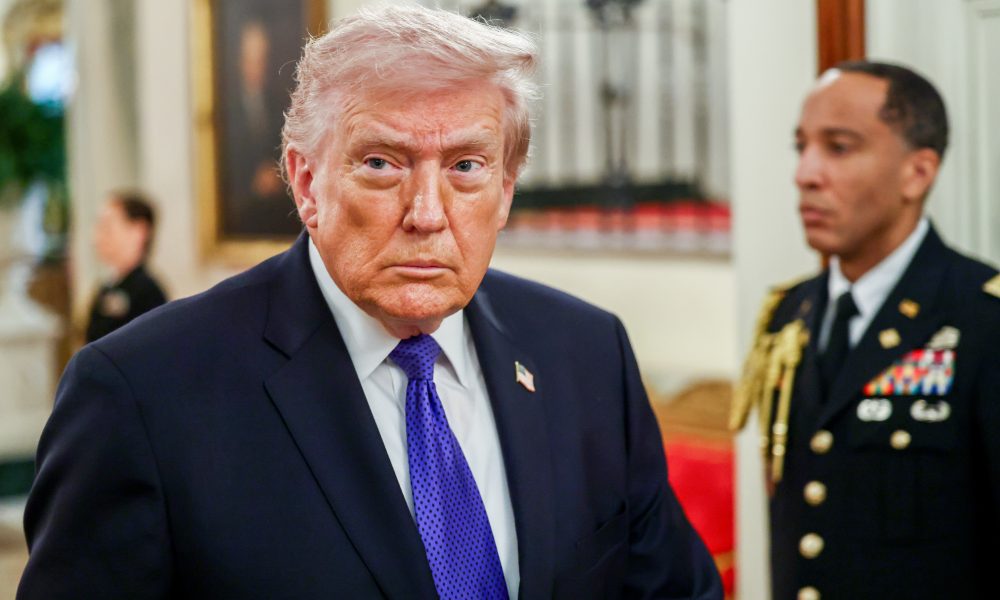
Article satirique : Trump demande l'annulation de la Coupe du monde après la défaite américaine
Un article satirique rapportant que Donald Trump aurait demandé au président de la FIFA, Gianni Infantino, d'annuler la Coupe du monde après
 legorafi.fr·12h ago
11 Historians Weigh In: Has Trump Fundamentally Changed American Democracy?
The article examines whether Donald Trump's presidency has fundamentally altered American democracy, featuring perspectives from 11 historia
 politico.com·2d ago
The enemies of American freedom also had the upper hand on July 4, 1776
Chicago Sun-Times·4d ago
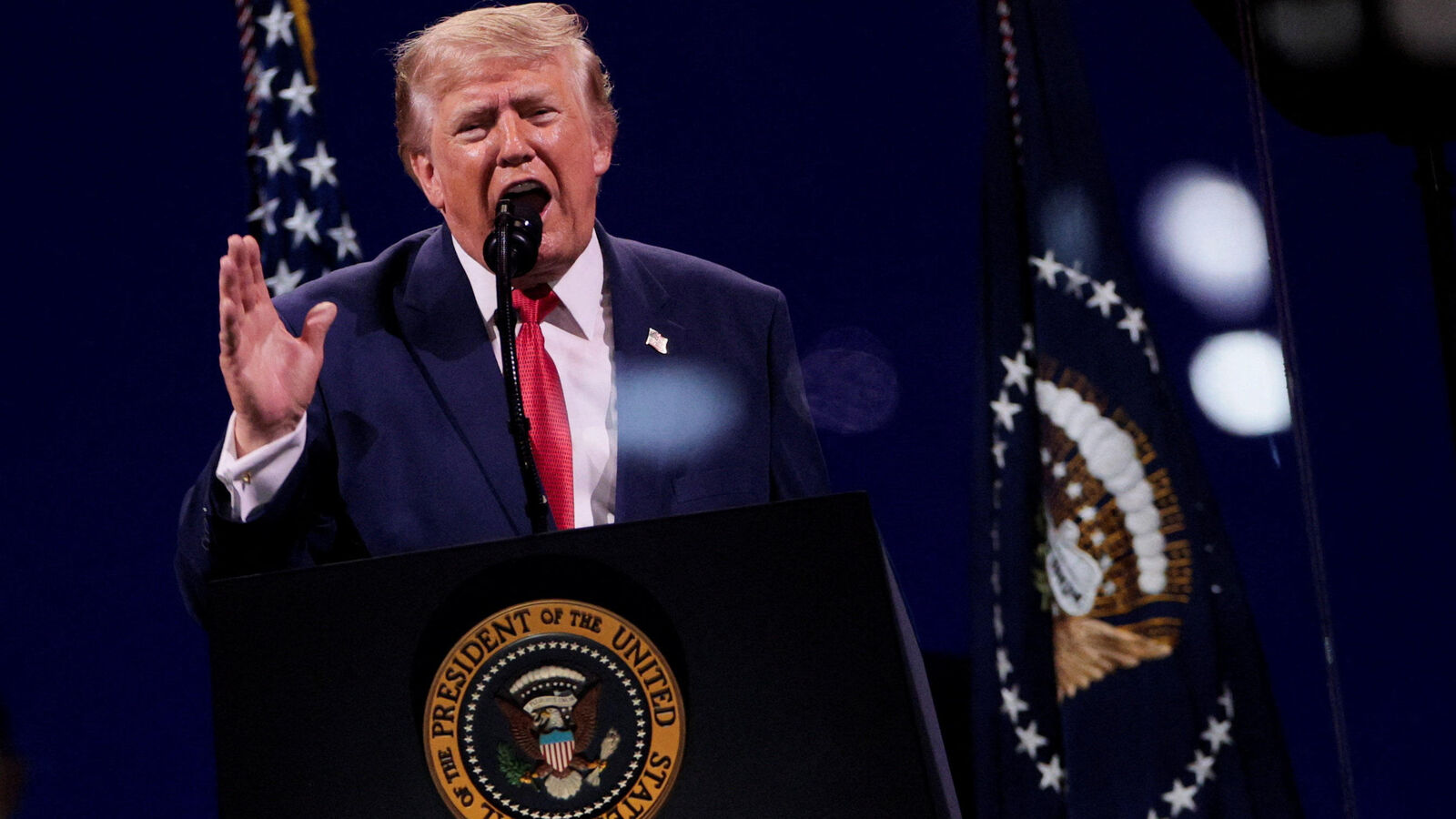
250e anniversaire des États-Unis : Trump livre un discours patriotique et attaque ses opposants « communistes »
À l'occasion du 250e anniversaire de l'indépendance des États-Unis, le président Donald Trump a prononcé un discours patriotique à Washingto
 l.leparisien.fr·2d ago
Ingérence politique de Donald Trump dans la suspension d'un joueur américain à la Coupe du monde de la FIFA
Un scandale éclate à la Coupe du monde de la FIFA après que le président américain Donald Trump soit intervenu directement auprès du préside
 985fm.ca·1d ago
Comments
Sign in to join the conversation.
No comments yet. Be the first.