
























AI-powered stethoscope shows promise for rapid detection of heart conditions, study finds
By
George Wright
Summary
A British research team has conducted a study showing that AI-powered stethoscopes can detect three heart conditions — heart failure, heart valve disease, and abnormal heart rhythms — in seconds. The technology, which builds on the original stethoscope invented in 1816, could enable faster diagnosis and earlier treatment for patients. Experts describe the innovation as a potential "game-changer" in cardiac care.
Source

 bskyAI-powered stethoscope shows promise for rapid detection of heart conditions, study findsbbc.com
Key quotes
· 2 pulledThe original stethoscope, invented in 1816, allows doctors to listen to the internal sounds of a patient's body.
The new technology could be a 'game-changer' resulting in patients being treated sooner, experts say.
You might also wanna read


A very impressive discovery of a new ECG marker for sudden cardiac death validated in 3 different cohorts and linked to benefit of defibrillator, an outgrowth of human research ingenuity and AI deep l
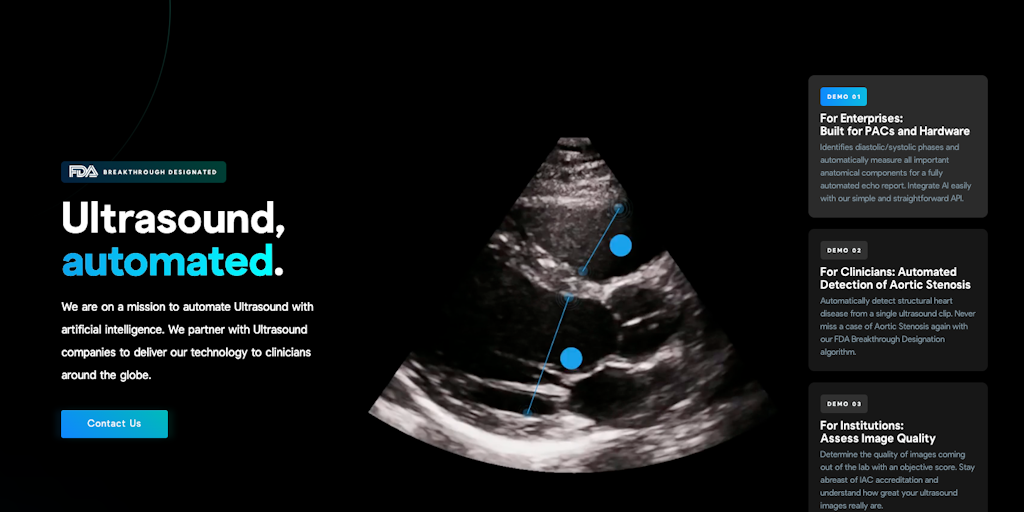
iCardio.ai Launches FDA-Cleared AI Platform for Automated Echocardiography Analysis
iCardio.ai is an AI-powered platform that helps ultrasound teams automate echocardiography measurements, detect aortic stenosis, and generat
 Product Hunt·1mo ago
Harvard study finds AI outperforms doctors in emergency triage diagnoses
A Harvard study found that AI systems outperformed human doctors in emergency medicine triage, diagnosing more accurately in high-pressure s
 The Guardian·1mo ago
AI tools help diagnose 18 children with previously undiagnosed rare diseases, Boston Children's Hospital study finds
New research from Boston Children's Hospital demonstrates that AI tools successfully diagnosed 18 children with previously undiagnosed rare
 nypost.com·2d ago
European patients turn to AI chatbots for medical guidance amid healthcare gaps
Patients in Europe, particularly those with rare or complex conditions, are increasingly turning to AI chatbots like ChatGPT for medical adv
 mdsc.pe·4d ago
How I Used AI to Diagnose My Chronic Fatigue and Health Symptoms
A personal narrative about using AI tools (likely large language models) to track, analyze, and solve a mysterious chronic health condition
 metalearn.substack.com·5d ago
Comments
Sign in to join the conversation.
No comments yet. Be the first.