
























Synthetic surveys use AI to simulate public opinion, but cannot replace real human responses
By
Ambuj Tewari
Summary
The article examines the emerging practice of "synthetic surveys" or "silicon sampling," where AI models simulate human responses to surveys as a cheaper alternative to traditional polling. It highlights the declining response rates to conventional surveys and the high costs involved. However, the article argues that AI-generated opinions are fundamentally different from genuine public opinion, as AI models lack real-world experiences, emotions, and the nuanced perspectives that shape human viewpoints. The piece warns that while synthetic surveys may be cost-effective, they cannot reliably replace actual public opinion measurement.
Source

 bskySynthetic surveys use AI to simulate public opinion, but cannot replace real human responsestheconversation.com
Key quotes
· 3 pulledOne survey provider prices a 10 minute survey of 1,000 people in the tens of thousands of dollars.
Could AI models stand in for hundreds or thousands of people, emulating the range of answers humans would provide?
But are the results tru
You might also wanna read

The frustration of AI-generated responses replacing genuine human expertise
The article describes the author's frustrating experiences with AI-generated content replacing genuine human interaction and expertise. Two
orchidfiles.com·1mo agoThe frustration of AI-generated responses replacing genuine human expertise
The article describes the author's frustrating experiences with AI-generated content replacing genuine human interaction and expertise. Two
orchidfiles.com·1mo ago
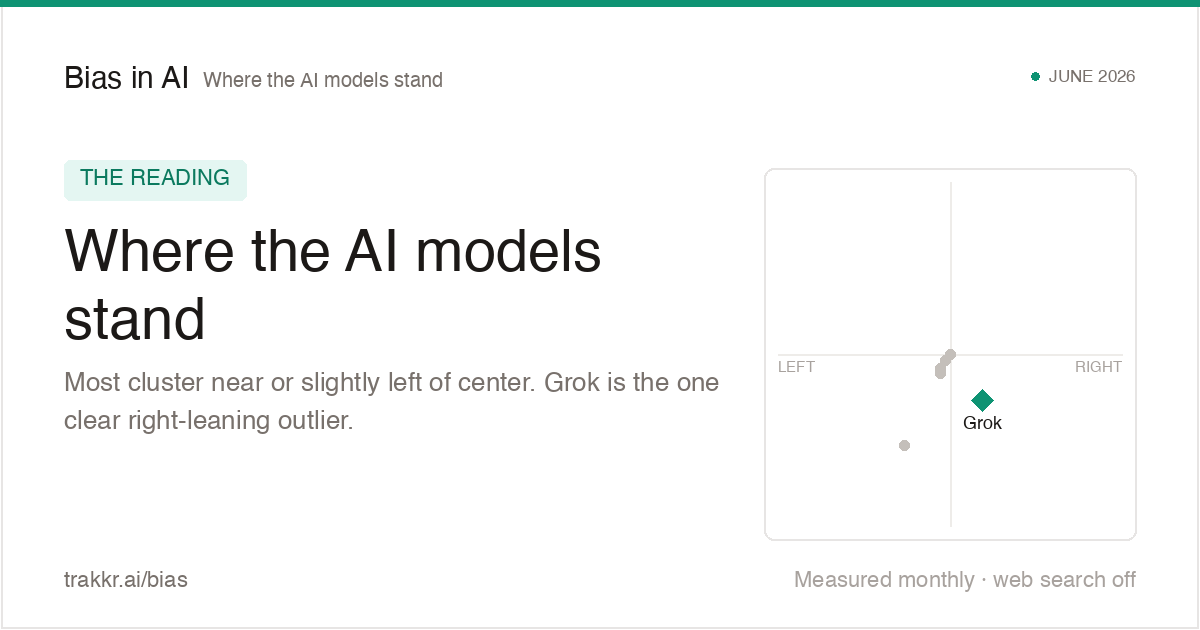
Measuring political bias in major AI models through repeated testing
This article presents a methodology for measuring political bias in major AI models by asking them the same charged questions about politics
 trakkr.ai·4d ago
Why AI-Driven Synthetic User Testing Fails: A Case for Real UX Research
The article argues against the growing trend of companies using AI-driven "synthetic" user testing as a replacement for real UX research wit
 Smashing Magazine·1y ago
Pew survey reveals sharp optimism gap: AI experts hopeful, US public distrustful
A Pew Research Center report reveals a significant divide between AI experts and the general US public regarding perceptions of artificial i
 theverge.com·1mo ago
The Case for Human-Centered Websites in an AI-Dominated Social Media Landscape
The author reflects on the proliferation of AI-generated content in social media feeds, particularly noticing suspicious cat videos that app
 marcus-obst.de·8mo ago
The Erosion of Unique Human Voices in the Age of AI-Generated Content
The article argues that the widespread use of Large Language Models (LLMs) for content creation is eroding our unique human voices. The auth
 tonyalicea.dev·7mo ago
Comments
Sign in to join the conversation.
No comments yet. Be the first.