
























AI Drug Discovery Stalled by Lack of Trustworthy Biological Data
By
Patrick Boyle, PhD
Summary
The article discusses the gap between AI's potential in drug discovery and actual results, attributing the productivity gap to the quality and trustworthiness of biological data. Unlike massive datasets used to train generalist AI models, biological datasets are often small, inconsistent, and lack standardized metadata. The author argues that for AI to truly transform drug discovery and life sciences, biological data must be authenticated, validated, and supported by robust metadata standards.
Source
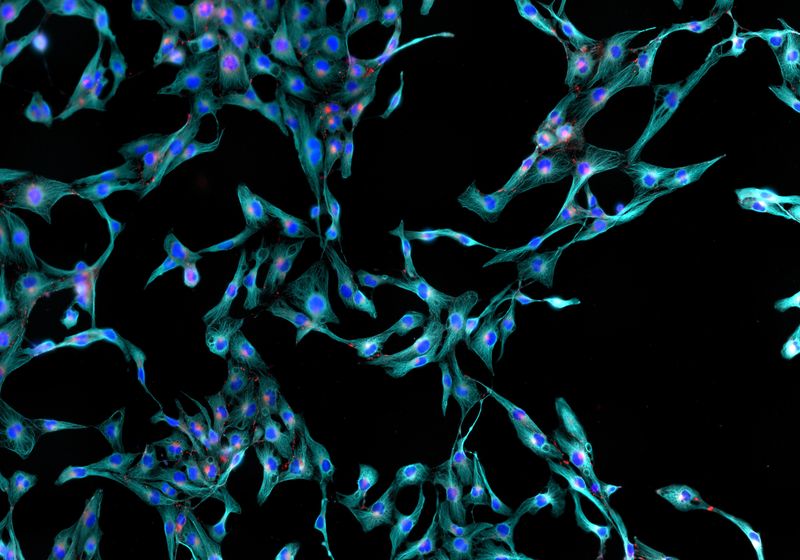
 bskyAI Drug Discovery Stalled by Lack of Trustworthy Biological Datathe-scientist.com
Key quotes
· 5 pulledBillions of dollars are spent annually to apply artificial intelligence (AI) to life sciences and drug discovery.
However, we have yet to see a flood of new drugs and therapies on the market that can be attributed to AI, despite its tremendous potential to accelerate discovery.
The root cause of this productivity gap comes down to data.
Compared with the massive datasets used to train large generalist language models like ChatGPT and Claude, the data available for biological models is far smaller and less standardized.
To unleash the potential of AI in life sciences and drug discovery, biological datasets must be authenticated, validated, and supported by standardized metadata.
You might also wanna read


Reflections on 2024 Bio-ML Predictions: Generative Chemistry and Molecular Dynamics Challenges
The article reflects on the author's 2024 predictions about bio-ML (biological machine learning) from a 2026 perspective, focusing on genera
 owlposting.com·5mo ago
AI Advances in Drug Discovery: From Data Integration to Dual-Action Cancer Drug Design
The article discusses recent advancements in AI-driven drug discovery, highlighting two key developments: 1) Analytica 2026, an event focuse
 drugtargetreview.com·4mo ago
BioTradingArena: AI Biotech Trading Benchmark with 655 Validated Catalyst Cases
BioTradingArena is a benchmark dataset for AI-driven biotech trading, containing 655 validated biotech catalyst cases with linked clinical t
 biotradingarena.com·4mo ago
Why supervised learning AI cannot make truly novel scientific discoveries
The article presents a recorded speech arguing that generative AI trained via supervised learning is fundamentally incapable of making truly
 twitter.com·14d ago
BIOS AI Platform for Biomedical Research Ranks #1 on BixBench Benchmark
BIOS is an AI-powered scientific research platform that ranked #1 on BixBench for biological data analysis. The system offers flexible resea
 Product Hunt·4mo ago
Tamarind Bio: AI Inference Platform for Drug Discovery Models
Tamarind Bio is an AI inference provider for drug discovery that offers a platform for biopharma companies to run leading open-source AI mod
 news.ycombinator.com·5mo ago
Comments
Sign in to join the conversation.
No comments yet. Be the first.