
























Cybersecurity Risks of AI-Driven Permit-to-Work Systems in Offshore Oil and Gas
By
HackMoN Ai
Summary
This article examines the cybersecurity vulnerabilities emerging from the digital transformation of Permit-to-Work (PTW) systems in offshore oil and gas operations. Traditionally paper-based safety authorization processes are being replaced by interconnected digital platforms, creating new attack surfaces for cyber threats. The piece explores how AI-driven PTW systems, while improving operational efficiency and safety, introduce risks including unauthorized access, data manipulation, and potential sabotage of critical safety workflows. It positions the offshore PTW as a new cybersecurity battleground requiring specialized defense strategies.
Source
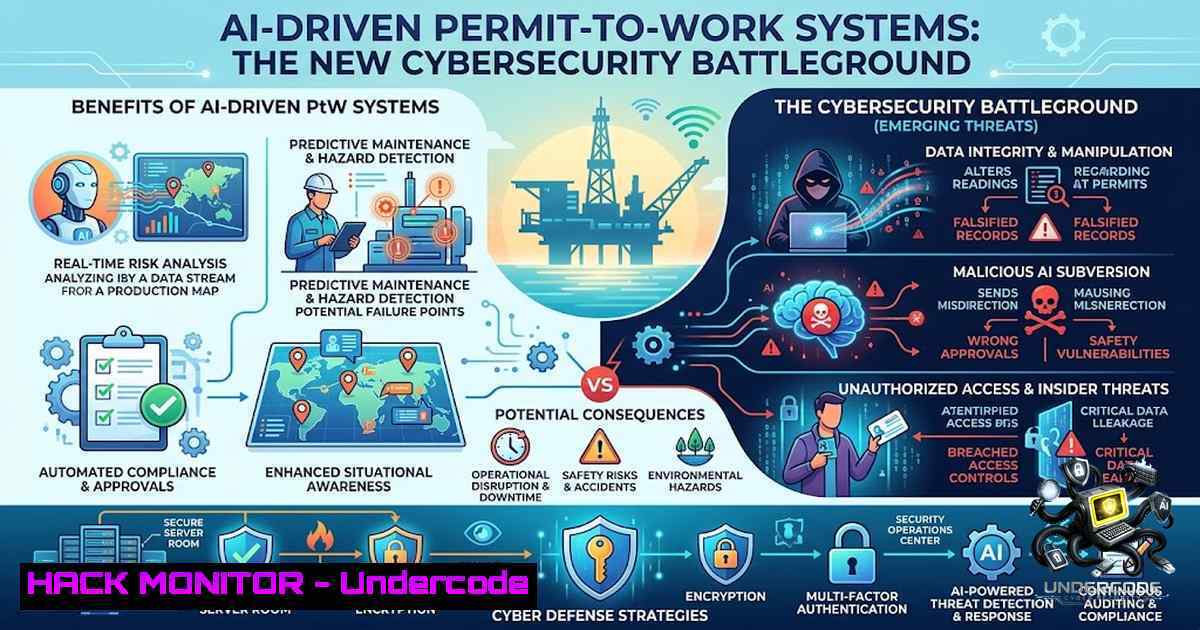
 bskyCybersecurity Risks of AI-Driven Permit-to-Work Systems in Offshore Oil and Gasundercodetesting.com
Key quotes
· 3 pulledThe Permit-to-Work (PTW) system has long been the cornerstone of safety management in high-risk offshore oil and gas operations—a formal, documented process used to authorize hazardous work such as hot work, confined space entry, and live system maintenance.
As the industry undergoes rapid digital transformation, these critical safety systems are evolving from paper clipboards and radio communications into interconnected digital platforms that introduce an entirely new attack surface.
For cybersecurity professionals, the offshore PTW is no
You might also wanna read


The Practical Cybersecurity Risks of AI Implementation
The article argues that AI systems, particularly LLM-based ones, will compromise cybersecurity not through sci-fi scenarios of superintellig
 rys.io·5mo ago
Security Analysis of OpenClaw: Risks and Vulnerabilities in AI-Powered Autonomous Agents
The article critiques OpenClaw, an AI-powered autonomous agent system, comparing it to earlier AI agent hype cycles like AutoGPT and BabyAGI
 composio.dev·3mo ago
Cybersecurity Risks of AI-Powered Web Browsers: Experts Warn of Emerging Vulnerabilities
The article discusses the emerging trend of AI-powered web browsers like ChatGPT Atlas and Microsoft's Copilot Mode for Edge, which can answ
 The Verge·7mo ago
AI Engineers Face the Same Automation Risks They Create for Others
An AI engineer reflects on the irony that even those building AI systems are not safe from being replaced by AI. The article explores how AI
 dmanco.dev·21d ago
Security Risks of OpenClaw's AI Agent Capabilities: How Powerful Features Become Attack Vectors
The article examines how OpenClaw's powerful AI agent capabilities, which provide access to files, tools, browsers, terminals, and long-term
 1password.com·4mo ago
Security Risks and Vulnerabilities in Anthropic's Model Context Protocol (MCP)
The article examines security risks and vulnerabilities in Anthropic's Model Context Protocol (MCP), which enables AI systems to connect to
 hiddenlayer.com·7mo ago
Comments
Sign in to join the conversation.
No comments yet. Be the first.