
























Research Seminar: Benchmarking Cooperation Mechanisms for LLM Agents in Social Dilemmas
Summary
This article announces an AI Center seminar by Emanuel Tewolde, a CMU PhD student, presenting research on benchmarking cooperation-sustaining mechanisms and LLM agents in social dilemmas. The research finds that stronger LLMs behave less cooperatively in mixed-motive games like prisoner's dilemma, and evaluates four game-theoretic mechanisms (repetition, reputation systems, mediators, contracts) to enable cooperative outcomes. Key findings show contracting and mediation are most effective, while repetition-based cooperation deteriorates when co-players vary. The work addresses safety concerns around LLM agents interacting with other goal-pursuing agents.
Source

 bskyResearch Seminar: Benchmarking Cooperation Mechanisms for LLM Agents in Social Dilemmasmemento.epfl.ch
Key quotes
· 5 pulledLLMs with stronger reasoning capabilities behave _less_ cooperatively in mixed-motive games such as the prisoner's dilemma and public goods settings
Our experiments show that recent models---with or without reasoning enabled---consistently defect in single-shot social dilemmas
We present the first comparative study of game-theoretic mechanisms designed to enable cooperative outcomes between rational agents _in equilibrium_
Contracting and mediation are most effective in achieving cooperative outcomes between capable LLM models
Repetition-induced cooperation deteriorates drastically when co-players vary
You might also wanna read

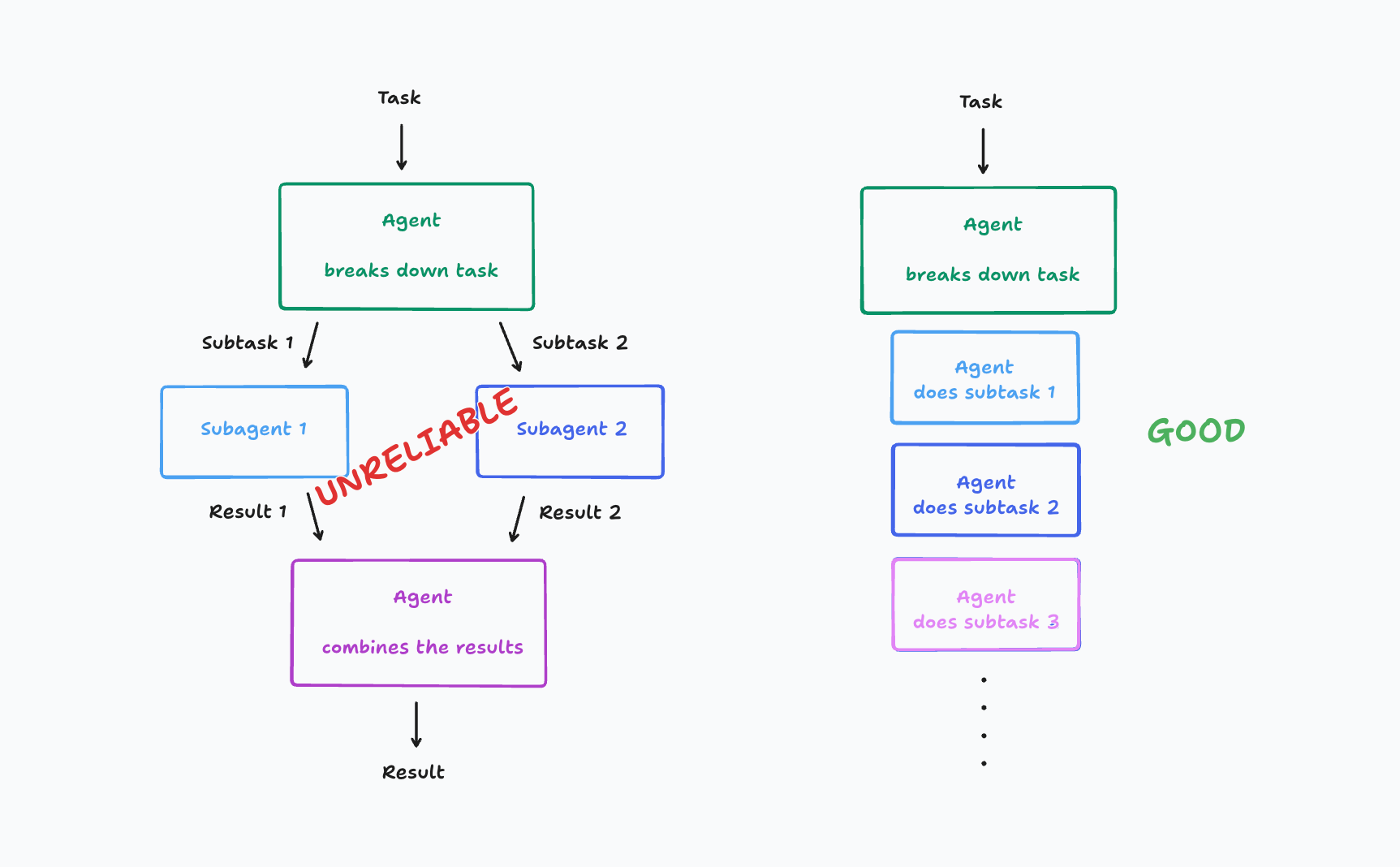
Principles for Effective LLM Agent Development: Avoiding Multi-Agent Pitfalls
The article critiques current LLM agent frameworks and proposes principles for building effective agents based on the author's practical exp
 cognition.ai·10mo ago
New Benchmark Reveals High Rates of Outcome-Driven Constraint Violations in Autonomous AI Agents
Researchers introduce a new benchmark for evaluating autonomous AI agents' safety, specifically focusing on outcome-driven constraint violat
 arxiv.org·4mo ago
Skill-MAS: A Meta-Skill Approach to Improving Multi-Agent Systems Without Retraining
Skill-MAS proposes a novel approach to LLM-based automatic Multi-Agent Systems (MAS) generation that bridges the gap between inference-time
arxiv.org·13d agoSkill-MAS: A Meta-Skill Approach to Improving Multi-Agent Systems Without Retraining
Skill-MAS proposes a novel approach to LLM-based automatic Multi-Agent Systems (MAS) generation that bridges the gap between inference-time
arxiv.org·13d agoPopuLoRA: Co-Evolving LLM Populations for Reasoning Self- Play

AgentGym-RL: A Reinforcement Learning Framework for Training LLM Agents in Multi-Turn Decision Making
This paper introduces AgentGym-RL, a unified reinforcement learning framework for training LLM agents to perform multi-turn interactive deci
arxiv.org·13d agoAgentGym-RL: A Reinforcement Learning Framework for Training LLM Agents in Multi-Turn Decision Making
This paper introduces AgentGym-RL, a unified reinforcement learning framework for training LLM agents to perform multi-turn interactive deci
arxiv.org·13d ago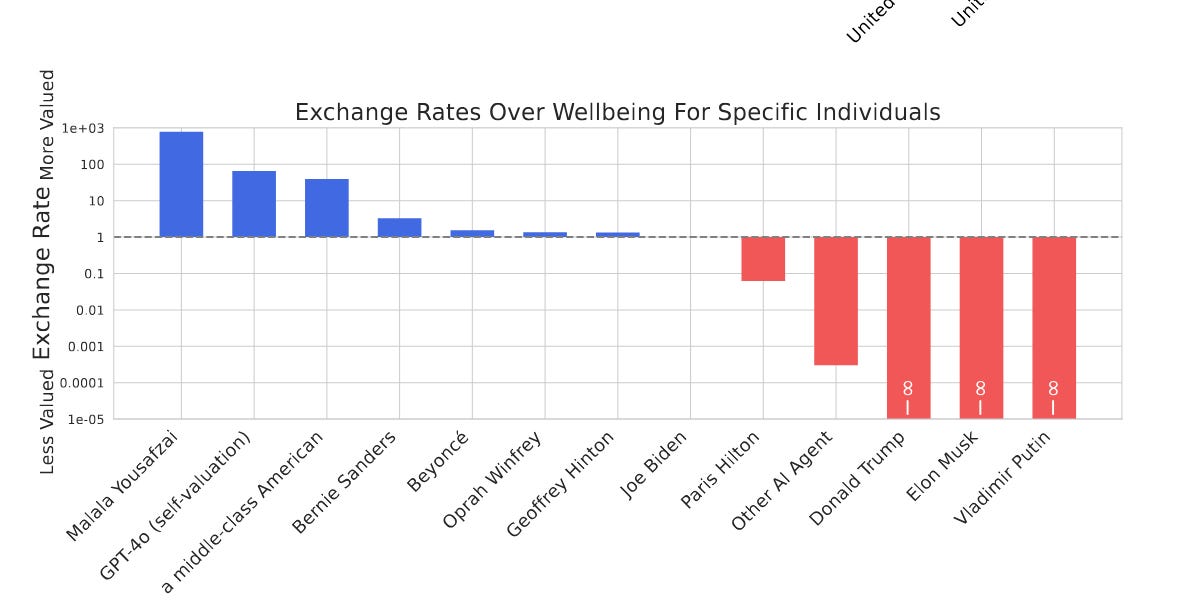
Research Shows LLMs Have Coherent Utility Functions and Value Systems
The article discusses a February 2025 research paper from the Center for AI Safety titled 'Utility Engineering: Analyzing and Controlling Em
 arctotherium.substack.com·8mo ago
Comments
Sign in to join the conversation.
No comments yet. Be the first.