
























AI Agents Demonstrate Autonomous Execution of High Energy Physics Analysis Pipelines
By
[Submitted on 20 Mar 2026 (v1), last revised 20 Jun 2026 (this version, v3)]
Summary
This paper presents a proof-of-concept demonstrating that large language model-based AI agents (specifically Claude Code) can autonomously execute substantial portions of a high energy physics (HEP) analysis pipeline, including event selection, background estimation, uncertainty quantification, statistical inference, and paper drafting. The authors introduce a framework called Just Furnish Context (JFC) that integrates autonomous analysis agents with literature-based knowledge retrieval and multi-agent review. They demonstrate this by conducting analyses on open data from ALEPH, DELPHI, and CMS, including a CMS Run1 Open Data H→τ+τ− measurement and the first Lund plane measurement on LEP data — a genuinely novel result produced autonomously by an AI agent. The authors argue the HEP community underestimates current AI capabilities and advocate for new strategies in training, analysis organization, and human expertise allocation.
Source

 bskyAI Agents Demonstrate Autonomous Execution of High Energy Physics Analysis Pipelinesarxiv.org
Key quotes
· 5 pulledLarge language model-based AI agents are now able to autonomously execute substantial portions of a high energy physics (HEP) analysis pipeline with minimal expert-curated input.
We argue that the experimental HEP community is underestimating the current capabilities of these systems, and that most proposed agentic workflows are too narrowly scoped or scaffolded to specific analysis structures.
We present a proof-of-concept framework, Just Furnish Context (JFC), that integrates autonomous analysis agents with literature-based knowledge retrieval and multi-agent review, and show that this is sufficient to plan, execute, and document a credible high energy physics analysis.
We demonstrate this by conducting analyses on open data from ALEPH, DELPHI, and CMS to perform electroweak, QCD, and Higgs boson measurements.
Rather than replacing physicists, these tools promise to offload the repetitive technical burden of analysis code development, freeing researchers to focus on physics insight, truly novel method development, and rigorous validation.
You might also wanna read

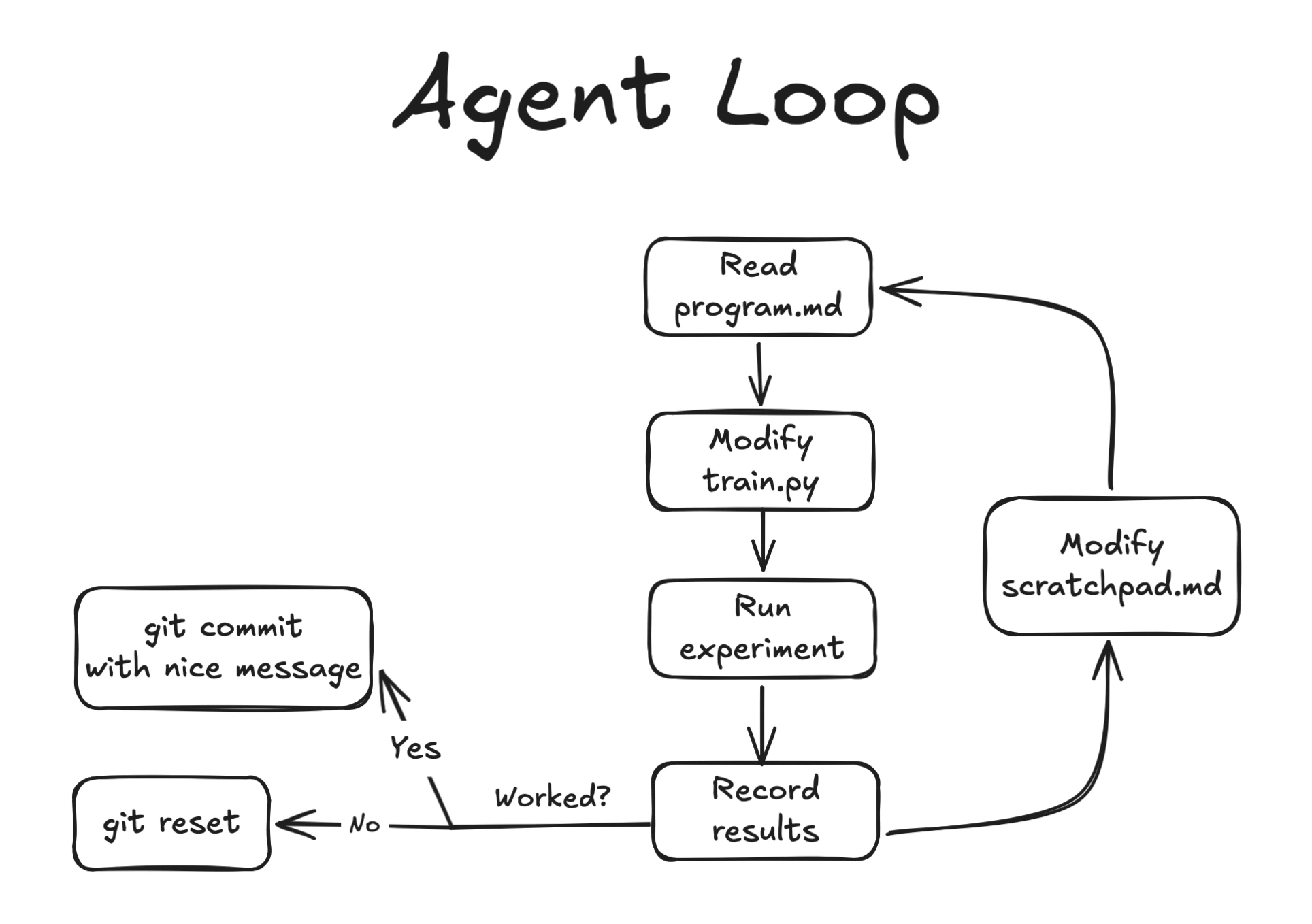
Experimenting with AI-Powered Research Automation: Applying Karpathy's Autoresearch to Legacy eCLIP Code
The author describes experimenting with Andrej Karpathy's Autoresearch framework by applying it to their old eCLIP research code. They set u
 ykumar.me·3mo ago
Practical Guide to Using Claude Code: Personal Experience and Professional Insights
The article is a comprehensive personal account of the author's extensive experience using Claude Code, an AI coding assistant. The author d
 blog.sshh.io·7mo ago
Building a Software Factory with Claude Code: From AI-Assisted Coding to Agentic Development
This article provides a comprehensive guide on building a software factory using Claude Code and other AI coding tools. It covers the evolut
 freecodecamp.org·26d ago
Anthropic Researchers Use 16 Parallel Claude Agents to Build Rust-Based C Compiler
Anthropic researcher Nicholas Carlini describes an experiment using "agent teams" - multiple Claude AI instances working in parallel on a sh
 anthropic.com·4mo ago
Building a Programming Language with Claude Code: A Case Study in AI-Assisted Development
The author details their experience building a new programming language called Cutlet over four weeks using Claude Code, an AI programming a
ankursethi.com·3mo ago
Practical AI Adoption: Using Claude for Deterministic Simulation Testing at TigerBeetle
The article documents the author's experience using Claude AI to solve a technical problem at TigerBeetle involving deterministic simulation
matklad.github.io·5mo agoComments
Sign in to join the conversation.
No comments yet. Be the first.