
























Startup Deep Fission proposes burying nuclear reactors a mile underground to replace containment domes
By
@autonocion
Summary
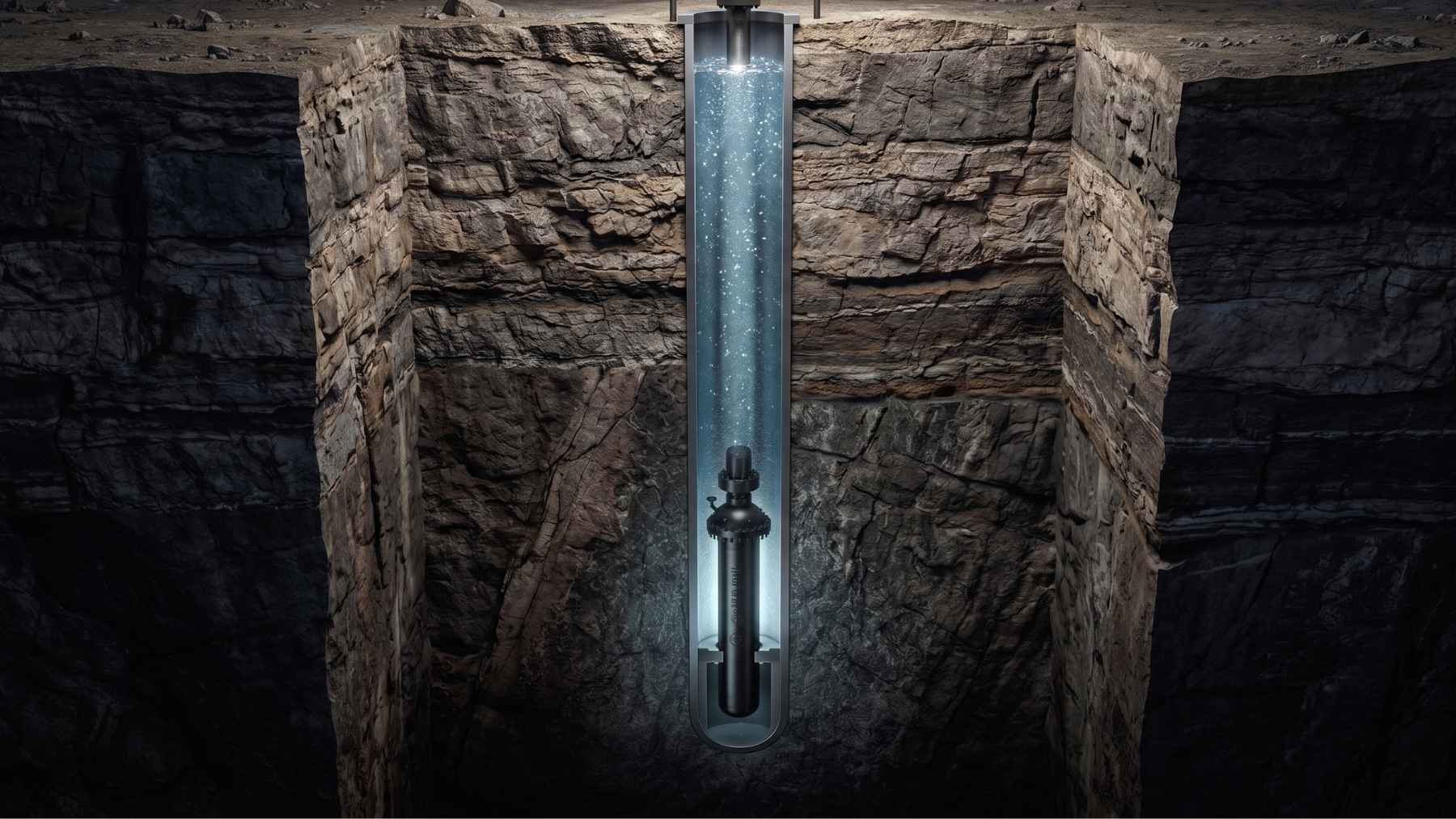
Deep Fission, a Berkeley-based startup now trading on Nasdaq, proposes burying a full pressurized water reactor a mile underground in a 30-inch borehole. The surrounding rock and water pressure would replace the need for a steel containment vessel and concrete dome. Each hole would generate 15 megawatts, with 100 holes on one site producing 1.5 gigawatts. The approach aims to drastically reduce nuclear plant costs and construction timelines by leveraging deep-earth pressure and geology as natural containment.
Source
 bskyStartup Deep Fission proposes burying nuclear reactors a mile underground to replace containment domesautonocion.com
Key quotes
· 5 pulledThe big concrete dome is the part of a nuclear plant almost anyone can draw from memory. It is there for a reason.
Deep Fission, a Berkeley startup that began trading on Nasdaq this month, thinks it can get rid of both.
Not by shrinking the reactor, the way most of the industry is trying to, but by burying it.
The plan is to lower a full pressurized water reactor about a mile underground, down a borehole roughly 30 inches wide.
One hole would make 15 megawatts; 100 on one site would add up to 1.5 gigawatts.
You might also wanna read

Portable Nuclear Reactor 'Radiant' Offers Efficient, Water-Free Power for Remote and Critical Sites
The article introduces 'Radiant,' a compact nuclear reactor designed for mass production and easy transport, capable of replacing diesel gen

Canada plans up to 10 new nuclear reactors by 2040 in $100B+ energy strategy
Canada's Energy Minister Tim Hodgson announced plans for a "nuclear renaissance" involving the construction of up to 10 new nuclear reactors
 cbc.ca·3d ago
Nuclear Microreactors: Small-Scale Power for Towns and Campuses Face Public Trust Challenges
The article explores the potential of nuclear microreactors - small-scale nuclear power plants that could power entire towns or campuses whi
 theconversation.com·9mo ago
Nuclear Batteries: From Medical Implants to Modern Applications in Long-Term Energy Storage
The article explores the history and future of nuclear batteries, starting with the first nuclear-powered pacemakers implanted in the 1970s
 spectrum.ieee.org·10mo ago
Discovery of Oklo: Earth's Two-Billion-Year-Old Natural Nuclear Reactor
Physicist Francis Perrin discovers a unique natural nuclear reactor in Gabon with a lower proportion of uranium-235, challenging accepted sc
iaea.org·1y ago
Using Nuclear Explosions for Carbon Sequestration: A Bold Climate Change Solution
The article proposes using nuclear explosions in a remote basaltic seabed to accelerate carbon sequestration through Enhanced Rock Weatherin
arxiv.org·11mo ago
Comments
Sign in to join the conversation.
No comments yet. Be the first.