
























A Tentative Detection of a Point Source in the Disk Gap of HD 100546 with VLT/SPHERE-IRDIS Sparse Aperture Masking Interferometry
Dori Blakely et al 2025 AJ 169 152 Modeling of a transitional protoplanetary disk finds a best fit to the data for a disk containing an unresolved planet or brown dwarf that moved between 2018 and…
Read the full articleYou might also wanna read

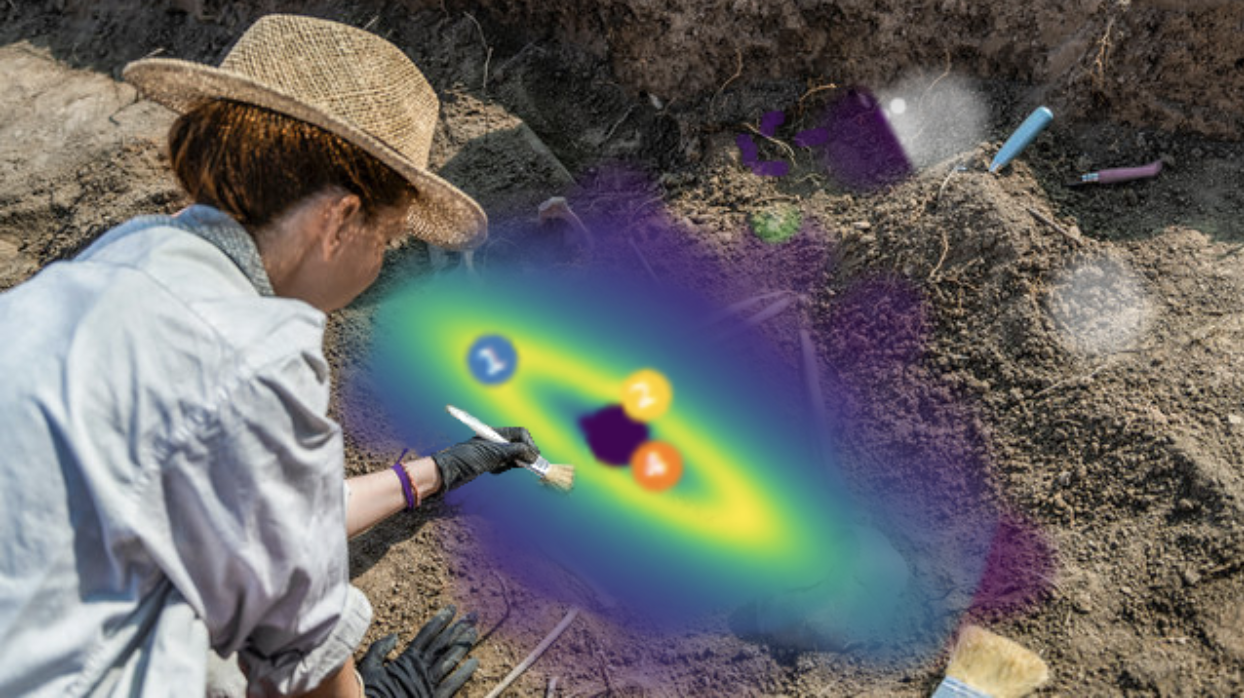
New imaging technique combines reference-star and angular differential imaging to reveal faint exoplanets and debris disks
What do astronomers and archaeologists have in common? Today's guest author discusses how faint exoplanet signals are extracted from their n
 astrobites.org·16d ago
High-precision HDC reference instrument for the Sol Star System
Article URL: Comments URL: Points: 10 # Comments: 1
A 'smart ruler' could help swarms of space telescopes image exoplanets
We've talked plenty of times here about the infeasibility of launching a mirror big enough to directly image exoplanets using current rocket

Machine Learning Validates Unrecognized Transient Astronomical Phenomena in Historical Observatory Images
Transient, star-like point sources that appear and vanish over short timescales are described in astronomical images prior to launch of Sput
 arxiv.org·2mo ago
VLT Study Reveals Dramatic Nickel Emission and CN Outgassing in Interstellar Comet 3I/ATLAS
We report VLT spectroscopy of the interstellar comet 3I/ATLAS (C/2025 N1) from $r_{\rm h}\!\simeq\!4.4$ to $2.85$ au using X-shooter (300-55
arxiv.org·10mo ago
Isotopic Evidence for a Cold and Distant Origin of the Interstellar Object 3I/ATLAS
Interstellar objects provide the only directly observable samples of icy planetesimals formed around other stars, and can therefore provide
arxiv.org·4mo ago
Comments
Sign in to join the conversation.
No comments yet. Be the first.