
























Newly discovered protist Euplotes gigatrox transforms into supergiant and cannibalizes its siblings
By
Tina Hesman Saey
Summary
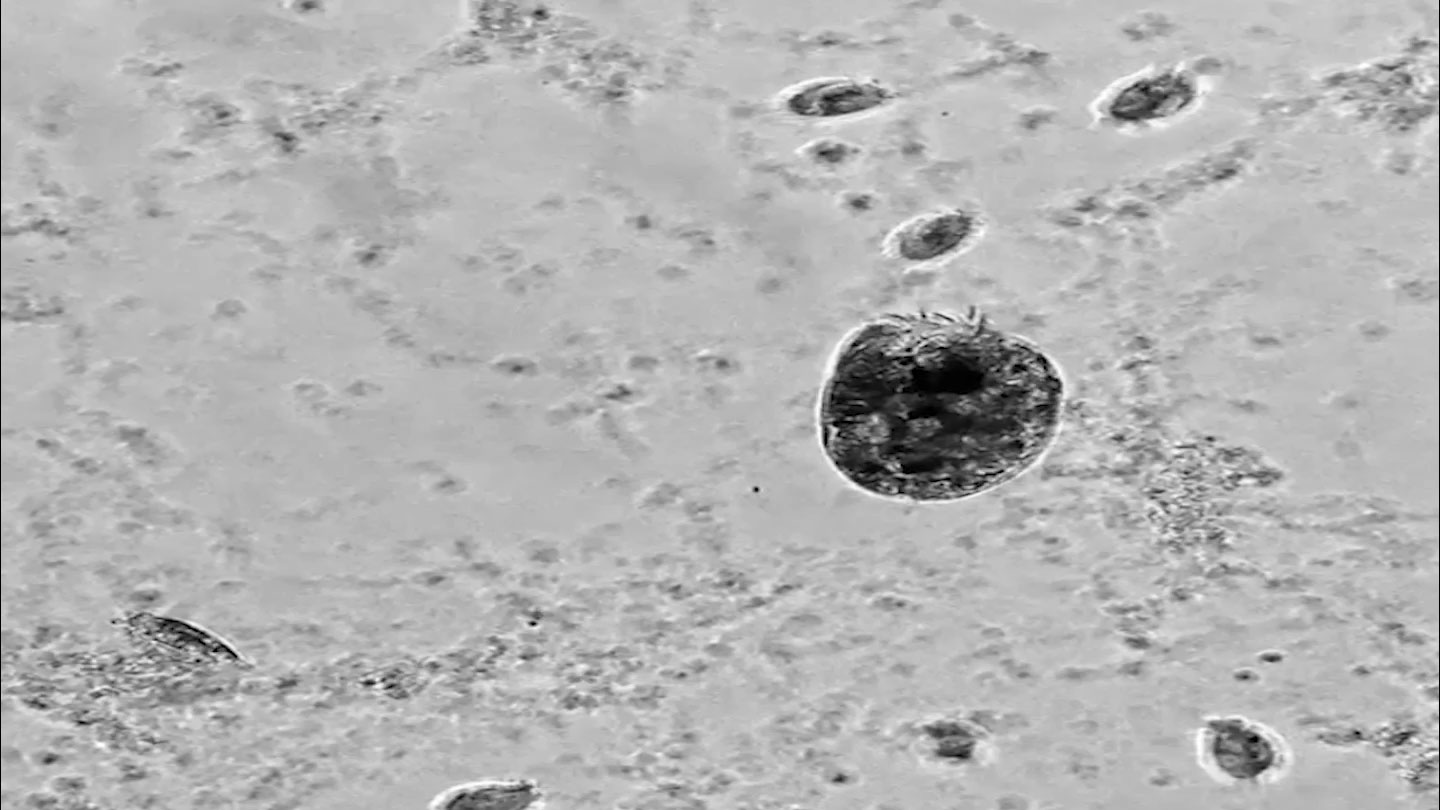
A newly discovered single-celled protist, Euplotes gigatrox, can transform into a 'supergiant' form more than twice its normal size and cannibalize its genetically identical siblings. This shape-shifting behavior may offer insights into how early life forms evolved complex social behaviors.
Source
 Twitter / XNewly discovered protist Euplotes gigatrox transforms into supergiant and cannibalizes its siblingssciencenews.org
Key quotes
· 3 pulledA newly discovered microbe is like a mini version of the Hulk.
Euplotes gigatrox is a single-celled protist that resembles an insect.
Sometimes a small number of the protists balloon into 'supergiants' more than twice their regular size.
You might also wanna read


Cannibalistic supergiant cells discovered in ciliate Euplotes gigatrox
This article reports on a scientific discovery in the ciliate Euplotes gigatrox, a microbial eukaryote (protist). Researchers found that in
 pnas.org·18d ago
Raymond Goldstein: Decision-making without a brain
Scientists Discover Ultra-Minimalist Microbe That Challenges Definitions of Life
Scientists have discovered an ultra-minimalist single-celled organism with an exceptionally small genome that challenges fundamental definit
 quantamagazine.org·7mo ago
Genome sequencing reveals minimalistic multicellularity toolkit in slime mould Acrasis kona
This article discusses the genetic basis of aggregative multicellularity in the slime mould Acrasis kona. Unlike most multicellular organism
 communities.springernature.com·1mo ago
Genome sequencing of hallucinogenic Yunnan bolete reveals unknown compound behind visions
Researchers at the University of Utah have sequenced the genomes of 53 specimens of the Yunnan bolete mushroom, which causes hallucinations
 psychedelics.co.uk·23d ago
Comments
Sign in to join the conversation.
No comments yet. Be the first.