
























A Late-Stage Infall Renovation: Mapping the Circumstellar Disk of AB Aurigae
What happens when a young star captures some extra gas and dust? New observations of a dusty disk reveals how a late-stage infall event may be influencing planet formation in AB Aurigae. The post A…
Read the full articleYou might also wanna read


Isotopic Evidence for a Cold and Distant Origin of the Interstellar Object 3I/ATLAS
Interstellar objects provide the only directly observable samples of icy planetesimals formed around other stars, and can therefore provide
 arxiv.org·4mo ago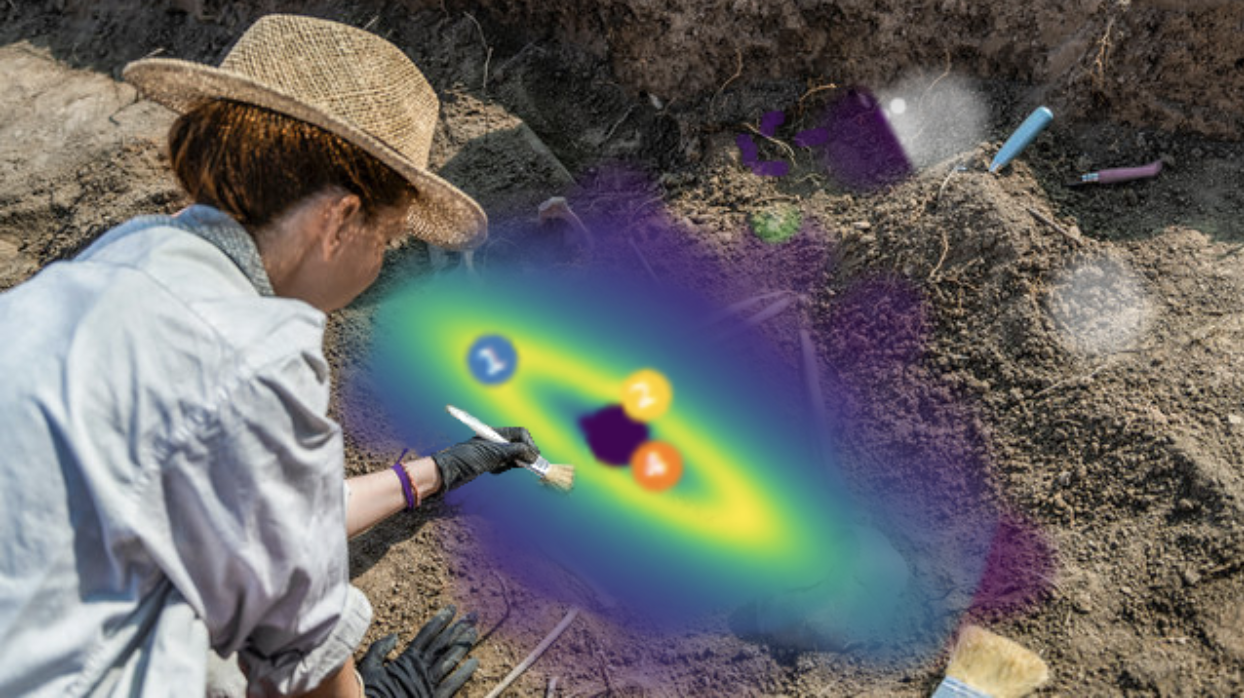
New imaging technique combines reference-star and angular differential imaging to reveal faint exoplanets and debris disks
What do astronomers and archaeologists have in common? Today's guest author discusses how faint exoplanet signals are extracted from their n
 astrobites.org·16d ago
VLT Study Reveals Dramatic Nickel Emission and CN Outgassing in Interstellar Comet 3I/ATLAS
We report VLT spectroscopy of the interstellar comet 3I/ATLAS (C/2025 N1) from $r_{\rm h}\!\simeq\!4.4$ to $2.85$ au using X-shooter (300-55
arxiv.org·10mo ago
James Webb Space Telescope captures young stars at multiple formation stages in Orion A
Webb unveils young stars across every stage of formation

JWST/MIRI reveals young stellar objects and star formation in Centaurus A's warped dust disc
Centaurus A (Cen A), the nearest active radio galaxy, hosts a warped dust disc formed in a gas-rich merger. We present JWST/MIRI imaging in
arxiv.org·2d agoThere is a planet that survived the death of its star, and now we know how it did it.
The giant planet WD 1856 b, which survived a dead star, offers clues about atmospheres, orbital migration, and the distant future of our Sol
Comments
Sign in to join the conversation.
No comments yet. Be the first.