
























A Galactic Interloper: A Study of the Camelopardis OB1 Association’s Clusters and Its Visitor from the Perseus Arm
Joseph Mullen et al 2025 ApJ 992 17 What at first appeared to be single group of stars with similar origins is now known to be three separate groups of stars that have converged at the same location…
Read the full articleYou might also wanna read
'Cosmic wallflowers' may hold the key to the origin of globular clusters
Astronomers using computer simulations have investigated whether a class of star clusters nicknamed "cosmic wallflowers" could be the long-s

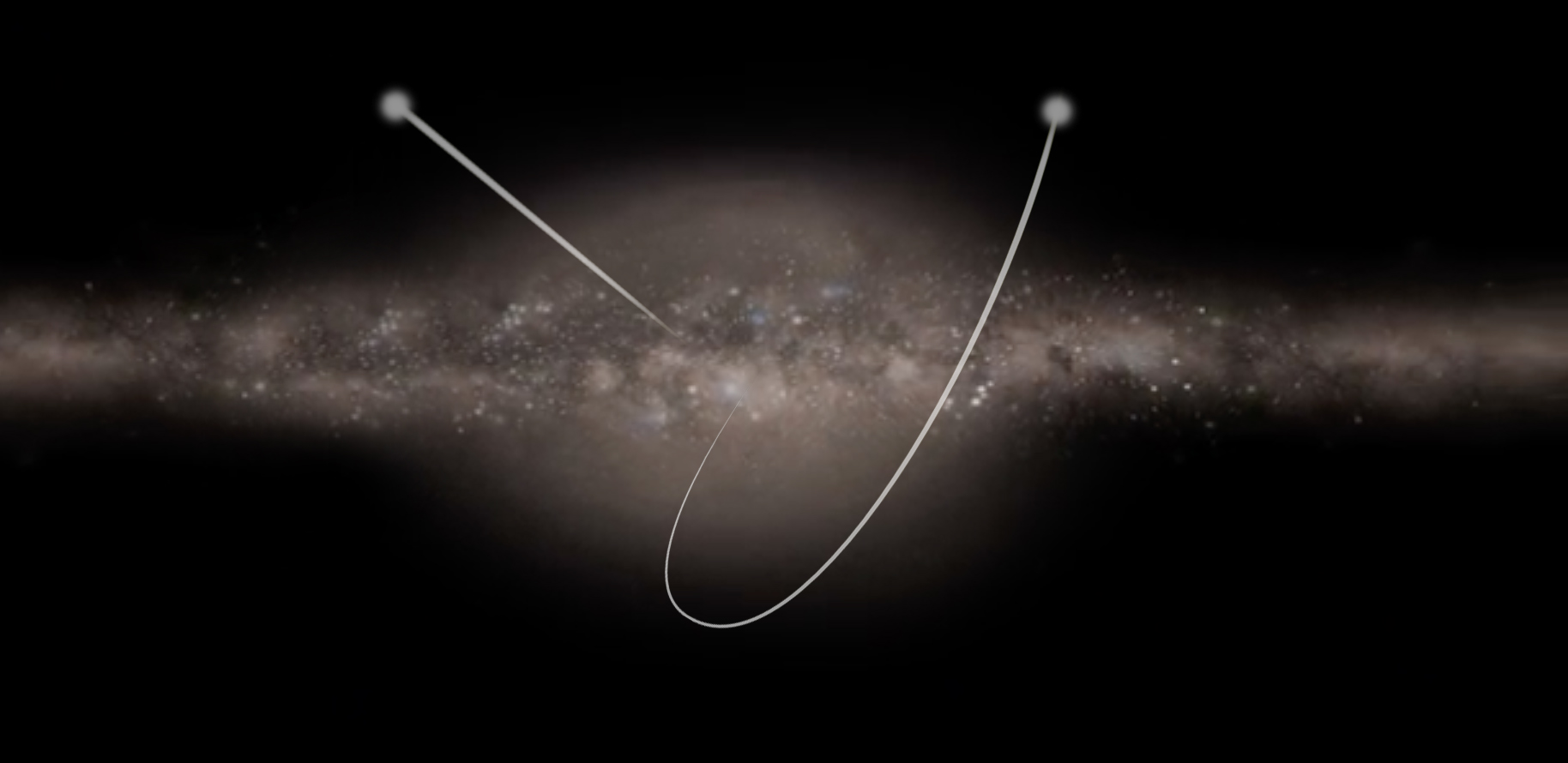
First Old, Low-Mass Hypervelocity Star Discovered Ejected from Milky Way's Center
A recent study presents the first strong evidence of an old, low-mass hypervelocity star flung from the galactic center.
 aasnova.org·29d ago
First Old, Low-Mass Hypervelocity Star Discovered Ejected from Milky Way's Center
A recent study presents the first strong evidence of an old, low-mass hypervelocity star flung from the galactic center.
AAS Nova·29d agoSpectroscopic Classification of ASASSN-25cm as a Classical Nova
Original link submitted from IFL Science: Comments URL: Points: 12 # Comments: 1
Are interphylum spiralian relationships resolvable?
The phyla making up the major animal clade of Spiralia have been clear since the advent of molecular phylogenetics; the relationships betwee
502 Bad Gateway
Secrets of Galaxy MergersDeep in the cosmic wilderness, astronomers are unlocking the hidden drama of how galaxies grow — by dissecting a ti

XMM-Newton and Chandra data reveal Milky Way's outer spiral arms are 10% farther than previously thought
The European Space Agency’s XMM-Newton and NASA’s Chandra X-ray space telescopes have spotted the aftermath of three bright explosions echoi
XMM-Newton and Chandra data reveal Milky Way's outer spiral arms are 10% farther than previously thought
The European Space Agency’s XMM-Newton and NASA’s Chandra X-ray space telescopes have spotted the aftermath of three bright explosions echoi
Comments
Sign in to join the conversation.
No comments yet. Be the first.