
























19th-Century Popular Science: Making Sound Visible Through Accessible Acoustics Experiments
Of all the senses cultivated throughout the 19th century, it was the sense of hearing that experienced the most dramatic transformation, as the science of sound underwent rapid advancement. Lucas…
Read the full articleYou might also wanna read


Charles Darwin avait raison : les humains et les animaux partagent certains goûts musicaux
Une étude récente révèle que les humains et les animaux partagent des préférences musicales, suggérant des racines évolutives communes. Cett
Sound waves guide cultured cells to form vessel-like networks within one week
With the aid of physical forces—in this case, sound—it is possible to actively steer the formation of engineered tissue. For example, sound

The Rise and Fall of the Public Sandbox
A nineteenth-century experiment in children's play helped reshape American cities—and later fell out of favor. The post The Rise and Fall of

Scientists create quantum sound device that could transform communications
A new quantum device can generate precisely controlled bursts of sound-like particles, or phonons, by forcing electrons through an ultra-thi
Hegemonic Microtonality: Decolonizing the Soundscape of Music Theory Pedagogy
This thesis examines how Western music theory pedagogy—long organized around tonal and twelve-tone equal-temperament frameworks—structures b
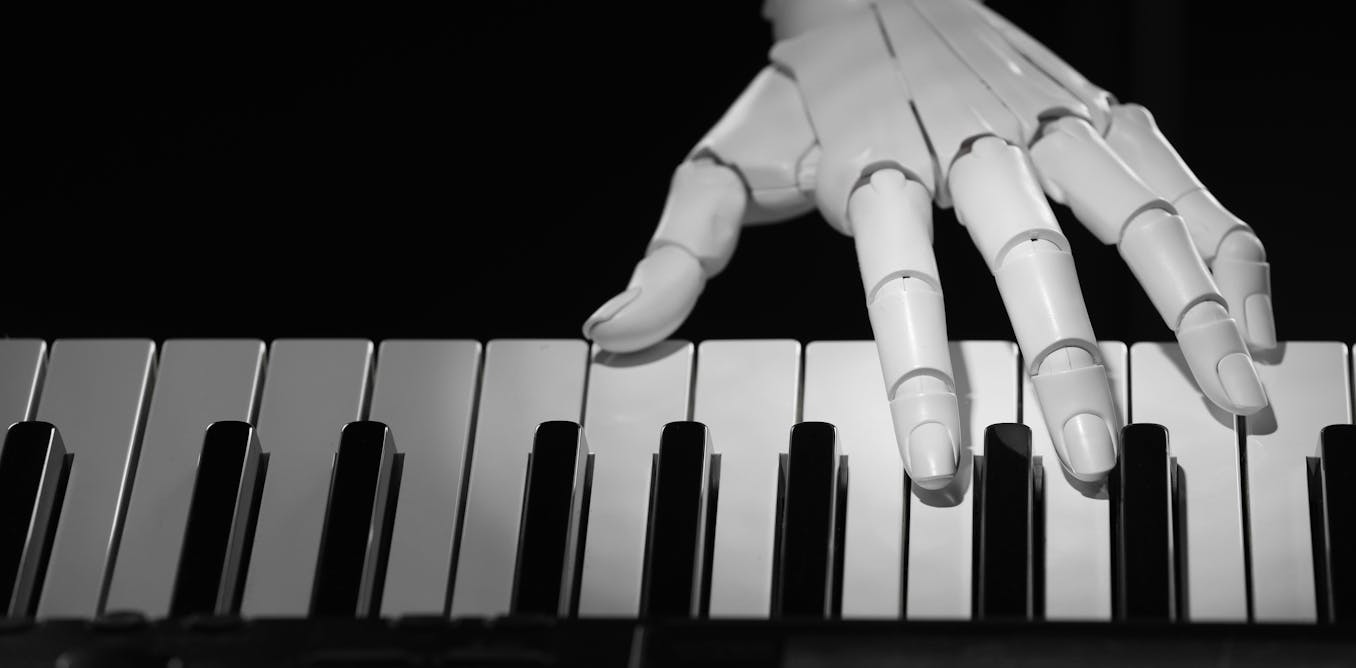
AI-generated songs and copyright: Historical lessons from the phonograph
History suggests copyright adapts to technology. AI may be no exception.
 tcnv.link·11h ago
Comments
Sign in to join the conversation.
No comments yet. Be the first.