 Shared by @edzitron.com ↗
 wheresyoured.at1h ago
 Shared by @9to5mac.com ↗
 9to5mac.com1h ago
 Shared by @theregister.com ↗
 theregister.com1h ago
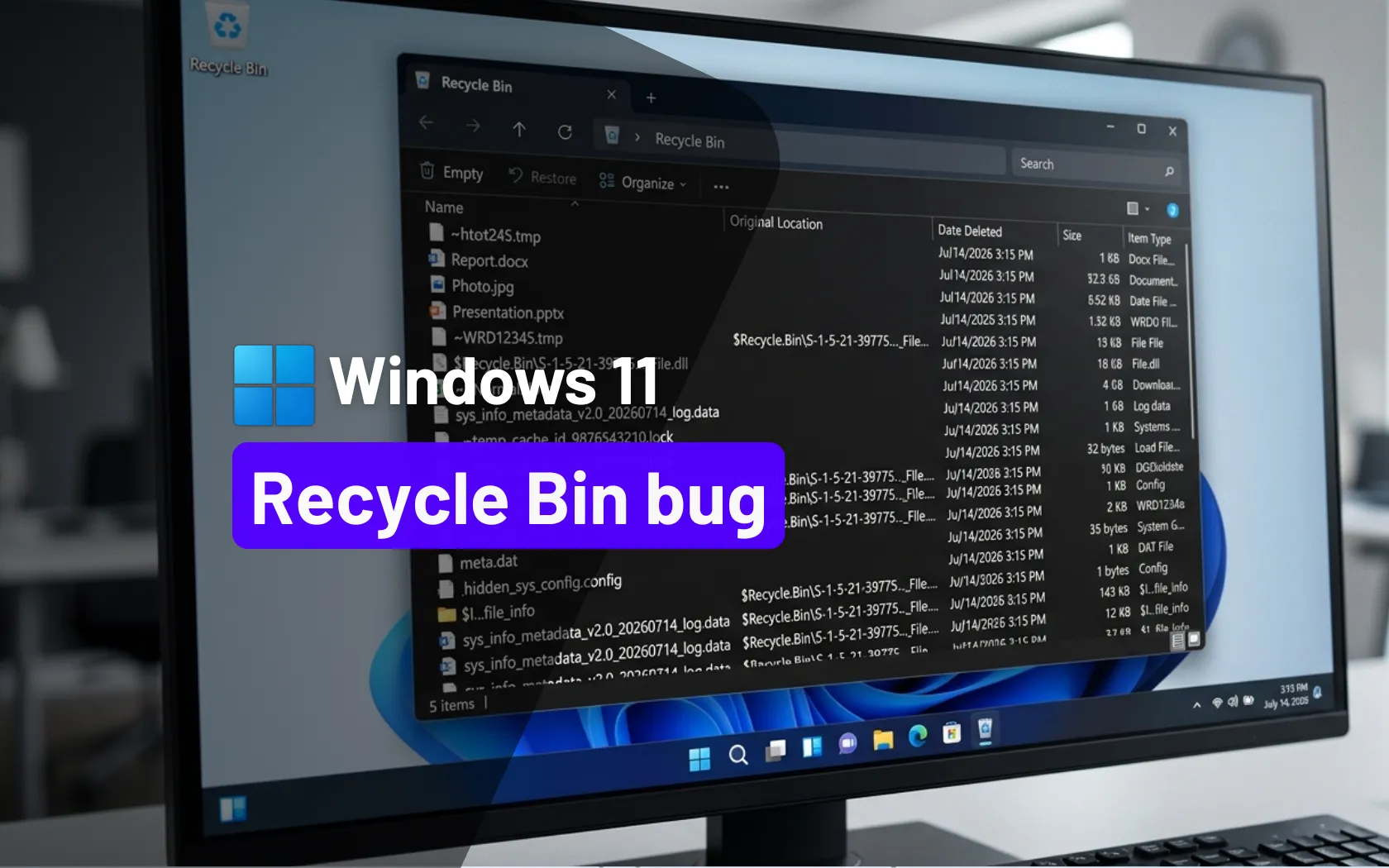
Microsoft has acknowledged a bug introduced by the June 9, 2026 security update (KB5094126) that causes the Recycle Bin to display internal system filenames instead of original file names when users permanently delete a single item. The issue affects Windows 11, Windows 10, and Windows Server, according to pureinfotech.com. "When users permanently delete a single item from the Recycle Bin, the confirmation dialog incorrectly displays an internal system filename (e.g., $Rxxxxx.ext) instead of the original filename." Microsoft has labeled the problem as cosmetic on its Windows Release Health Dashboard and confirmed that a fix is in development, pureinfotech.com reported. The bug was introduced by the KB5094126 update, which was part of the June Patch Tuesday rollout. Hacker News reported that the June 2026 Patch Tuesday update (KB5095051) for Windows 11 specifically has also introduced this Recycle Bin bug. Beyond the filename display issue, users have reported additional stability problems and OneDrive-related glitches since the update rolled out, according to Hacker News. "While Microsoft has officially acknowledged this specific issue, users have reported additional stability problems and OneDrive-related glitches since the update rolled out." The coverage from Hacker News highlights ongoing quality control concerns with Windows updates, noting that this is not the first time a Patch Tuesday update has introduced unexpected side effects. Microsoft has not yet provided a timeline for the fix, but the company has stated it is working on a resolution.

Defense contractor Leonardo is introducing SignalTrace, a new technology that pairs automatic license plate readers (ALPRs) with sensors capable of scraping unique identifiers from smart devices like phones, wearables, infotainment systems, and even pet trackers. This surveillanc
 share.google·Tech by Flipboard·1h ago·3 min read
Nicole D'Antuono from IPC examines how the broadcast industry can learn from the finance sector's successful IP transformation. Both industries rely on real-time communications where latency, reliability, and operational continuity are critical. The article draws parallels betwee


 Shared by @philiptobias.bsky.social ↗
 bgr.com1h ago
 Shared by @notateslaapp.com ↗
 notateslaapp.com1h ago
 Shared by @massivelyop.bsky.social ↗
 Shared by @lenticulus.bsky.social ↗
 resist.bot1h ago
 eff.org1h ago
 Shared by @paradiddletriplets.bsky.social ↗
 nytimes.com1h ago
 Shared by @theregister.com ↗theregister.com1h ago
 Shared by @tj800.bsky.social ↗
 theguardian.com1h ago
 Shared by @captlaserpants.bsky.social ↗
 theverge.com1h ago