 Shared by @infobot.bsky.social ↗
 rekkerd.org3h ago
 Shared by @infobot.bsky.social ↗rekkerd.org3h ago
 Shared by @infobot.bsky.social ↗rekkerd.org3h ago
DeepReinforce AI has released Ornith-1.0, a new family of open-source models built specifically for agentic coding tasks. The models, which range from a compact 9 billion parameter variant to a massive 397 billion parameter mixture-of-experts model, are designed to handle complex coding workflows autonomously. According to a post on Hugging Face, the models are post-trained on top of Google's Gemma 4 and Alibaba's Qwen 3.5 base models, achieving state-of-the-art performance among open-source models of comparable size on benchmarks like Terminal-Bench 2.1, SWE-Bench, NL2Repo, and OpenClaw. "The key innovation is a self-scaffolding approach that allows the models to improve their own coding capabilities through iterative refinement." This self-improving mechanism is at the heart of Ornith-1.0's appeal. DeepReinforce AI described the training framework as using reinforcement learning that jointly optimizes both the generation of solutions and the scaffolding that orchestrates those rollouts. That means the model doesn't just write code; it also learns to manage the multi-step process of testing, debugging, and refining its own outputs, a capability that could dramatically reduce the need for human oversight in software development. The range of model sizes is notable. The 9B Dense variant is intended for edge devices and local deployment, while the 397B MoE model targets frontier-scale performance. Hacker News noted that the team behind the release is likely at Aloha, though DeepReinforce AI officially announced the project. By releasing the models as open-source, the team aims to democratize access to advanced agentic coding tools that previously were only available through proprietary services. "The release features a self-improving training framework using reinforcement learning that jointly optimizes solution generation and the scaffolding that drives those rollouts." Early evaluations suggest that Ornith-1.0 models outperform other open-source coding models on several key benchmarks, though direct comparisons with leading closed-source systems remain limited. The open-source community has already begun experimenting with the models, which are available on Hugging Face. With the combination of self-scaffolding and parameter sizes spanning from edge to server-grade, Ornith-1.0 represents a significant step toward AI systems that can autonomously handle real-world coding tasks from start to finish.
OutYet.ai is a tracking website that monitors upcoming AI model releases from major labs like OpenAI, Anthropic, Google DeepMind, and Meta. It allows users to follow specific models or providers and get verified alerts when public access is confirmed. The page currently tracks 8
 outyet.ai·Hacker News: Front Page·4h ago·5 min read
South Korea's government and major tech companies (including Samsung and SK Hynix) are committing $1 trillion to megaprojects aimed at expanding memory chip production, building AI data centers, and accelerating the commercial deployment of humanoid robots by 2028. The initiative
 arstechnica.com·Hacker News: Front Page·4h ago·7 min read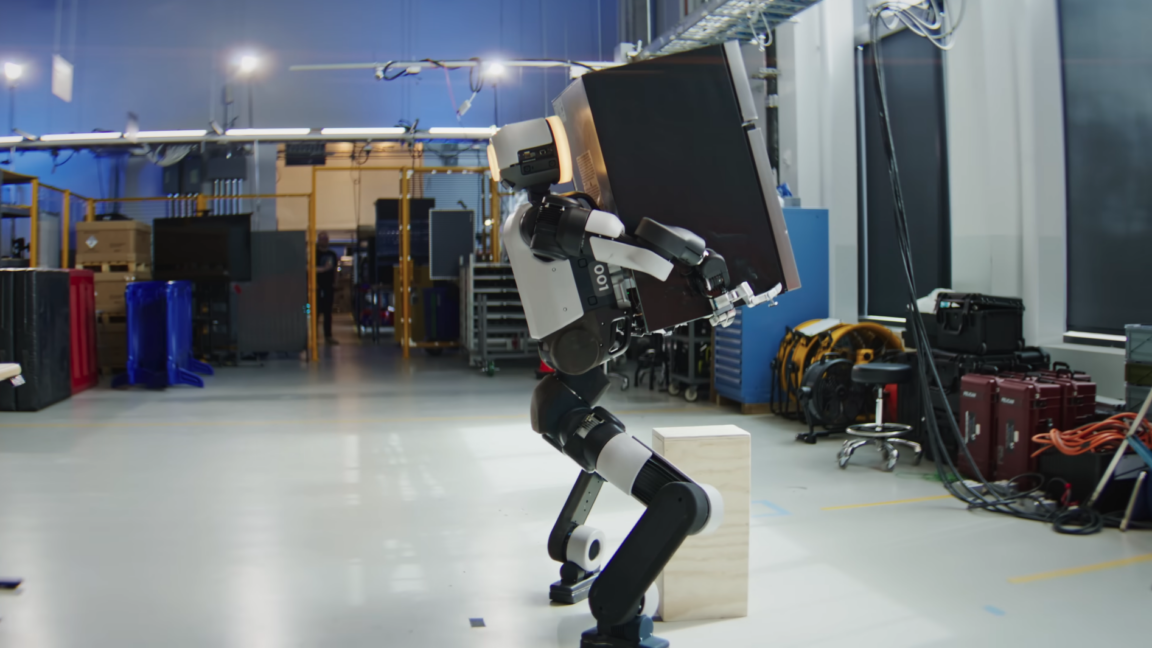

 Shared by @polygon.com ↗
 polygon.com4h ago
 Shared by @Thorwallet ↗
 thorwallet.org4h ago
 Shared by @volts.wtf ↗
 techradar.com4h ago
 hccf.onmy.cloud5h ago
 Shared by @yzhang_cs ↗
 arxiv.org5h ago
 Shared by @verge ↗
 theverge.com6h ago
 Shared by @apsphysiology.bsky.social ↗
 bbc.com6h ago
 AI6h ago
 jonathanbeard.io6h ago