The article argues that the AI boom's next major bottleneck is electricity, not chips, pointing to a specific under-the-radar energy play. Multiple outlets are covering this shift today.
technologyMonday, June 22, 2026
AI's next bottleneck is electricity, not chips
The AI arms race is shifting from silicon to power lines. As NVIDIA's valuation balloons past $4T, analysts and strategists are pointing to electricity supply as the real constraint. Meanwhile, the industry's cultural contradictions are on full display: Microsoft wants to make users 'addicted' to its AI assistant, while Vivaldi's leader vows to keep AI out of the browser.
The power problem
The AI boom's next bottleneck is becoming clear: securing enough electricity to run all those GPUs.
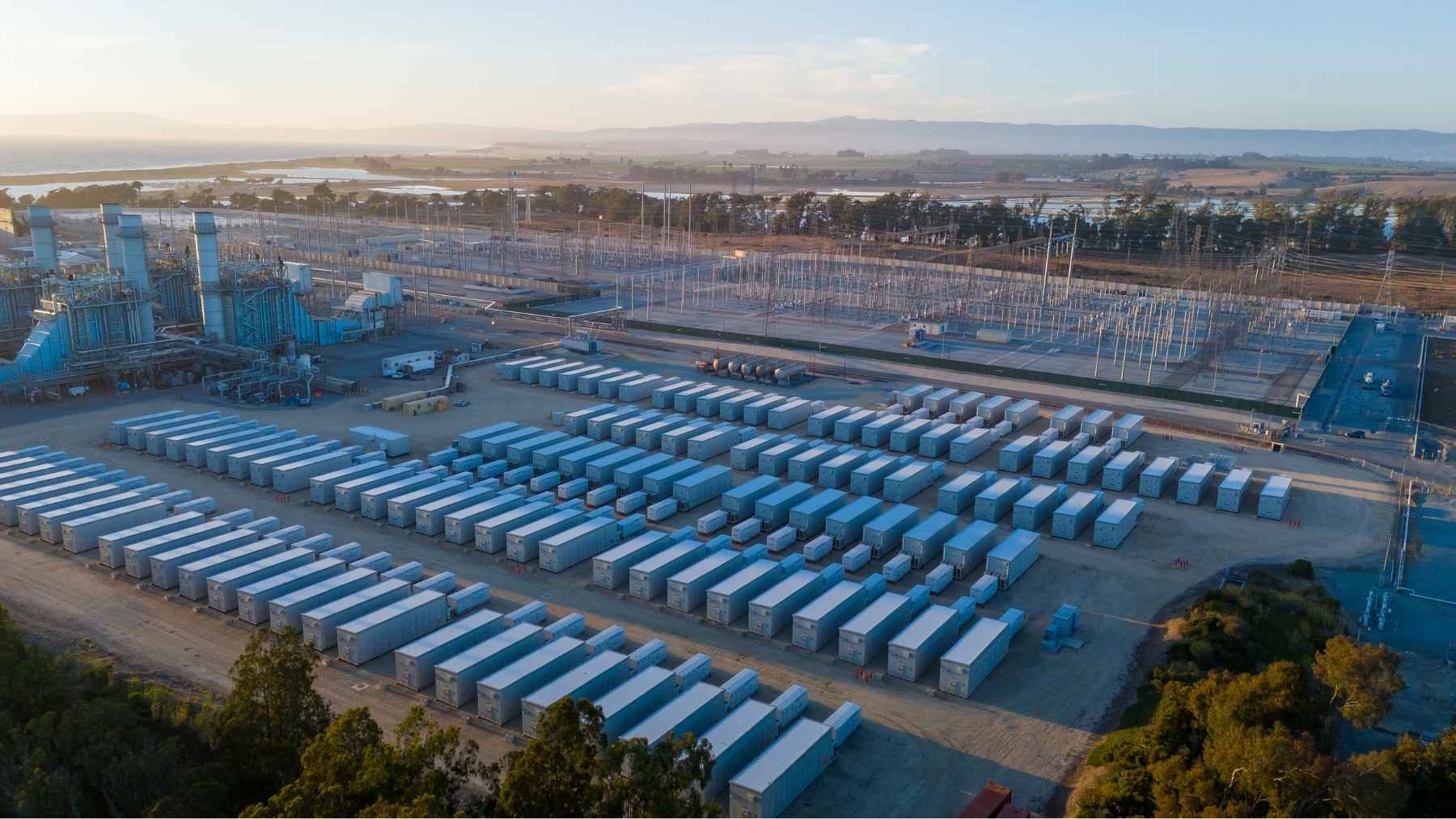
California's grid batteries delivered 12,000 MW, equivalent to 12 nuclear plants, covering 44% of state demand at peak evening hour. A real-world example of grid-scale storage working at scale.
AI's cultural divide
While some companies race to integrate AI everywhere, others are pushing back, and the tactics are getting aggressive.
Internal Microsoft documents reveal a three-phase plan to make users 'addicted' to its AI assistant Scout before rolling out features. Multiple outlets are covering this story today.
Vivaldi's co-founder pledges to keep AI out of the browser, positioning it as a privacy-focused alternative. A counterpoint to the industry's AI-everywhere trend.
Markets and infrastructure
Wall Street is betting big on AI infrastructure plays, from chip designers to monitoring platforms.
Bernstein raised Arm's price target to $500, citing its power-efficient architecture as ideal for agentic AI. Multiple outlets are covering this today.
Truist upgraded Datadog to Buy with a $300 target, highlighting its role in monitoring AI workloads. A sign of confidence in the AI infrastructure layer.
Also today14
Why I'm betting on AI-curated directories when Google AI Overviews answer the same queriesdev.to
Interactive. Violent. Gross. Inside Fishtank, the Unhinged Future of Reality TVwrd.cm
Is Big Tech Facing Its “Big Tobacco Moment”?jacobin.com
Electronically Commutated Motor (ECM) Market Research Report — Global Forecast till 2035www.marketresearchfuture.com
Primary Lithium Battery Market Research Report — Global Forecast till 2035www.marketresearchfuture.com
The Anti-Intellectualism of the Silicon Valley Elitewww.thenation.com
Exploiting Auth0 Defaults in XSS Attackswww.elttam.com
Auth0, a popular cloud-based identity and access management platform, has two default configurations that can be exploited to pivot across applications within an Auth0 tenant from a single XSS vulnerability. The article highlights how these insecure defaults create security risks
From Couch To Critical Infrastructure: How GRFICSv3 Turns Your Laptop Into A Chemical Plant—And Why Everyundercodetesting.com
This article introduces GRFICSv3, an open-source framework that allows security professionals to simulate a complete industrial control system (ICS) environment—including a chemical plant—entirely on a laptop using virtual machines and Docker containers. It highlights the critica
Ethan Thornton is trying to do everything all at oncetechcrunch.com
Ethan Thornton dropped out of MIT at 19 to found Mach Industries, a defense startup that has raised $485 million and is now valued at $1.8 billion. The company runs six weapons programs, including a hydrogen-powered system initially prototyped with parts from Home Depot and Amazo
Mamba Explainedthegradient.pub
Mamba is a novel AI model based on State Space Models (SSMs) that emerges as a formidable alternative to Transformer models. It addresses the key inefficiency of Transformers—the quadratic bottleneck in attention mechanisms—by enabling feasible processing of extremely long sequen
From GPUs To Memory: The 9-Step Blueprint For Building Production-Grade Agentic AI Systems + Video -undercodetesting.com
This article presents a comprehensive 9-step blueprint for building production-grade agentic AI systems, covering everything from GPU compute infrastructure to user interfaces. It details the layered architecture required to move beyond simple chatbots toward autonomous digital w
China has approved the world’s first invasive brain-computer chip—here’s what’s nextwww.technologyreview.com
China has approved the world's first invasive brain-computer interface (BCI) product for use beyond clinical trials, making it available to patients with limb paralysis from spinal cord injuries. The device, developed by a Chinese company, was implanted in patient Dong in Novembe
The 'secret sauce' behind the tiny town that's cracked Australia's energy problemwww.sbs.com.au
The small town of Yackandandah in Victoria, Australia, has become a model for community-driven renewable energy transition. With solar panels on most rooftops, electric vehicles, community-owned EV chargers funded by the town's own petrol station, and an electric bike for mail de
Professor Jonathan Heeney developed a universal coronavirus vaccine using artificial intelligence rather than traditional virology methods. The AI analyzed genetic sequence data from an entire family of coronaviruses to identify conserved features shared across dozens of variants
More roundups that day
privacy roundupBiometric ID, license plate creep, and police tactics


tv roundupHouse of the Dragon Season 3 premiere dominates
legal roundupAnthropic hit with two legal fronts today

Food safety net unravels as solar fridges help farmers

Minions, AI art, and adaptation debates
energy policy roundup