All Topics
All Topics
Technology
Technology
AI
AI
Business
Business
Entertainment
Entertainment
News
News
Programming
Programming
Science
Science
Design
Design
Environment
Environment
Finance
Finance
Crypto
Crypto
Politics
Politics
Sports
Sports
Education
Education
Gaming
Gaming
Art
Art
Music
Music
Health
Health
Security
Security
Books
Books
Food
Food
Travel
Travel
Personal
Personal
Bluesky
Twitter

programmingFriday, August 21, 2026

Rust Glancer's low-memory LSP debut

Today's programming news is a mix of fresh tooling and cautionary tales. The standout is Rust Glancer, a new LSP implementation promising under 100MB of RAM, which could be a game-changer for older hardware. But there's also a healthy dose of skepticism about OpenTelemetry's complexity and a fascinating security incident involving phone call logging.

Sources
+11

New Tools and Optimizations

Developers are pushing the envelope on efficiency, from language servers to GPU rendering and TTS serving.

#01rust-glancer.github.ioAug 21
0
Hello, world! · Rust Glancer

Rust Glancer is a new LSP for Rust built for low memory use, staying under 100MB even during full indexing. That's a meaningful alternative for developers on older machines, and it's already been tested on an 8GB MacBook Pro.

by matklad13 min readRead original
#02zeux.ioAug 21
0
Billions of triangles in minutes

This is a deep technical dive into NVIDIA's RTX Mega Geometry, using an open-source sample to improve clustered LOD support in meshoptimizer. If you care about rendering performance, this shows how to push billions of triangles without the official demo's restrictions.

by corysama26 min readRead original
#03nari-labs.comAug 21
0
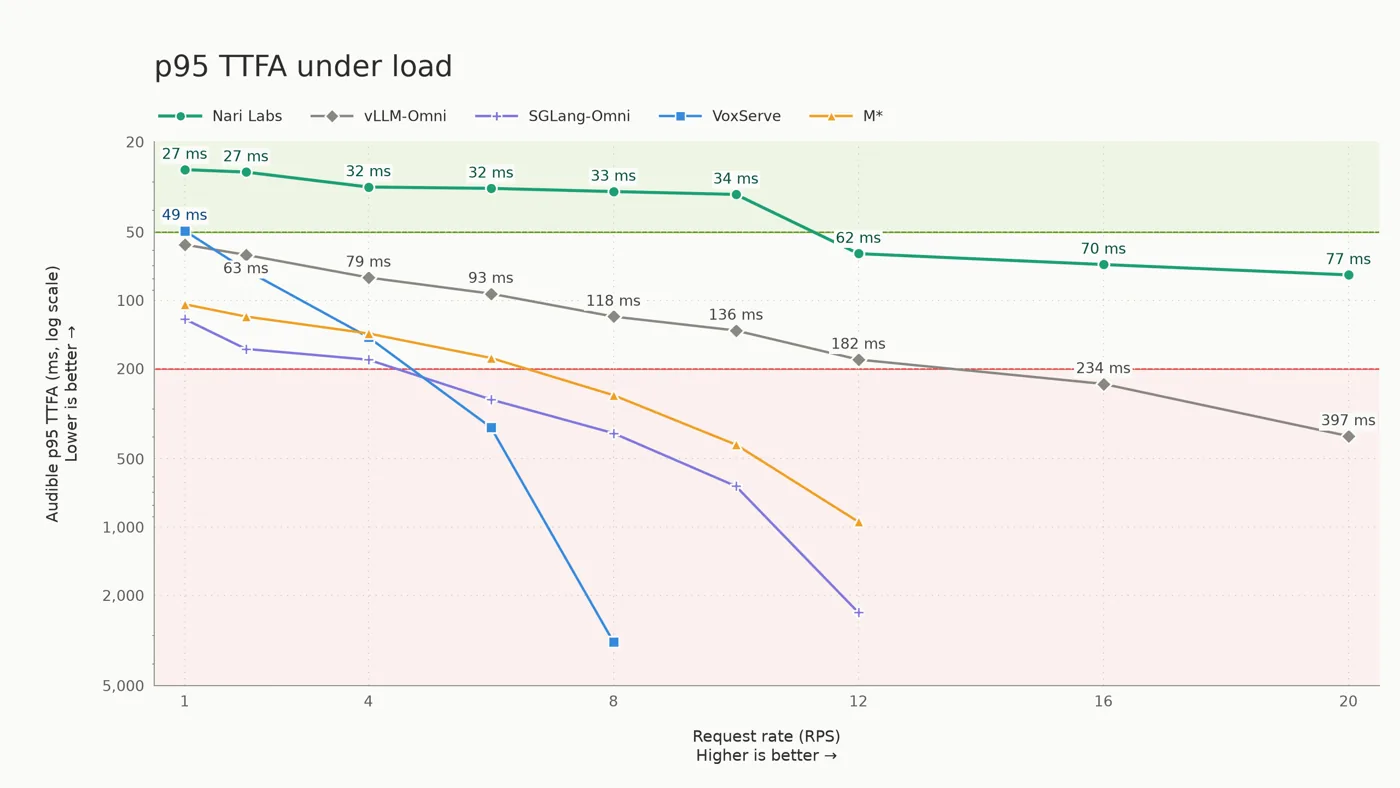
Pushing the Speed-Cost Frontier for Qwen3-TTS

Qwen3-TTS gets a serious speed boost here, hitting 10 RPS and sub-50ms TTFA on a single H100. That's a concrete benchmark for anyone serving TTS models, and it outperforms several existing implementations.

The Observability Grind

Observability remains a sore spot, with OpenTelemetry's complexity drawing fire and a new eBPF-based tool trying to sidestep the pain.

Security and Hardware Quirks

From accidental DNS hijacking to GPU memory internals, today's stories remind us that infrastructure has sharp edges.

#07blog.doubleword.aiAug 21
0
What happens when a GPU reads memory | Doubleword

This traces an RTX 4090's memory access path from SASS to hardware, building on previous reverse engineering work. It's a detailed look at GPU microarchitecture that's useful for performance tuning.

Also today13

  • the task isn't the jobsunilpai.dev

    The author reflects on the paradox of increased productivity from coding agents: while they enable rapid prototyping and idea validation, they do not proportionally reduce the overall scope of work or improve fundamental engineering skills. The piece highlights that volume of out

  • Remotely unlocking electric scooters — Henri Emateguihenriemategui.com

    The author details a security research project where they identified an electric scooter company in their city and analyzed its backend infrastructure. By using subdomain reconnaissance, WordPress user enumeration, and brute force techniques, the researcher gained administrative

  • Tumble Forthtumbleforth.hardcoded.net

    Virgil Dupras, author of Collapse OS and Dusk OS, introduces a new article series designed to guide web developers into low-level programming. The series aims to broaden computing perspectives through step-by-step story arcs and includes a recurring corny joke in each episode.

  • How we rebuilt our Electron recording engine in Swiftcircleback.ai

    The article details the technical migration of a desktop app's meeting recording engine from an Electron render process to native Swift. The team identified that running real-time audio processing in the browser-based render process caused persistent reliability issues and edge c

  • Resolved: CSS Class Prefix Selector | CSS-Trickscss-tricks.com

    The article discusses a newly resolved CSS proposal that introduces a wildcard class prefix selector (e.g., `.btn-*`). This feature aims to simplify styling for component variations by allowing developers to target classes starting with a specific prefix, replacing verbose manual

  • Postage labelsfontsinuse.com

    A photograph demonstrating the output of a custom Troff-based software program designed for printing address labels. The image shows printed fictional addresses next to scissors and CDs at a post office desk, illustrating the practical application of the tool. The creator selecte

  • Quick impressions: A week of using Codex more than Claudeallaboutcoding.ghinda.com

    The author shares initial impressions from comparing Codex TUI (using gpt-5.6-sol) and Claude Code TUI (using opus-5) on MacOS over one week. Key observations include: Claude had more pre-existing skills/plugins, which the author plans to fix by pointing Codex at the Claude skill

More roundups that day