Trump fired all 22 members of the National Science Board without explanation, putting $8.8 billion in NSF funding for AI, quantum, and chip startups at risk. Multiple outlets are covering this, and it's the biggest science policy story of the day.
politicsWednesday, June 24, 2026
NSF board firing shakes US science funding
Trump fired all 22 members of the National Science Board, the body that oversees $8.8 billion in NSF funding. It's the biggest story in science policy today, with ripple effects for AI, quantum, and chip startups. Meanwhile, an Anthropic AI found vulnerabilities in classified US systems in hours, and a new report warns AI data centers are sparking global class conflict.
Science funding shock
The biggest political story today is a direct attack on the institutions that fund basic research.
AI and national security
Two stories show AI's growing role in both defending and threatening state systems.
Anthropic's AI model Mythos found vulnerabilities in classified US government systems within hours during a test with intelligence agencies. The model identified weaknesses but didn't exploit them, and the finding was disclosed in a Senate hearing.
The DOJ moved to dismiss a citizen lawsuit against xAI for running gas-burning turbines without permits, arguing only the feds can enforce such laws. Steve Vladeck flags the dangerous constitutional implications of that argument.
AI's political footprint
From Super PACs to grassroots resistance, AI is reshaping politics at every level.
The Atlantic looks at AI industry Super PACs trying to influence midterm elections, noting the tension between executives' public warnings about AI risk and their push to shape regulation through political spending.

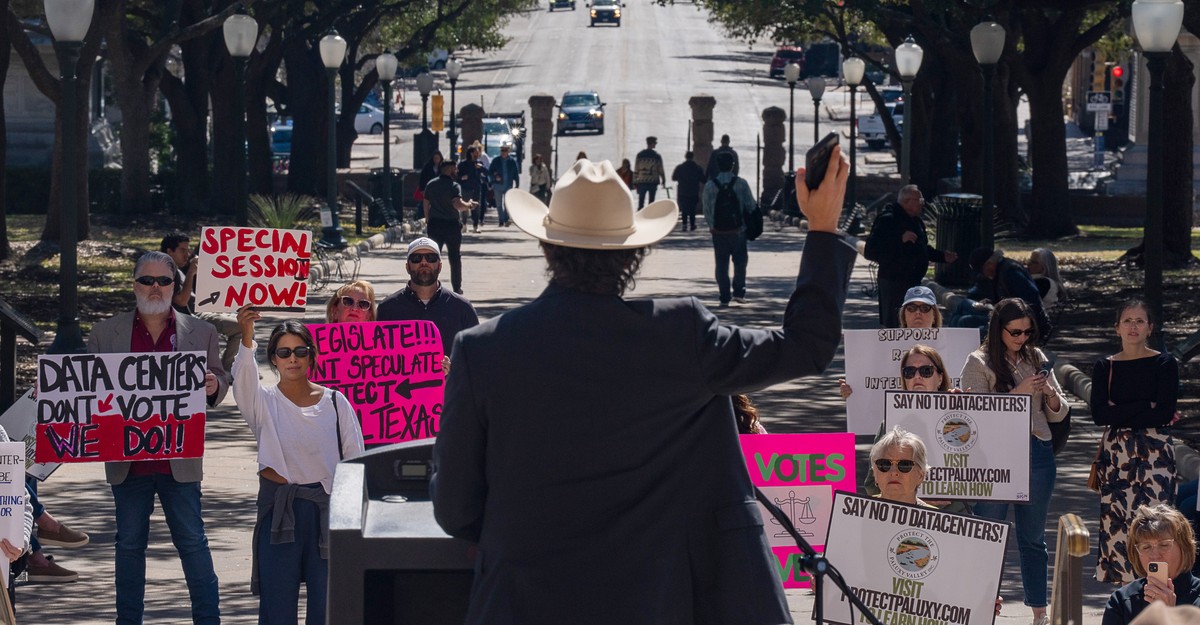
Truthout frames the fight against AI data centers as global class warfare, with communities protesting water depletion, pollution, and rising costs driven by Big Tech's energy demands.
Also today14
Elon Musk and the plot to hijack America’s broadbandwww.theverge.com
Progress in reducing emissions 2026 report to Parliament - Climate Change Committeewww.theccc.org.uk
Some local police have access to an ICE facial recognition appwww.npr.org
More of Illinois has access to electronic monitoring than ever before. But does it work?www.chicagotribune.com
Keir Starmer couldn’t beat the curse of Brexit – a politics poisoned by nationalismwww.theguardian.com
Palestine Action ‘terror’ sentencing, Starmer resignation but Labour change unlikely over Israel policyasiapacificreport.nz
‘A total, utter nightmare’: small businesses on Brexit, 10 years onwww.theguardian.com
A retrospective analysis of Brexit's impact on small-to-medium-sized British businesses, 10 years after the referendum. The article details how 16,000-20,000 businesses stopped exporting to the EU entirely, while those that continued face crushing red tape, rising costs, and lack
Is the NZ government sleepwalking into its own automation scandal?thespinoff.co.nz
The article argues that the New Zealand government's plan to cut 8,500 public sector jobs and replace them with AI and automation is risky, drawing on cautionary tales from abroad where automation failures have caused significant human and financial harm. Author Alexandra Sinclai
High risk of severe haze for rest of 2026 amid El Nino, biofuel demand and Indonesia budget cuts: Reportwww.channelnewsasia.com
The Singapore Institute of International Affairs (SIIA) has issued a rare "red" warning in its Haze Outlook 2026 report, indicating a high risk of severe transboundary haze affecting Brunei, Indonesia, Malaysia, and Singapore for the rest of 2026. The peak danger period is expect
Resistance Disguised as a History Lesson: Fascism and the Universitywww.publicbooks.org
This article tells the story of Mildred Harnack, an American literature professor teaching at the Berlin Night School for Adults in 1932, who used her classroom as a space of quiet resistance against the rising Nazi regime. It explores how she and her students—many of them workin
Rep. Adriano Espaillat Was Slow to Help Mahmoud Khalil. It Could Cost Him His Seat.theintercept.com
The article covers how Rep. Adriano Espaillat (D-NY) was slow to respond to the ICE arrest of Mahmoud Khalil, a Columbia University student and pro-Palestinian activist. Eleven months after Khalil's arrest, Espaillat finally met with him — only after a primary challenger, Dariali
Weingarten: Kids’ Attention Crisis Demands Widespread Curbs on AI and Techwww.the74million.org
American Federation of Teachers President Randi Weingarten argues that schools are unprepared for the seismic shifts brought by artificial intelligence and that widespread curbs on AI and tech are needed to address a children's attention crisis. She calls for screen limits and AI
AI is changing the physics of collective intelligence—how do we respond? | Brookingswww.brookings.edu
Jacob Taylor and Scott Page explore how AI is transforming collective intelligence—the ability of groups to solve problems together. They argue that AI changes the "physics" of collective intelligence by altering communication speed, diversity of perspectives, and coordination co
Texas leaders are asking data centers how much water they use. Most aren’t responding.feeds.texastribune.org
Texas state officials sent a survey to data center companies to determine their water and energy usage, but less than a third of companies responded. At a legislative hearing, state Rep. Brad Buck criticized the low response rate, calling it 'bad data, bad study.' The issue is si