





















Zig vs Rust: Practical Comparison for CLI Tool Development
By
dayvster

Kettled twice. Extra chewy, extra trustworthy.
Summary
This article provides a technical comparison between Zig and Rust programming languages, focusing on their practical applications for building command-line interface (CLI) tools. It discusses memory management concepts including stack and heap operations, and analyzes why Zig may offer more practical advantages over Rust for real-world CLI development scenarios.
Key quotes
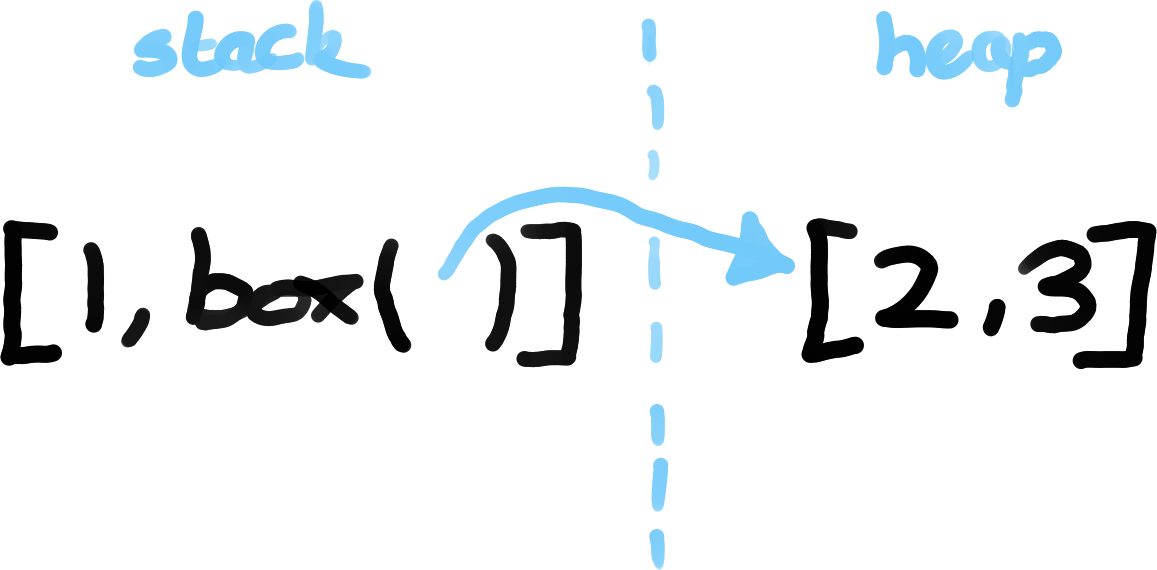
· 5 pulledSo when it comes to memory management there are two terms you really need to know, the stack and the heap.
The stack is a region of memory that stores temporary data that is only needed for a short period of time.
It operates in a last-in, first-out (LIFO) manner, meaning that the most recently added data is the first to be removed.
Basically imagine a stack of plates, if you wanna remove one plate you remove the top one, remove the middle plate and disaster awaits in this analogy.
The stack is typically used for storing function parameters, local variables.
You might also wanna read

Dynamic Borrow-Checking in a Toy Programming Language: Implementing Rust-like Memory Safety Without Static Types
This article presents a demonstration of a toy programming language that implements borrow-checking without static type-checking. The langua
 scattered-thoughts.net·1mo ago
C++26 Standard Draft Finalized with Reflection, Memory Safety, Contracts, and New Concurrency Framework
The C++26 standard draft has been completed, introducing major new features including reflection capabilities that allow C++ to describe its
 infoq.com·1mo ago
Understanding Fil-C: A Simplified Model of Memory-Safe C/C++ Implementation
The article presents a simplified model of Fil-C, a memory-safe implementation of C/C++. It explains that while the real Fil-C uses a compil
Sky: An Experimental Elm-Inspired Programming Language That Compiles to Go
Sky is an experimental programming language that combines Go's pragmatism with Elm's elegance to create a fullstack functional programming l
 github.com·1mo ago
Analyzing Rust's Coherence and Orphan Rules: Ecosystem Development Challenges and Proposed Solutions
This article critiques Rust programming language's coherence rules and orphan rules, which prevent implementing traits for types defined in
boxyuwu.blog·2mo ago
SBCL Fibers: Implementation Design for Lightweight Cooperative Threads
This is a draft design document describing the implementation of lightweight userland cooperative threads (called 'fibers') for SBCL (Steel
atgreen.github.io·2mo ago