





















The Elo Rating System in Chess: Origins, Mechanics, and How It Measures Player Strength
By
Katherine Wise

Pulled from the oven just right. Trustworthy, fact-dense, deeply satisfying.
Summary
The article explains the Elo rating system, a mathematical algorithm developed by Hungarian-American physics professor Arpad Elo to assign numerical values to chess players' playing strength. A player's Elo rating fluctuates based on the relative strength of their opponent and the game result (win, loss, or draw). The system provides a standardized way to measure and compare chess players' abilities.
Key quotes
· 3 pulledThe Elo rating system is a system that uses a mathematical algorithm to assign a numerical value to a player's playing strength.
A player's Elo goes up or down, depending on the relative strength of their opponent and the result of the game: win, loss, or draw.
The term is named after Hungarian-American physics professor Arpad Elo, who invented a system to determine the relative strength of chess players.
You might also wanna read

Enhancing Search Accuracy with Chess-Inspired ELO Scores at ZeroEntropy
ZeroEntropy, a team of mathematicians and programmers, introduces new reranker models zerank-1 and zerank-1-small based on chess Elo Scores
zeroentropy.dev·11mo ago
Improving Bullet Chess Performance Through Technique Adjustment
The article discusses the author's improvement in bullet chess performance by changing their piece-moving technique, resulting in a gain of
jacobbrazeal.wordpress.com·1y ago
Tracking AI Model Performance Degradation: Arena Elo History Visualization
This article presents a visualization tool that tracks the Elo ratings of flagship AI models over time on the Arena AI Leaderboard. It expla
mayerwin.github.io·1mo ago
Chess, Complexity, and the Art of Solving Hard Problems
The article uses a chess analogy to explore how experts and non-experts approach complex, complicated problems. It contrasts the shallow ana
blog.griffens.net·1d ago

Critical Analysis of Chess Complexity Research Methodology
The article critiques a research paper titled 'A Metric of Chess Complexity' by FM David Peng, focusing on methodological deficiencies in me
 lichess.org·9mo ago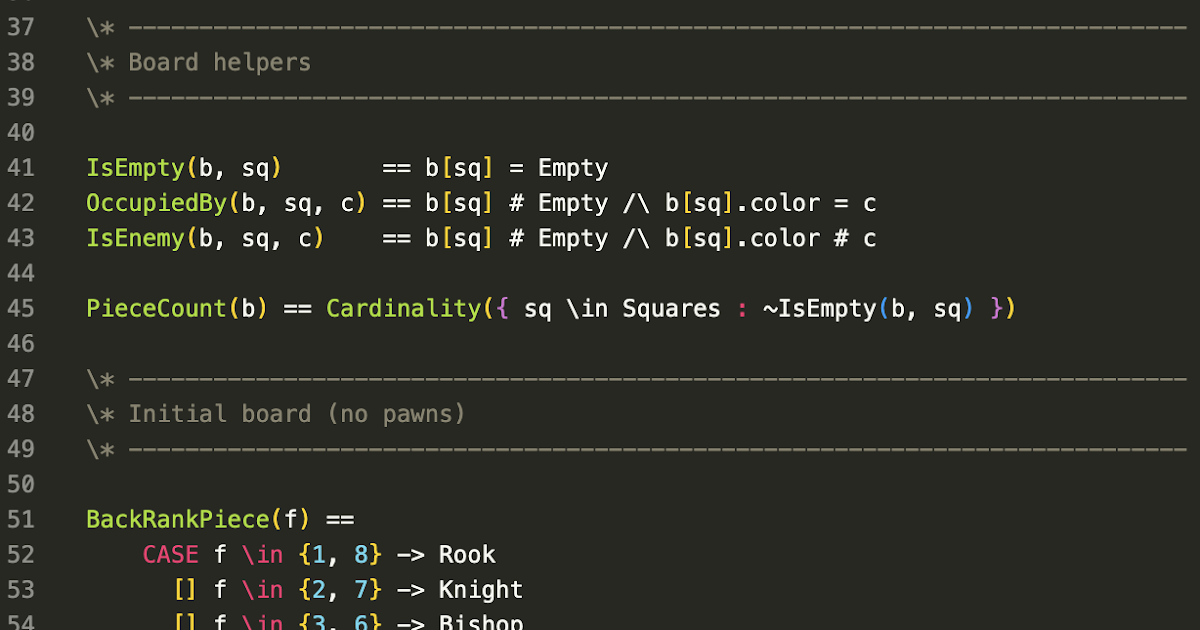
Modeling Chess as a Concurrent System: Invariants and Interleaved Execution
The article discusses chess as a concurrent system with interleaved execution (turn-based play) and introduces the concept of modeling such
 muratbuffalo.blogspot.com·21d ago