





















Webinar: Climate Trends and Wildland Fire Risk Analysis for Alaska's Fire Season

A weekday bagel. Dependable, satisfying, no fuss.
Summary
This webinar examines how increasing temperature and precipitation during Alaska's fire season (April-September) create uncertainty about future wildland fire risk. Warming increases fire risk while higher precipitation may partially offset it. The analysis covers trends of heat and drought indicators (vapor pressure deficit, SPI, SPEI, convective precipitation, heat index) across the full season and by early (April-June) and late (July-September) halves, using machine-learning analysis of large-scale meteorological data.
Key quotes
· 3 pulledTemperature and precipitation are increasing during Alaska's fire season (April-September) creating uncertainty about future wildland fire risk
Warming increases risk while higher precipitation may partially offset it
This webinar examines trends of heat and drought indicators (vapor pressure deficit, SPI, SPEI, convective precipitation, heat index) across the full season and by each half (April-June, July-September)
You might also wanna read

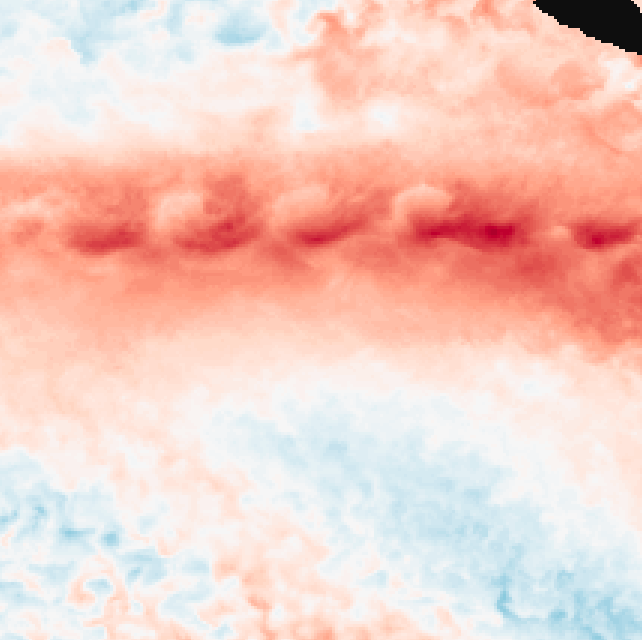
41-Year Timelapse of Daily Ocean Temperature Anomalies (1985-Present)
A 41-year timelapse visualization of daily ocean temperature anomalies from January 1985 to present, highlighting specific oceanographic phe

Mathematical Modeling of Climate Change Tipping Points
This article explores the mathematical modeling of climate change tipping points, tracing back to Soviet climatologist Mikhail Budyko's work
 quantamagazine.org·8mo ago
The Evolutionary Origins and Adaptive Functions of Autosexual Behavior in Birds
This article explores the evolutionary origins and adaptive functions of masturbation (autosexual behavior) in birds and other animals. It e
 onlinelibrary.wiley.com·1h ago
King's College London seeks Research Associate for epigenetic study of Parkinson's and Alzheimer's
King's College London is hiring a Research Associate to investigate epigenetic regulation in neurodegenerative diseases like Parkinson's and
 dementiaresearcher.nihr.ac.uk·1h ago
CompleteRXN: A Method for Filling Gaps in Open Chemical Reaction Databases
This academic paper from Delft University of Technology researchers addresses the problem of incompleteness in chemical reaction datasets li
 arxiv.org·2h ago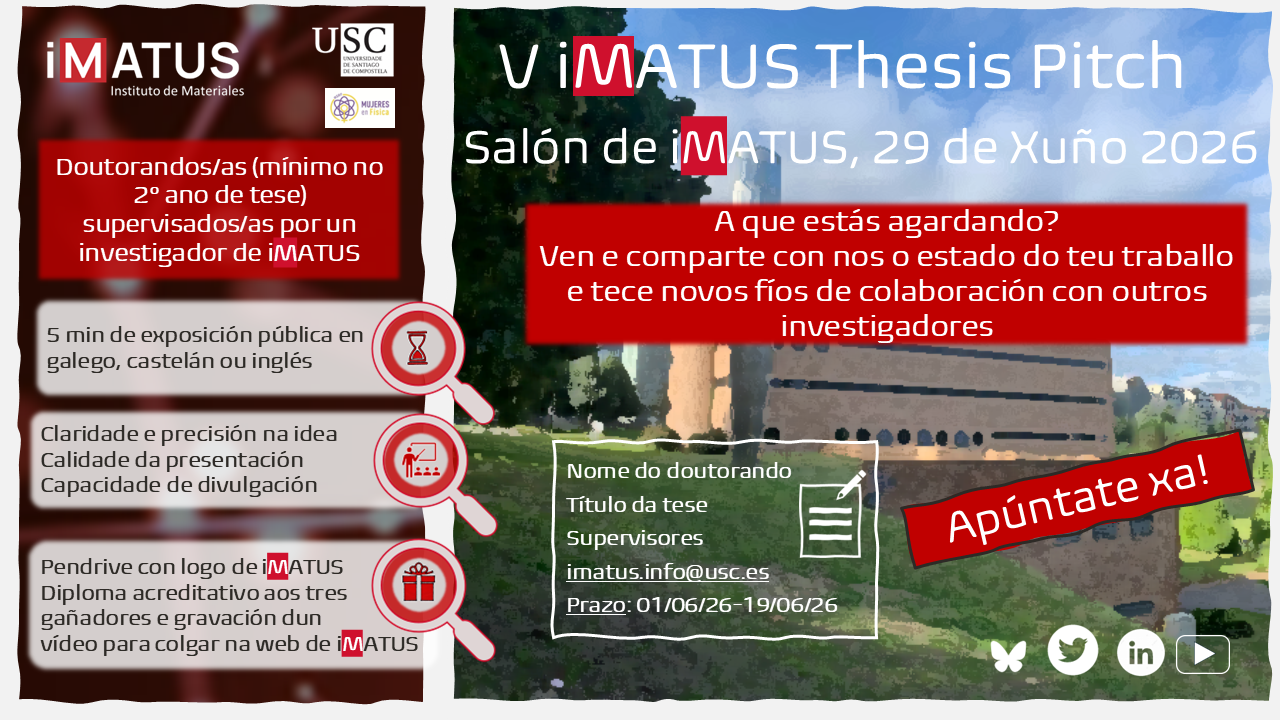
iMATUS anuncia a quinta edición do seu Thesis Pitch para doutorandos en xuño de 2026
O iMATUS organiza a quinta edición do iMATUS Thesis Pitch, un evento onde estudantes de doutoramento vinculados ao instituto presentan a súa
 imatus.usc.es·4h ago