





















Think Linear Algebra: A Code-First, Case-Based Introduction to Linear Algebra with Python
By
tamnd

Pulled from the oven just right. Trustworthy, fact-dense, deeply satisfying.
Summary
Think Linear Algebra is a code-first, case-based educational book that teaches linear algebra through real-world problems and Python programming. Rather than focusing on abstract theory, each chapter tackles practical challenges such as modeling web traffic, simulating flocking birds, or analyzing electrical circuits. Readers use Python libraries like NumPy, SciPy, SymPy, and NetworkX to build working solutions, demonstrating how linear algebra provides elegant, general-purpose tools for computational thinking and problem-solving.
Key quotes
· 3 pulledThink Linear Algebra is a code-first, case-based introduction to the most widely used concepts in linear algebra, designed for readers who want to understand and apply these ideas — not just learn them in the abstract.
Each chapter centers on a real-world problem like modeling traffic in the web, simulating flocking birds, or analyzing electrical circuits.
Using Python and powerful libraries like NumPy, SciPy, SymPy, and NetworkX, readers build working solutions that reveal how linear algebra provides elegant, general-purpose tools for thinking and doing.
You might also wanna read


Sostactic: Lean4 Tactics for Proving Polynomial Inequalities with Sum-of-Squares Certificates
Sostactic is a Lean4 mathematical proof assistant tool that provides tactics for proving polynomial inequalities using sum-of-squares (SOS)
 github.com·1mo ago
The Step-Size Trap: How Numerical Differentiation Fails with Floating-Point Arithmetic
The article explores the mathematical and computational challenges of numerical differentiation, specifically the step-size trap in finite d
Visual Introduction to Probability and Statistics: An Interactive Learning Resource
"Seeing Theory" is a visual educational resource that introduces probability and statistics through interactive visualizations. The content
 seeing-theory.brown.edu·3mo ago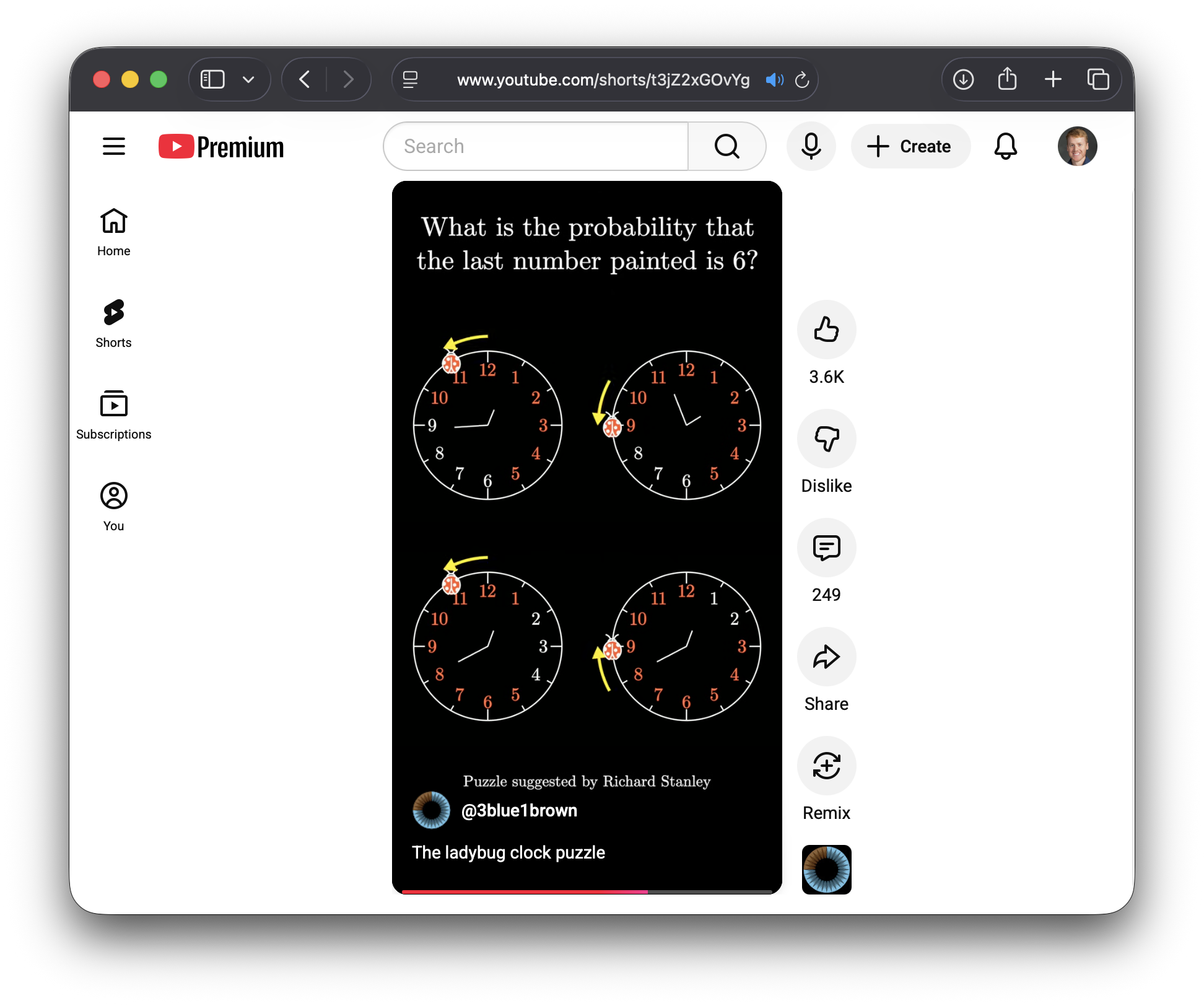
Simulating the Ladybug Clock Puzzle: A Computational Approach to a Mathematical Problem
The article discusses a mathematical puzzle about a ladybug moving around a clock face, visiting all hour markers exactly once, and asks for

Using Quantifier Elimination to Solve Mathematical Competition Problems
The article discusses using quantifier elimination, a powerful computational technique from mathematical logic, to solve competition math pr
 grossack.site·5mo ago
Mathlib4: The Mathematical Library for Lean 4 Theorem Prover
Mathlib4 is the mathematical library for the Lean 4 theorem prover, containing programming infrastructure, mathematical content, and develop
github.com·5mo ago