





















AI Adoption Threatens Tribal Nations' Data Sovereignty and Cultural Knowledge
By
OPINION | June 9, 2026 • Kerri J. Malloy, San José State University

Pure flour-power. Hearty enough to carry you through lunch.
Summary
The article discusses how the rapid adoption of AI by public agencies poses significant threats to tribal nations' sovereignty over their cultural knowledge and data. It argues that tribal nations should have the authority to govern how their data is collected, stored, interpreted, shared, and used, and that current federal, state, and local AI initiatives often overlook these critical sovereignty concerns.
Key quotes
· 3 pulledPublic agencies are moving quickly to adopt artificial intelligence.
These efforts may have the intention of improving governance. But when it comes to cultural knowledge and data, AI technologies pose important questions about tribal nations' sovereignty and governing authority that are too often overlooked.
Tribal nations should have the authority to govern how their data is collected, stored, interpreted, shared and used.
You might also wanna read
Governance Primitive for Institutional AI Deployment: Addressing Authority Constraints in High-Stakes Systems
The article discusses the institutional trust problem in AI deployment, particularly why AI agents fail to gain adoption in high-stakes inst


"Right-to-Compute" Laws Spread as States Take Opposite Approaches to AI Regulation
The article discusses the emerging legislative trend of "right-to-compute" laws that protect AI and computing from regulation, starting with
 vktr.com·4mo ago
The Coming Scarcity of Frontier AI Access
The article argues that the common belief in widespread, abundant access to frontier AI models is misguided. Contrary to the mantra that AI
 writing.antonleicht.me·26d ago
The Impact of AI on Democratic Institutions: Rule of Law, Universities, and Free Press
The article examines how AI threatens the foundational institutions of democratic societies—the rule of law, universities, and a free press.
 cyberlaw.stanford.edu·4mo ago
The Missing Element in Agentic AI: True User Agency as Collective Bargaining
The article argues that the current narrative around "agentic AI" is missing a crucial dimension: true user agency. While AI companies marke
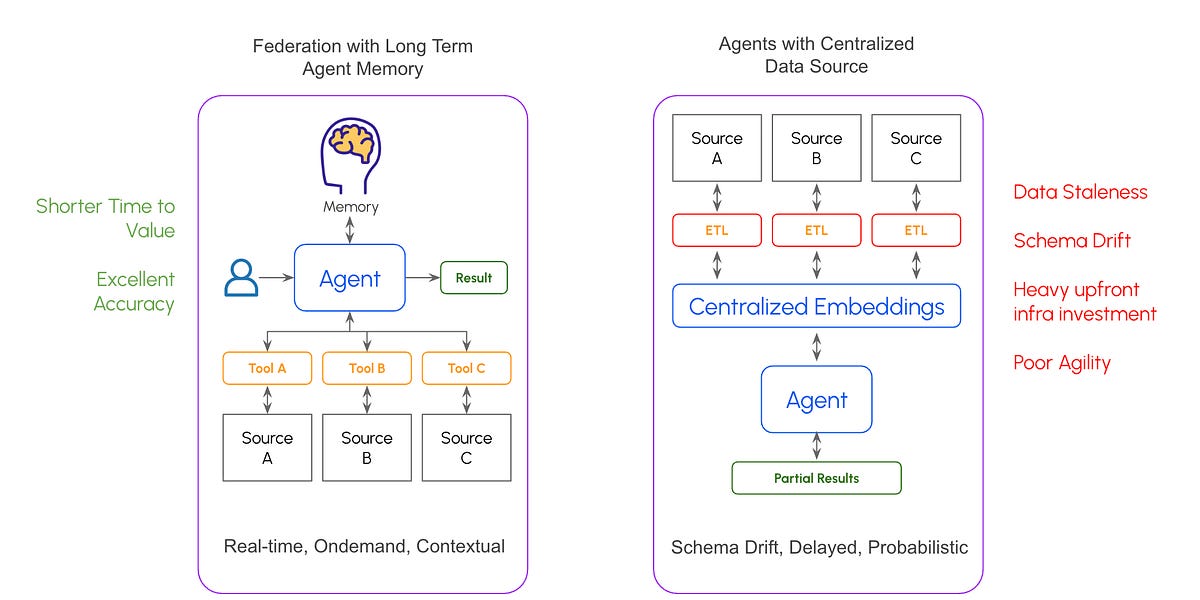
Why AI Agents Should Query Existing Data Systems Instead of Building Vector Infrastructure
The article argues against the prevailing trend of building parallel AI-specific data infrastructure (vector databases, embedding pipelines,
 gnanaguru.com·5mo ago