





















The Evolution of Async Programming Runtimes: Moving Beyond Thread-Per-Core Models
By
ibobev

If you only eat one bagel today, this is the bagel.
Summary
This article discusses the evolution of async programming runtimes and the shift away from traditional thread-per-core models. It explains how modern async runtimes handle asynchronous tasks that can yield and spawn future work, contrasting this with older approaches that used blocking operations and thread pools. The content focuses on programming language runtime design, particularly in Rust, and how async/await patterns have changed concurrent programming paradigms.
Key quotes
· 3 pulledProgramming language async runtimes are very focused on handling asynchronous, possibly long running tasks, that might yield for a variety of reasons, that themselves might spawn future work.
In an async runtime like async Rust, the model is that a task can yield, which, conceptually, creates a new piece of work
The death of thread per core represents a fundamental shift in how we think about concurrent programming
You might also wanna read

Optimizing .NET APIs for High Throughput: Techniques for 1M Requests Per Minute
Article discusses techniques for designing high-throughput .NET APIs capable of handling 1M requests per minute. It covers horizontal scalin
 blog.elmah.io·20h ago
SQLite as a Viable Alternative for Durable Workflow Execution
The article argues that SQLite can replace complex orchestration systems for durable workflow execution in many cases. It builds on DBOS's a

JWT vs Opaque Tokens: A Technical Comparison for API Security Architecture
This article compares JWT (JSON Web Tokens) and opaque tokens for API security, clarifying the common confusion between bearer tokens and JW
 nordicapis.com·2d ago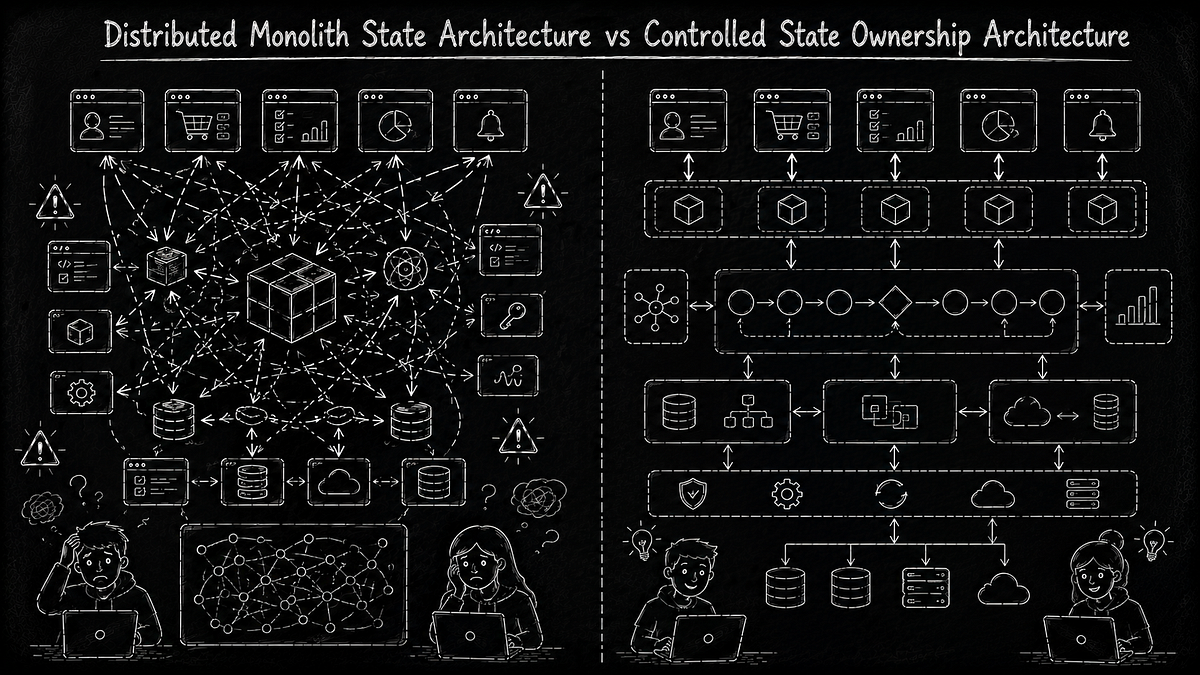
How Frontend State Management Becomes a Distributed Monolith as Apps Scale
This article discusses how frontend state management in growing applications can evolve into a "distributed monolith" — where state becomes
 medium.com·4d ago
A Field Guide to Production-Ready AI Agents: Context Windows, Security, and Drift Monitoring
Karl Mehta presents a field guide for building production-ready AI agents, focusing on four key engineering challenges: context-window disci

The Convergent Architecture of Frontier Agentic Systems
This article from Veso Research analyzes the emerging universal architecture across frontier agentic systems (Claude Code, OpenAI Codex, Gem
 veso.ai·6d ago