





















The Async/Await Trade-Off: Solving Readability While Obscuring Dependencies
By
zdw

Sesame, salt, and substance. A flagship bake.
Summary
The article examines the evolution of async/await programming patterns, tracing the history from the C10K problem (handling 10,000 concurrent connections) through OS thread limitations to modern async solutions. It argues that while async/await solved readability issues of callback-based code, it introduced new structural costs by obscuring dependency relationships between operations. The sequential syntax makes code look synchronous while hiding the actual asynchronous dependencies, creating a new set of cognitive and architectural challenges for developers.
Key quotes
· 3 pulledOS threads are expensive: an operating system thread typically reserves a megabyte of stack space and takes roughly a millisecond to create.
The async/await saga is a story where each chapter solves the previous chapter's worst problem while introducing new structural costs.
The sequential syntax that made async code readable also obscures the thing that matters: which operations actually depend on each other.
You might also wanna read


Tokyo AI Event Addresses Engineering Challenges of Production-Grade AI Systems
This article covers a Tokyo AI (TAI) community event focused on the engineering and operational challenges of transitioning AI from experime
 luma.com·46m ago
Copyparty: A Lightweight File Server That Runs as a Single Python Script
Copyparty is a lightweight, full-featured file server that runs as a single Python script, making it extremely easy to set up without needin
 hackaday.com·55m ago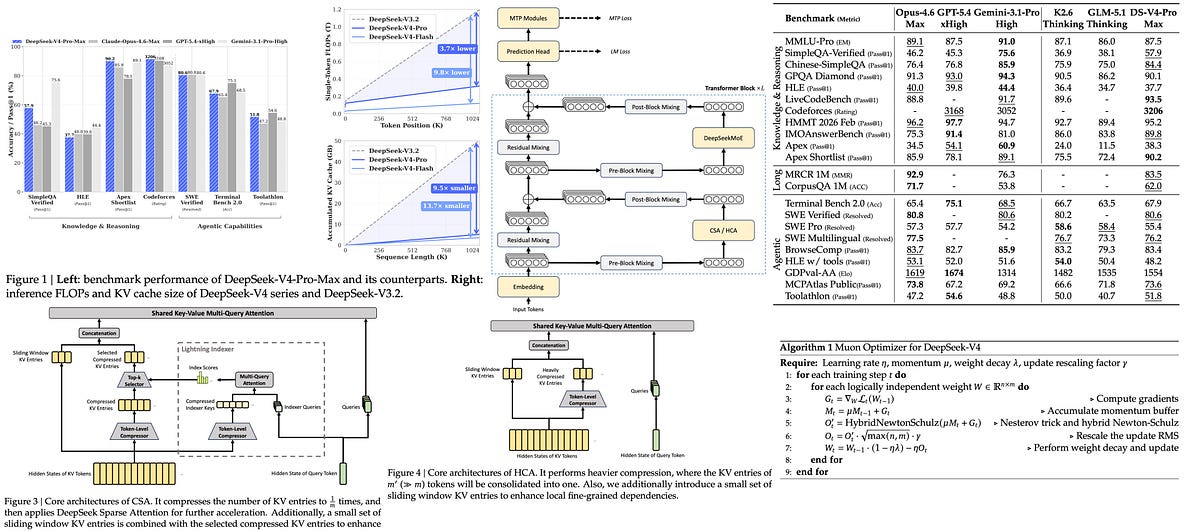
DeepSeek-V4: Hybrid Sparse-Attention Architecture Enables Efficient Million-Token Context Inference
DeepSeek-V4 introduces a hybrid sparse-attention architecture combined with on-policy distillation across domain specialists, enabling 1M-to
 artgor.medium.com·1h ago
How to Deploy Self-Hosted OpenClaw AI Agent on a Debian VPS
This article provides a step-by-step guide for deploying OpenClaw, an open-source personal AI agent, on a Debian VPS server. It covers the s
 blog.radwebhosting.com·2h ago
Linux kernel OOM killer discussion: protecting critical processes from memory pressure (2004)
A Linux kernel mailing list email thread from 2004 where Thomas Habets proposes a sysctl mechanism to protect specific processes (like xlock
 lwn.net·3h ago
Netflix engineer's open-source tool cuts AI token usage by up to 90%
Netflix senior engineer Tejas Chopra created software called "Project Headroom" that prunes redundant tokens from AI agent instructions befo
 theregister.com·4h ago