





















Technical Analysis: Choosing C++ Over Rust for High-Frequency Market Data Feed Handler
By
mpweiher

Slow-proofed and worth the wait. Worth its weight in flour.
Summary
The article explains why the author's company chose C++ over Rust for rewriting their high-performance market data feed handler, despite Rust's growing popularity in fintech. The decision was based on technical considerations where Rust's strict ownership model created friction for their specific use case involving real-time processing of 14 million messages per second with sub-100 microsecond latency requirements.
Key quotes
· 3 pulledDespite Rust's growing popularity in fintech and our own successful use of it in other systems, we chose C++
Our real-time market data architecture processes 14 million messages per second with sub-100 microsecond latency requirements
This post explores the technical reasoning behind that choice, diving into specific patterns where Rust's strict ownership model created friction for our use case
You might also wanna read

Optimizing .NET APIs for High Throughput: Techniques for 1M Requests Per Minute
Article discusses techniques for designing high-throughput .NET APIs capable of handling 1M requests per minute. It covers horizontal scalin
 blog.elmah.io·16h ago
SQLite as a Viable Alternative for Durable Workflow Execution
The article argues that SQLite can replace complex orchestration systems for durable workflow execution in many cases. It builds on DBOS's a

JWT vs Opaque Tokens: A Technical Comparison for API Security Architecture
This article compares JWT (JSON Web Tokens) and opaque tokens for API security, clarifying the common confusion between bearer tokens and JW
 nordicapis.com·2d ago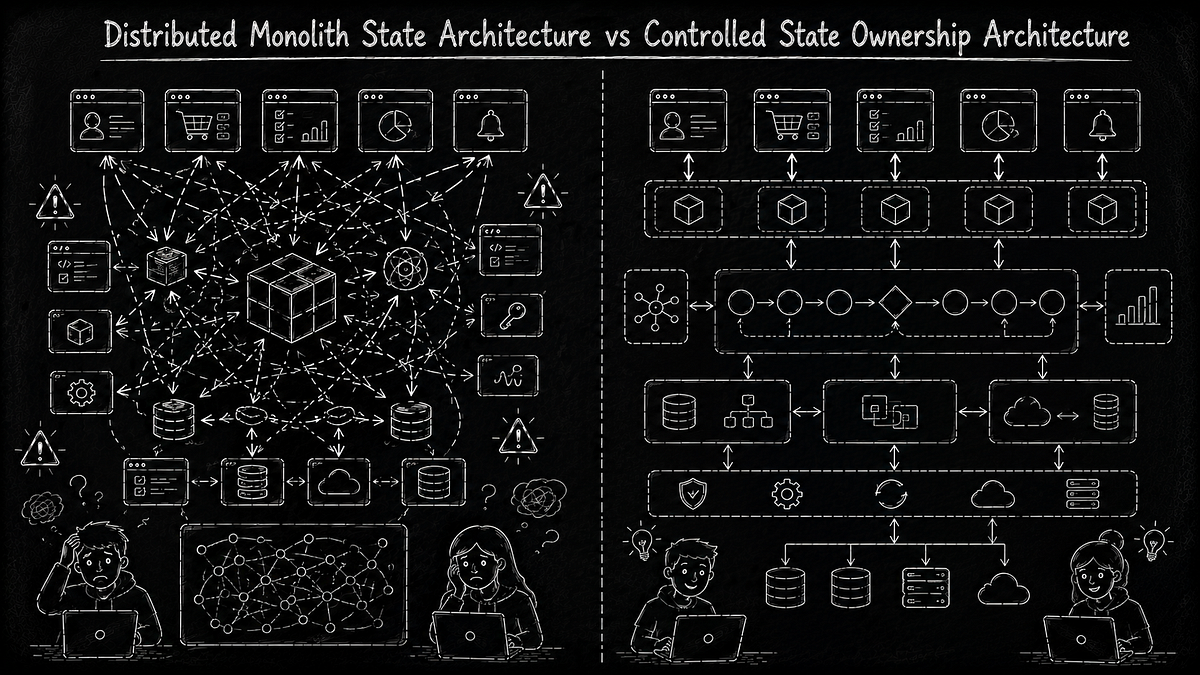
How Frontend State Management Becomes a Distributed Monolith as Apps Scale
This article discusses how frontend state management in growing applications can evolve into a "distributed monolith" — where state becomes
 medium.com·4d ago
A Field Guide to Production-Ready AI Agents: Context Windows, Security, and Drift Monitoring
Karl Mehta presents a field guide for building production-ready AI agents, focusing on four key engineering challenges: context-window disci

The Convergent Architecture of Frontier Agentic Systems
This article from Veso Research analyzes the emerging universal architecture across frontier agentic systems (Claude Code, OpenAI Codex, Gem
 veso.ai·6d ago