





















Technical Analysis and Critique of D-Bus Implementation in Linux Systems
By
LorenDB

A baker's-dozen of insight crammed into one ring.
Summary
The article is a technical critique of D-Bus, a message bus system used in Linux desktop environments. The author acknowledges D-Bus's usefulness as a service for inter-process communication but heavily criticizes its implementation, describing it as poorly designed despite being only 20 years old. The content appears to be a detailed technical analysis from a programming perspective, likely discussing specific implementation flaws, design issues, and potential alternatives or improvements.
Key quotes
· 3 pulledD-Bus was introduced by GNOME folks about 20 years ago. For software made only 20 years ago, as opposed to 40 like X, it's surprisingly almost equally as bad.
As a service, D-Bus is incredibly handy and useful, and overall, I believe the idea should absolutely be used by more apps. However, the implementation... oh boy.
What is D-Bus? Everyone has heard about D-Bus, but what is it, actually? D-Bus' idea is pretty simple: let applications communicate with each other.
You might also wanna read


Optimizing .NET APIs for High Throughput: Techniques for 1M Requests Per Minute
Article discusses techniques for designing high-throughput .NET APIs capable of handling 1M requests per minute. It covers horizontal scalin
 blog.elmah.io·21h ago
SQLite as a Viable Alternative for Durable Workflow Execution
The article argues that SQLite can replace complex orchestration systems for durable workflow execution in many cases. It builds on DBOS's a

JWT vs Opaque Tokens: A Technical Comparison for API Security Architecture
This article compares JWT (JSON Web Tokens) and opaque tokens for API security, clarifying the common confusion between bearer tokens and JW
 nordicapis.com·2d ago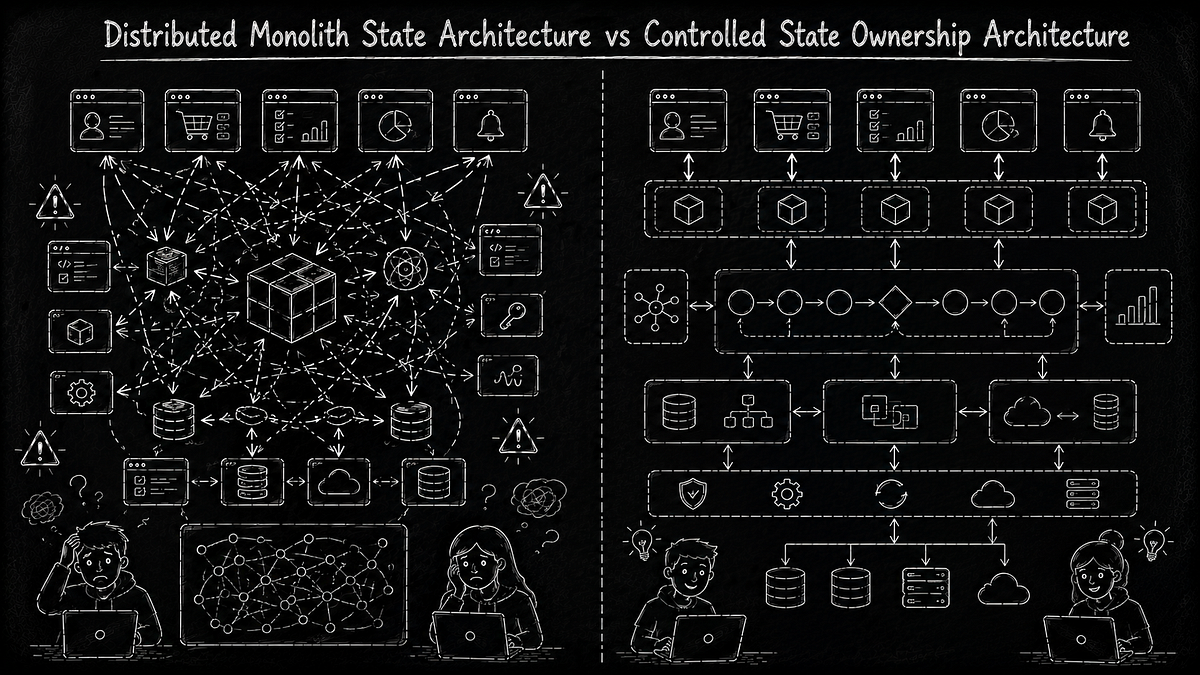
How Frontend State Management Becomes a Distributed Monolith as Apps Scale
This article discusses how frontend state management in growing applications can evolve into a "distributed monolith" — where state becomes
 medium.com·4d ago
A Field Guide to Production-Ready AI Agents: Context Windows, Security, and Drift Monitoring
Karl Mehta presents a field guide for building production-ready AI agents, focusing on four key engineering challenges: context-window disci

The Convergent Architecture of Frontier Agentic Systems
This article from Veso Research analyzes the emerging universal architecture across frontier agentic systems (Claude Code, OpenAI Codex, Gem
 veso.ai·6d ago