





















T5Gemma 2: Next-Generation Encoder-Decoder Models with Multi-Modal Capabilities
By
milomg

Lightly toasted, lightly seasoned, mostly correct.
Summary
T5Gemma 2 is the next generation of encoder-decoder models based on Gemma 3, featuring multi-modal and long-context capabilities. The model introduces architectural improvements including tied word embeddings across encoder and decoder, and merged decoder self- and cross-attention to reduce parameter count. It offers compact pre-trained models at sizes of 270M-270M (~3 billion parameters) and demonstrates strong performance across various benchmarks including natural language understanding, generation, and multi-modal tasks.
Key quotes
· 3 pulledT5Gemma 2 is the next evolution of our encoder-decoder family based on Gemma 3, featuring the first multi-modal and long-context encoder-decoder models.
Unlike T5Gemma, T5Gemma 2 adopts tied word embeddings (over encoder and decoder) and merged decoder self- and cross-attention to save model parameters.
It offers compact pre-trained models at sizes of 270M-270M (~3 billion parameters) and demonstrates strong performance across various benchmarks.
You might also wanna read

TranslateGemma: Open AI Translation Models Based on Google's Gemma 3 Support 55 Languages
TranslateGemma is a new suite of open AI translation models built on Google's Gemma 3 framework, supporting 55 languages with high accuracy
 Product Hunt·4mo ago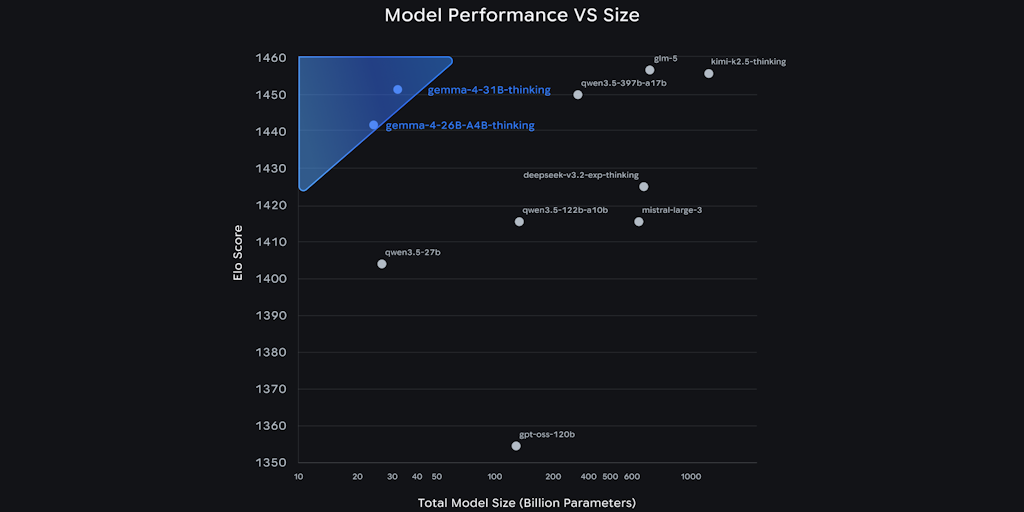
Google DeepMind Releases Gemma 4: Most Advanced Open AI Model Family
Google DeepMind has released Gemma 4, its most advanced open AI model family to date. The models feature enhanced reasoning capabilities, mu
Product Hunt·1mo ago
Google Releases Gemini Embedding 2: First Natively Multimodal Embedding Model
Google has released Gemini Embedding 2, its first natively multimodal embedding model that can map text, images, video, audio, and documents
Product Hunt·2mo ago
Google Unveils Gemini: A Multimodal AI Model to Rival GPT-4
Google's Gemini is introduced as its largest and most capable AI model, designed to be multimodal and capable of understanding and combining
 Product Hunt·9mo ago