





















Study on Electrified Dry Reforming of Methane for CO2 Utilization
By
PaulHoule

Toasted golden, schmeared with insight. Top of the rack.
Summary
The article discusses the challenges and potential of dry reforming of methane (DRM) as a method for CO2 utilization, highlighting its industrial limitations due to high CO2 emissions and energy requirements. It introduces a study on electrified DRM using Ni-La2O3–loaded activated carbon, which aims to address these issues by reducing CO2 emissions and improving efficiency.
Key quotes
· 3 pulledDespite great efforts made in the laboratory with the expectation of CO2 utilization, DRM has not yet been implemented in industrial settings.
One of the most important reasons is the massive CO2 emission that far exceeds CO2 conversion achieved in practical applications.
Dry reforming of methane (DRM) offers an attractive solution for the high-value utilization of two primary greenhouse gasses, methane and carbon dioxide.
You might also wanna read


CompleteRXN: A Method for Filling Gaps in Open Chemical Reaction Databases
This academic paper from Delft University of Technology researchers addresses the problem of incompleteness in chemical reaction datasets li
 arxiv.org·28m ago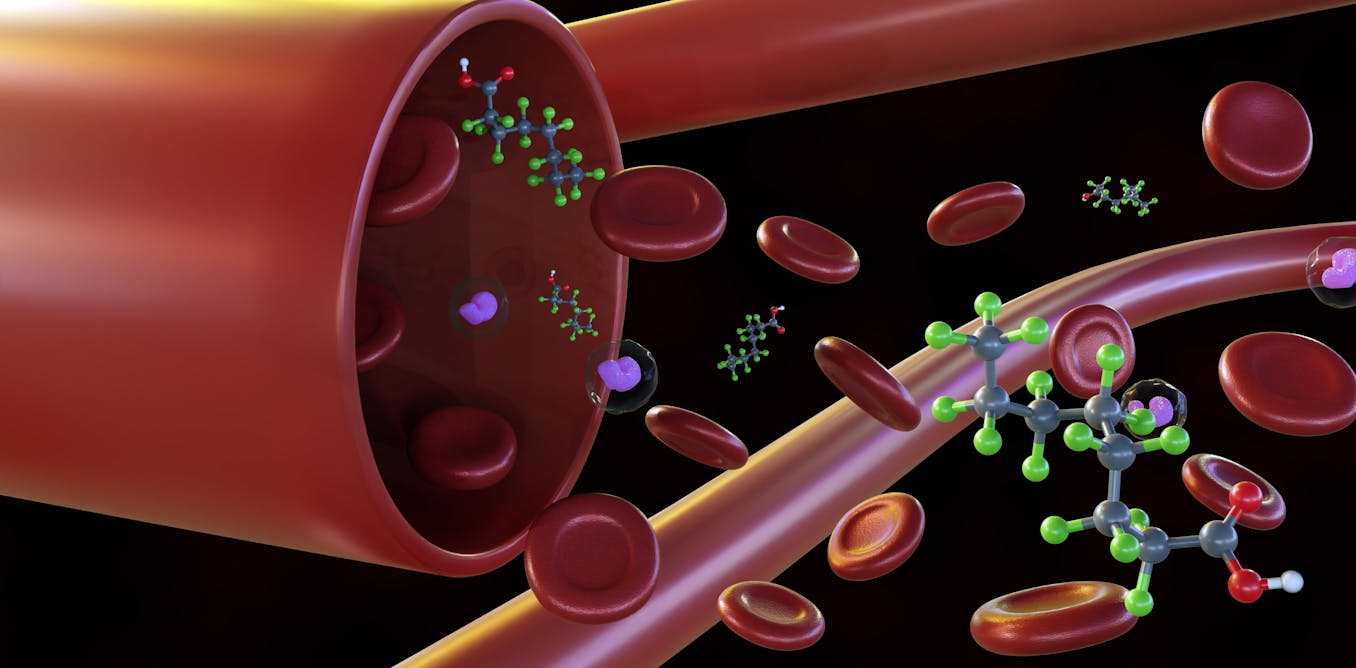
How PFAS leave detectable fingerprints in human blood as researchers trace their health impacts
PFAS (per- and polyfluoroalkyl substances) are synthetic chemicals found in virtually all living organisms, including humans. Researchers ar
 theconversation.com·1d ago
Wind and solar surpass gas in global electricity generation for first time in April 2026
For the first time ever, wind and solar generated more electricity globally than gas in April 2026. According to Ember, wind and solar produ
 electrek.co·1d ago
Clean energy growth makes worst-case climate scenario implausible, study finds
A recent study by climate scientists finds that the worst-case climate change scenario, driven by coal-heavy energy use, is no longer plausi
 yaleclimateconnections.org·1d ago
Lithium-ion batteries near theoretical limits as solid-state alternatives emerge
The lithium-ion battery, long dominant in smartphones, EVs, and drones, is approaching its theoretical performance limits. Scientists note t
 economist.com·1d ago
Lithium-ion batteries near theoretical limits as solid-state alternatives emerge
The lithium-ion battery, long dominant in smartphones, EVs, and drones, is approaching its theoretical performance limits. Scientists note t
economist.com·1d ago