





















Eulumdat Editor: A Tool for Editing LDT and IES Photometric Files
By
holg
Summary
The article appears to be about the Eulumdat Editor, a software tool for editing LDT (Eulumdat) and IES photometric files used in lighting design. These file formats contain photometric data about light fixtures, and the editor allows users to view, create, and modify these files. However, the actual article content is empty/missing, so the analysis is based solely on the title and metadata provided.
Hi HN — author here. iesna.eu is a browser-based ecosystem for working with photometric data: parsing standard luminaire files (LDT/EULUMDAT, IES LM-63, Oxytech, ATLA-S001), running design calculations against EN 13201 / ANSI/IES RP-8 / CJJ 45 / IES-IDA MLO, and (the part I most want to show off here) rendering real urban scenes in Bevy with the photometric data driving actual streetlight behavior, including sky-glow contribution. The Skyglow Analysis demo loads a real LDT file into a Bevy scene (Khronos Bistro test asset). The luminaire's intensity distribution drives the streetlight rendering directly — no fudging — and the sky-glow grade updates live as you adjust the uplight percentage. Swap to a full-cutoff fixture and the sky goes from F (Severe) back to A (Excellent). You can see the difference on the buildings as well as in the sky. Stack: Rust core (eulumdat-rs and friends, ~20 crates handling photometric formats), Bevy for the 3D rendering, WASM for browser deployment. No backend; everything runs client-side. About a thousand lines of new code on top of the existing photometric library to make the Bevy integration work. Things I'd love feedback on:
The atmospheric scattering model is currently single-scattering Rayleigh+Mie. Is that defensible for the use case, or should I move toward multi-scattering? The Bistro test scene works well visually but isn't a controlled environment. Anyone know of a public urban geometry asset that's more typical of real road-lighting evaluation? The CJJ 45 implementation (China's national road lighting standard) is the only one I've had to reverse-engineer from translated PDFs. If anyone has primary-source experience with it, I'd value a sanity check.
Open-source on GitHub (eulumdat-rs and the related crates). Crates.io: eulumdat
Comments URL: https://news.ycombinator.com/item?id=47984734
Points: 4
# Comments: 0
You might also wanna read


AI company logos and their unintended anatomical resemblances: A Feedback column
A humorous Feedback column from New Scientist that observes the proliferation of AI company logos and notes a blogger's observation that man
 newscientist.com·5h ago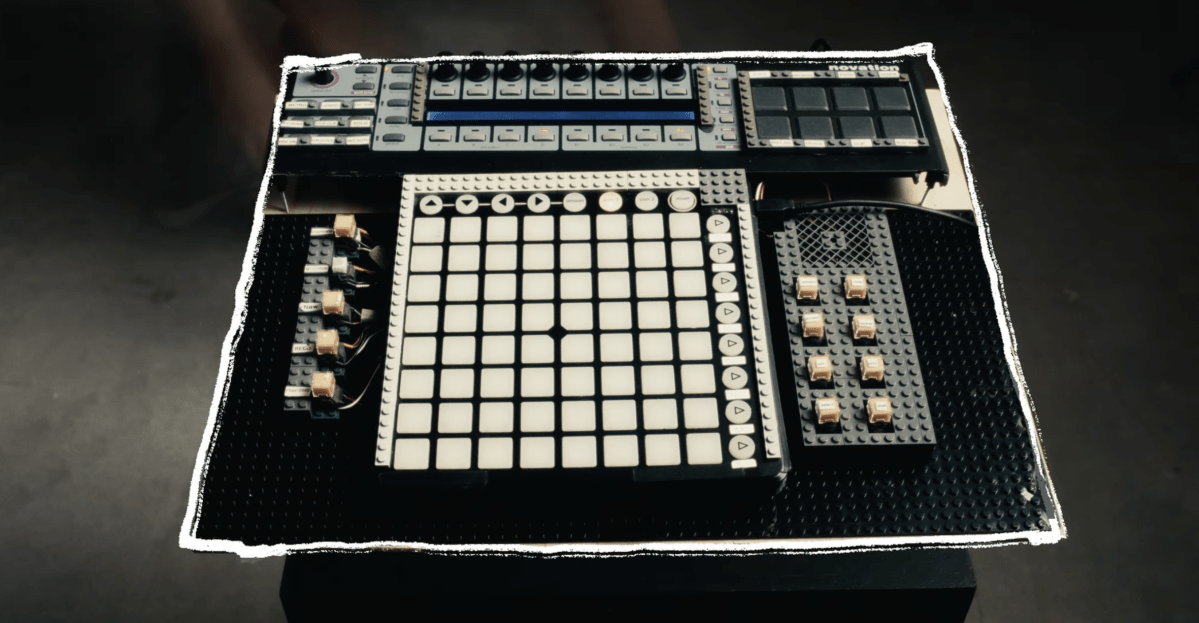
Ableton Push prototype was built from Lego bricks and scavenged music gear parts
Ableton's Push controller was originally prototyped by designer Jesse Terry using Lego bricks and parts scavenged from other music gear. Ter
 theverge.com·5h ago
Interior Design Portfolio Brochure Template Review: Tom Sarraipo's 26-Page InDesign Layout
A review and analysis of Tom Sarraipo's 26-page interior design portfolio brochure template for Adobe InDesign. The article highlights how t
 weandthecolor.com·8h ago
Ferrari launches first electric hypercar 'Luce' designed by Jony Ive and Marc Newson
Ferrari is undergoing a historic transformation by launching its first fully electric hypercar, the "Luce" (or "Ferrari E"), designed in col
 ft.com·9h ago
Bonsai Image 4B: Compact Image Generation Models for Local Devices
Bonsai Image 4B is a family of compact image-generation models released by the company, designed to run high-quality diffusion inference on
 prismml.com·12h ago
Study Documents Manipulative 'Dark Patterns' Used by AI Chatbots to Exploit Users
A new study by the Center for Democracy & Technology examines how AI chatbots like ChatGPT, Gemini, and Replika employ manipulative "dark pa
 404media.co·15h ago