





















Seven Common Mistakes in System Architecture Diagrams and How to Fix Them
By
billyp-rva

The bagel they save for the regulars. Don't skim, savour.
Summary
This article identifies seven common mistakes in system architecture diagrams and provides guidance on how to avoid them. It covers issues like poorly labeled resources, inconsistent icon usage, missing context, overly complex diagrams, incorrect abstraction levels, ignoring non-functional requirements, and failing to update diagrams. The article serves as a practical guide for software architects and engineers to create clearer, more effective documentation.
Key quotes
· 5 pulledPoorly labeled resources (the entities between the lines) is a common problem in system diagramming.
Consider the labels under the icons in this AWS diagram: The resources in this diagram are labeled by type instead of by name.
This is a follow-up to the original 7 Common Mistakes in Architecture Diagrams.
System architecture diagrams are essential tools for documenting complex systems.
However, common mistakes in these diagrams can lead to confusion, misinterpretation, and frustration for viewers.
You might also wanna read


Optimizing .NET APIs for High Throughput: Techniques for 1M Requests Per Minute
Article discusses techniques for designing high-throughput .NET APIs capable of handling 1M requests per minute. It covers horizontal scalin
 blog.elmah.io·14h ago
SQLite as a Viable Alternative for Durable Workflow Execution
The article argues that SQLite can replace complex orchestration systems for durable workflow execution in many cases. It builds on DBOS's a

JWT vs Opaque Tokens: A Technical Comparison for API Security Architecture
This article compares JWT (JSON Web Tokens) and opaque tokens for API security, clarifying the common confusion between bearer tokens and JW
 nordicapis.com·2d ago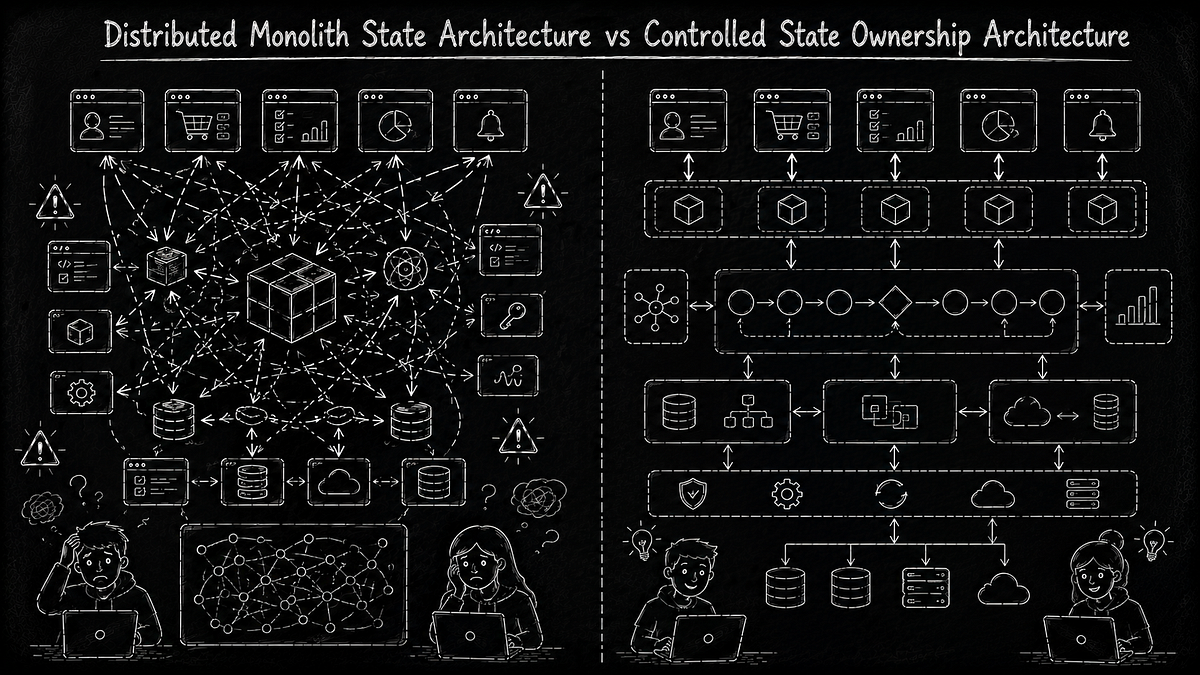
How Frontend State Management Becomes a Distributed Monolith as Apps Scale
This article discusses how frontend state management in growing applications can evolve into a "distributed monolith" — where state becomes
 medium.com·3d ago
A Field Guide to Production-Ready AI Agents: Context Windows, Security, and Drift Monitoring
Karl Mehta presents a field guide for building production-ready AI agents, focusing on four key engineering challenges: context-window disci

The Convergent Architecture of Frontier Agentic Systems
This article from Veso Research analyzes the emerging universal architecture across frontier agentic systems (Claude Code, OpenAI Codex, Gem
 veso.ai·6d ago