





















Quantum state distinguishability in noisy scrambled ensembles exhibits phase-transition behavior
By
[Submitted on 1 Jun 2026]

Crisped on the outside, thoughtful enough on the inside.
Summary
This research paper extends the concept of quantum state distinguishability from pairs of states to quantum state ensembles, characterized through average pairwise trace distance. The authors investigate whether "minimally" scrambled ensembles (modeled by 2-designs) can protect distinguishability under noise, revealing a fundamental competition between noise and information scrambling. Using a rigorous decoupling approach, they establish tight bounds showing a sharp threshold and phase-transition behavior governed by channel conditional entropy: below the threshold, states remain distinguishable with high probability; above it, distinguishability decays suddenly via power-law then collapses exponentially. A key finding is the sharp difference between unmeasured and post-measured scrambled ensembles—the former can retain high distinguishability under small noise, while the latter shows no such protected regime. The results have implications for quantum communication, cryptography, and learning tasks like shadow tomography.
Key quotes
· 4 pulledWe ask whether 'minimally' scrambled ensembles modeled by 2-designs protect distinguishability under noise, which sheds light on the fundamental competition between noise and information scrambling.
The distinguishability of noisy 2-design ensembles exhibits a sharp threshold and phase-transition behavior governed by channel conditional entropy: below the threshold, the states remain mutually distinguishable with high probability, while above it, distinguishability undergoes a sudden power-law decay and then collapses exponentially.
These results reveal a sharp difference between unmeasured and post-measured scrambled ensembles: the former can retain high distinguishability for sufficiently small noise, whereas the latter exhibits no such protected regime.
Under local purity-shrinking noise, post-measured noisy 2-design ensembles become exponentially indistinguishable for any measurement, precluding a noise threshold for learning tasks such as shadow tomography.
You might also wanna read
A Classical RAM Design That Mimics Quantum Collapse and Entanglement"


Research on Covert Communication Between AI Agents Using Pseudorandom Noise-Resilient Key Exchange
This research paper explores whether AI agents operated by different entities can conduct covert conversations that remain undetectable to a
 arxiv.org·2mo ago
Generating Gottesman–Kitaev–Preskill Qubit States Using Integrated Photonic Chip
The article discusses the generation of Gottesman–Kitaev–Preskill (GKP) qubit states using an ultra-low-loss integrated photonic chip, pavin
nature.com·11mo agoEmergence of Euclidean 3-Space from Quantum Temporal Correlations
The article discusses how Euclidean 3-space emerges from quantum temporal correlations in sequential measurements of Pauli observables on a
arxiv.org·1y ago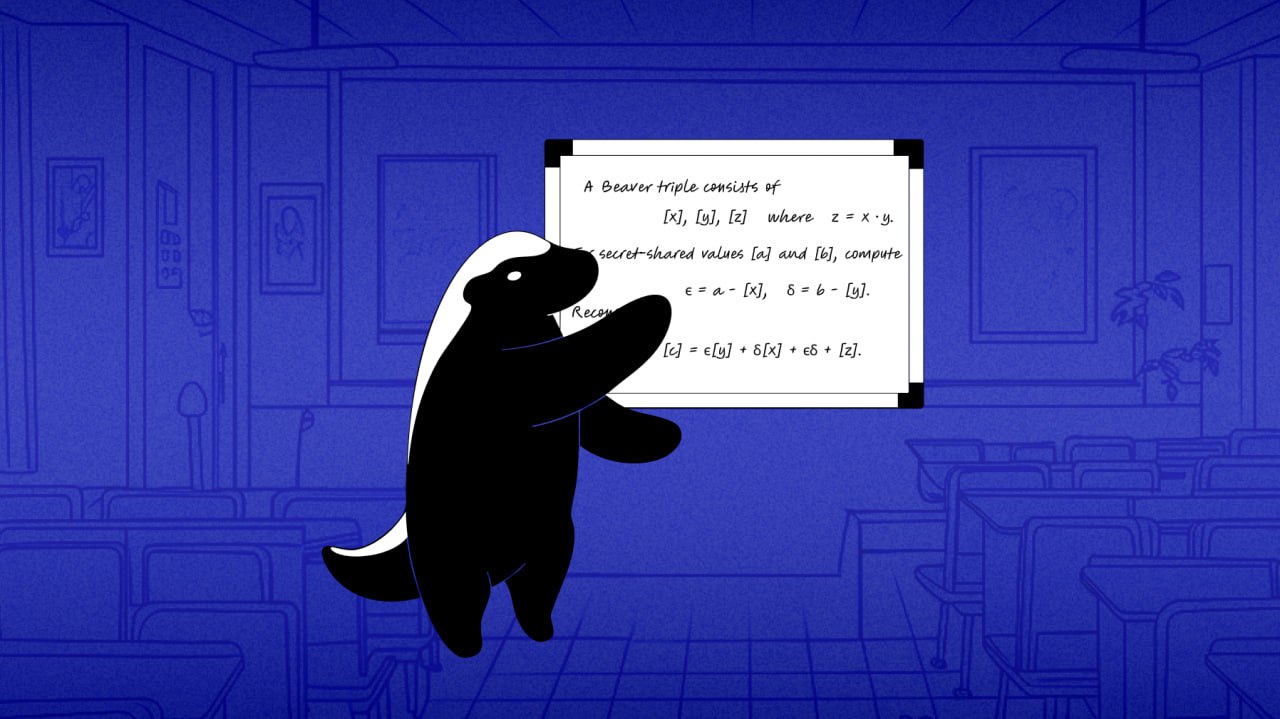
Understanding Beaver Triples: A Primer on Secure Multiparty Computation
The article introduces the concept of Beaver Triples in the context of secure multiparty computation (MPC). It uses an analogy about a frien
 stoffelmpc.com·1mo ago