





















River 0.4.0 Introduces Non-Monolithic Wayland Architecture Separating Compositor and Window Manager
By
dpassens

Master baker tier. Every paragraph earns its place on the tray.
Summary
The article discusses a significant architectural shift in Wayland compositors, focusing on river 0.4.0's non-monolithic approach that separates the window manager from the compositor. This breaks from traditional monolithic architectures where both components are combined into a single program. The new river-window-management-v1 protocol allows window managers to control window positioning and management independently, enabling greater flexibility and compatibility with existing window managers.
Key quotes
· 3 pulledTraditional Wayland compositors have a monolithic architecture that combines the compositor and window manager into a single program.
The new 0.4.0 release of river, a non-monolithic Wayland compositor, breaks from this traditional architecture and splits the window manager into a separate program.
The stable river-window-management-v1 protocol gives window managers full control over window positioning.
You might also wanna read

Optimizing .NET APIs for High Throughput: Techniques for 1M Requests Per Minute
Article discusses techniques for designing high-throughput .NET APIs capable of handling 1M requests per minute. It covers horizontal scalin
 blog.elmah.io·22h ago
How to Install Ubuntu Server 26.04 on Raspberry Pi: A Step-by-Step Guide
A practical guide for installing Ubuntu Server 26.04 on Raspberry Pi models. The article covers using Raspberry Pi Imager or direct download
 raspberrytips.com·1d ago
SQLite as a Viable Alternative for Durable Workflow Execution
The article argues that SQLite can replace complex orchestration systems for durable workflow execution in many cases. It builds on DBOS's a

JWT vs Opaque Tokens: A Technical Comparison for API Security Architecture
This article compares JWT (JSON Web Tokens) and opaque tokens for API security, clarifying the common confusion between bearer tokens and JW
 nordicapis.com·2d ago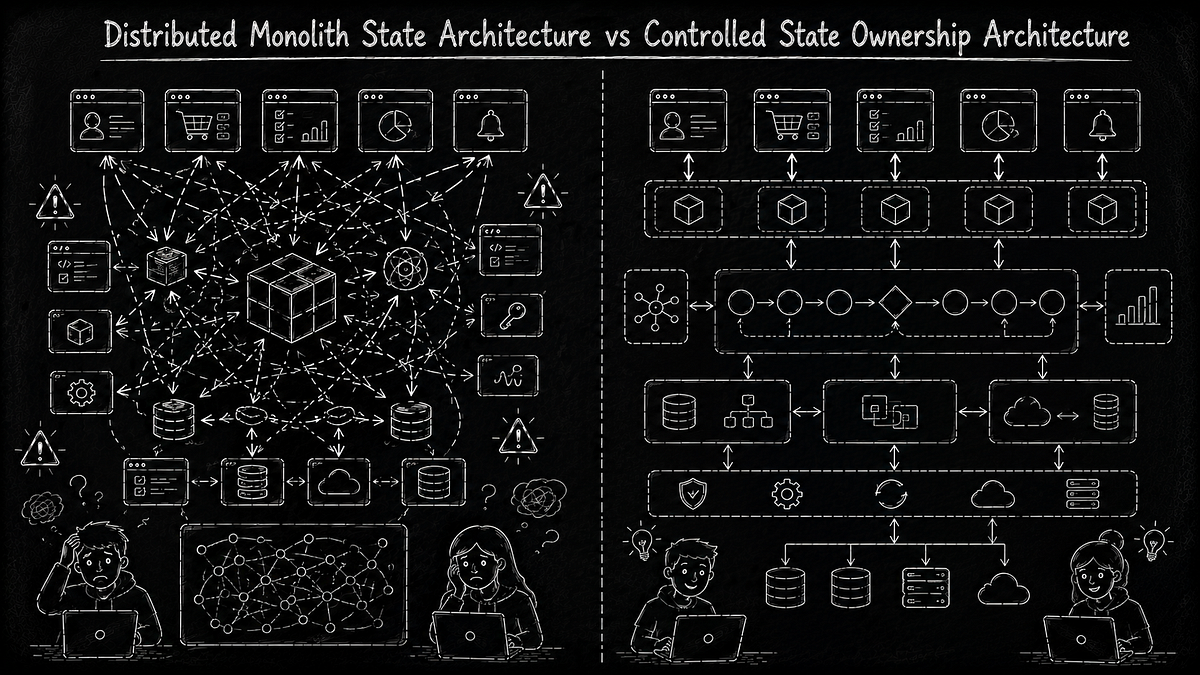
How Frontend State Management Becomes a Distributed Monolith as Apps Scale
This article discusses how frontend state management in growing applications can evolve into a "distributed monolith" — where state becomes
 medium.com·4d ago
A Field Guide to Production-Ready AI Agents: Context Windows, Security, and Drift Monitoring
Karl Mehta presents a field guide for building production-ready AI agents, focusing on four key engineering challenges: context-window disci