





















Why Type Checking May Be Solving the Wrong Problem in Software Design
By
mpweiher

A five-star bake. Worth schmearing, sharing, saving.
Summary
This article challenges the software industry's long-held belief that sophisticated type checking systems are essential for building reliable software. It argues that the obsession with type systems—from Haskell's category theory to Rust's borrow checker—may be solving the wrong problem. Instead, the author suggests that these elaborate type systems are workarounds for fundamental architectural mistakes that have persisted since the early days of programming. The piece questions whether the industry's investment in compile-time type error detection has been misguided, proposing that the real issues lie elsewhere in software design.
Key quotes
· 4 pulledWhat if the programming industry's decades-long obsession with type checking is solving the wrong problem entirely?
What if our increasingly sophisticated type systems—from Haskell's category theory to Rust's borrow checker—are elaborate workarounds for fundamental architectural mistakes we've been making since the beginning?
The software industry has convinced itself that type checking is not just useful, but essential.
We've built entire programming languages around the premise that catching type errors at compile time is one of the highest priorities in software design.
You might also wanna read

Optimizing .NET APIs for High Throughput: Techniques for 1M Requests Per Minute
Article discusses techniques for designing high-throughput .NET APIs capable of handling 1M requests per minute. It covers horizontal scalin
 blog.elmah.io·23h ago
SQLite as a Viable Alternative for Durable Workflow Execution
The article argues that SQLite can replace complex orchestration systems for durable workflow execution in many cases. It builds on DBOS's a

JWT vs Opaque Tokens: A Technical Comparison for API Security Architecture
This article compares JWT (JSON Web Tokens) and opaque tokens for API security, clarifying the common confusion between bearer tokens and JW
 nordicapis.com·2d ago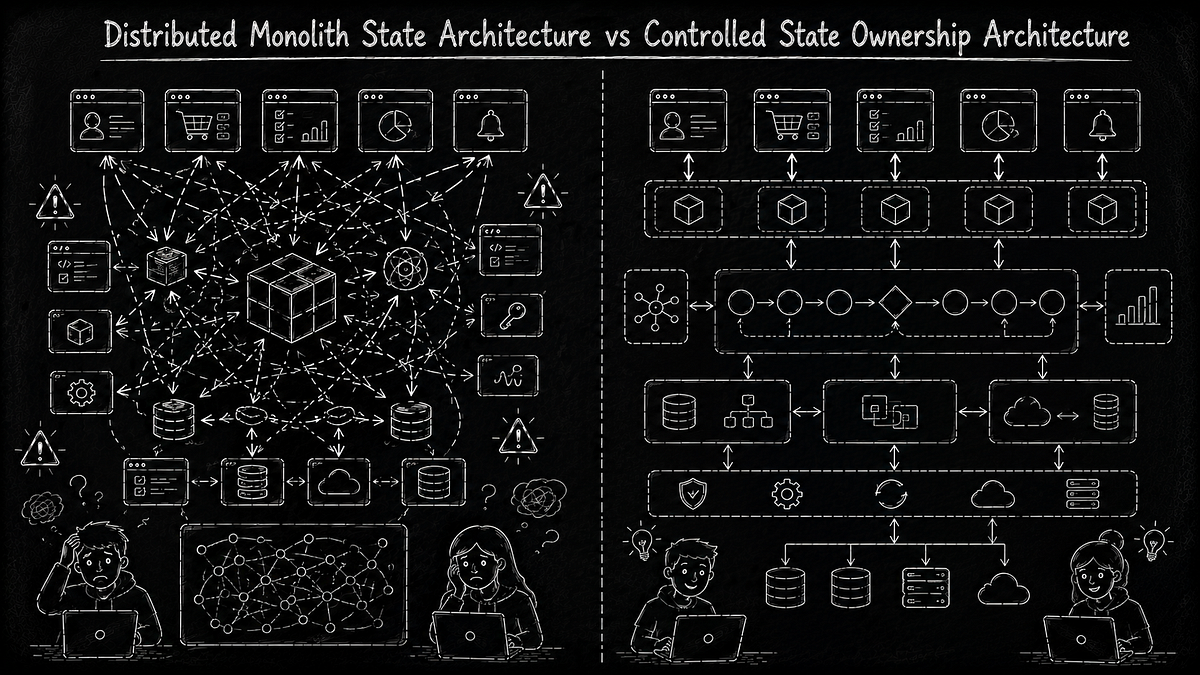
How Frontend State Management Becomes a Distributed Monolith as Apps Scale
This article discusses how frontend state management in growing applications can evolve into a "distributed monolith" — where state becomes
 medium.com·4d ago
A Field Guide to Production-Ready AI Agents: Context Windows, Security, and Drift Monitoring
Karl Mehta presents a field guide for building production-ready AI agents, focusing on four key engineering challenges: context-window disci

The Convergent Architecture of Frontier Agentic Systems
This article from Veso Research analyzes the emerging universal architecture across frontier agentic systems (Claude Code, OpenAI Codex, Gem
 veso.ai·6d ago