





















New infrared spectroscopy method detects ochratoxin A in white wine near legal limits
By
Vinetur

Right out the toaster. Reliable, with some real depth.
Summary
Researchers have developed a new label-free method using selective paper-enhanced infrared spectroscopy to detect ochratoxin A (OTA) in white wine at concentrations near the legal limit. OTA is a regulated mycotoxin with nephrotoxic and carcinogenic effects that appears in foods and beverages including wine. The method, described in the Journal of Hazardous Materials, could help wineries and testing laboratories speed up screening while maintaining regulatory compliance and consumer safety, with less laboratory complexity than existing approaches.
Key quotes
· 4 pulledA study published in the Journal of Hazardous Materials describes a new way to detect ochratoxin A, a regulated mycotoxin, in white wine at concentrations close to the legal limit
Ochratoxin A, often called OTA, is a contaminant that can appear in several foods and beverages, including wine
It is regulated in many countries because of its nephrotoxic and carcinogenic effects
The label-free method uses selective paper-enhanced infrared spectroscopy to screen contamination with less laboratory complexity
You might also wanna read


Electronic Nose System for Detection and Identification of Indoor Mold Species
This scientific study explores the development of an electronic nose system using SnO2 nanowire-based chemiresistive sensors to detect and i
 advanced.onlinelibrary.wiley.com·5mo ago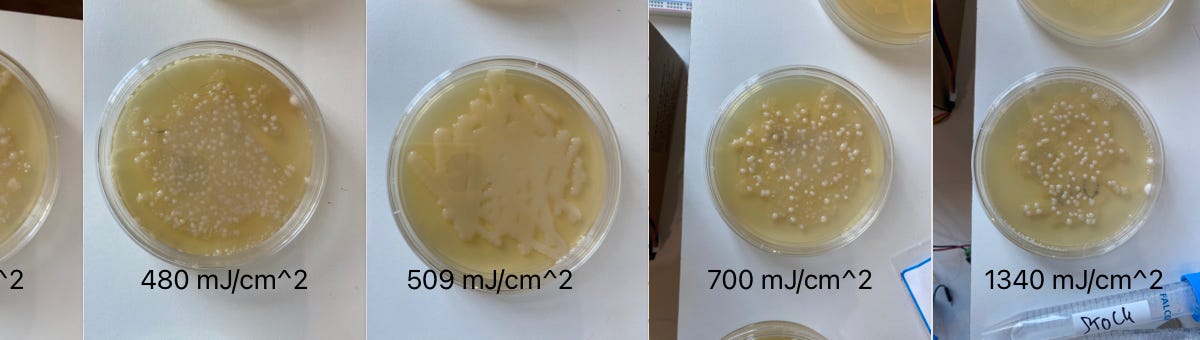
Personal Experiment: Testing UV Light Effects on Baker's Yeast Reveals Experimental Variability
The author conducted a personal experiment exposing baker's yeast to 280nm UV light as a 'minimal trust' investigation to understand the pra
 chillphysicsenjoyer.substack.com·7mo ago
French Police Warn Drivers of Unpredictable Deer Intoxicated by Fermented Fruit
French police in the Saône-et-Loire region have issued a warning to drivers about deer that may become intoxicated from eating fermented or
 nytimes.com·1mo ago
MIT Develops Noninvasive Glucose Monitoring Device Using Raman Spectroscopy
MIT researchers have developed a noninvasive device using Raman spectroscopy to measure blood glucose levels without finger pricks. The shoe
 news.mit.edu·6mo ago
EU-banned pesticide residues found in imported rice, tea and spices across four European countries
Laboratory tests on 64 food products from four EU countries (Netherlands, France, Austria, Germany) found residues of pesticides that are no
 foodwatch.org·7d ago