





















Quantum Computing Research Advances Threaten to Break Current Encryption Standards Sooner Than Expected
By
Andreas Maier

If you only eat one bagel today, this is the bagel.
Summary
This article examines the growing threat that quantum computing poses to Elliptic-Curve Cryptography (ECC), the mathematical foundation securing online banking, blockchain transactions, and encrypted communications. It discusses recent research papers that have compressed the timeline for Q-day—the point when quantum computers can break current encryption standards. The article explores the implications for digital security, the race to develop post-quantum cryptography standards, and the urgent need for organizations to begin transitioning their security infrastructure before existing protections become obsolete.
Key quotes
· 3 pulledThe question of when that threat materializes—the point often termed Q-day—has become a subject of intense, sometimes speculative debate.
For decades, the bedrock of modern digital life—from securing online banking to validating blockchain transactions—has rested upon the strength of Elliptic-Curve Cryptography (ECC).
The looming development of sufficiently powerful quantum computers poses an existential threat to this foundation.
You might also wanna read
Bitcoin's Quantum Computing Vulnerability: Timeline and Upgrade Paths
The article discusses the quantum computing threat to Bitcoin's security, specifically how Bitcoin's current cryptographic signatures would


New Quantum Algorithm Accelerates Timeline for Breaking Current Encryption Standards
Researchers at the Advanced Quantum Technologies Institute have developed a new quantum algorithm called JVG that dramatically accelerates t
 briefglance.com·3mo ago
Cryptography Engineer Updates Quantum Computing Timeline Assessment, Urges Faster Adoption of Quantum-Resistant Cryptography
A cryptography engineer explains their changed position on quantum computing timelines, stating that recent public progress from Google and
Analysis of NSA Influence on IETF Post-Quantum Cryptography Standardization
This article is part of a series examining the conflict between the NSA and IETF regarding post-quantum cryptography standardization. The au

Quantum Computers Threaten Asymmetric Cryptography but Not 128-bit Symmetric Keys
The article clarifies that quantum computers pose a threat to asymmetric cryptography (like RSA and ECDSA) but not to symmetric cryptography
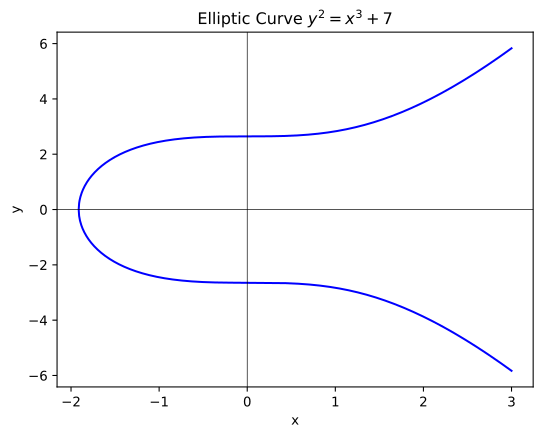
Technical Analysis of ECDSA Cryptography and Security Implications for Web3 Systems
This comprehensive technical article provides an in-depth exploration of ECDSA (Elliptic Curve Digital Signature Algorithm) from a Web3 secu
 avidthinker.github.io·6mo ago