





















Experimental demonstration of quantum communication advantage for Euclidean distance calculation using coherent state fingerprints
By
[Submitted on 29 May 2026]

Toasted to a respectable shade. No regrets, no crumbs left.
Summary
This paper presents an experimental demonstration of quantum advantage in communication complexity for the Euclidean distance problem. The researchers implemented a quantum fingerprinting protocol using coherent state pulse trains (rather than hard-to-generate entangled qubits) to calculate Euclidean distance between vectors representing real data sets. Using amplitude modulation for encoding non-binary data and superconducting nanowire single-photon detectors, they demonstrated a quantum advantage in transmitted information surpassing the best classical protocol for input sizes of 10^8, including tests with real grayscale images, with reasonable precision and error bounds.
Key quotes
· 4 pulledThe use of quantum states may lead to an exponential advantage in the use of such resources.
We perform a proof-of-principle experimental demonstration of the Euclidean distance protocol using amplitude modulation techniques for encoding non-binary data sets and high-performance superconducting nanowire single-photon detectors required to increase the accessible input size.
We show a quantum advantage in transmitted information surpassing the best classical protocol for an input size of $10^8$, for diverse types of data sets, including those corresponding to real grayscale images, and with reasonable precision and error bounds.
Our results highlight the potential of quantum communication complexity for use in a broad set of applications.
You might also wanna read


The dangers of anthropomorphising AI: Why we must see machines as machines
This article argues that anthropomorphising AI—projecting human thoughts, feelings, and intentions onto machines—is a natural but dangerous
 ethics.org.au·2h ago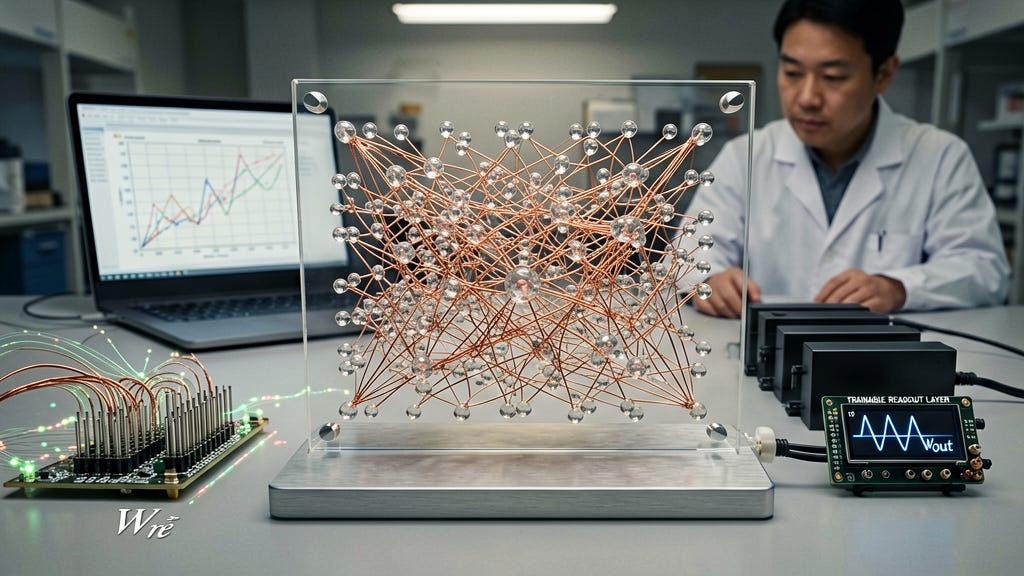
Researchers Work to Decode the "Black Box" of Reservoir Computing and Brain-Inspired AI
This article explores Reservoir Computing (RC), a specialized form of recurrent neural networks (RNNs) that mimics biological brain processe
 akmaier.substack.com·3h ago
Vera C. Rubin Observatory Set to Discover Millions of Asteroids and Transient Phenomena in Big-Data Astronomy Era
The Vera C. Rubin Observatory in Chile is preparing to begin operations, designed to capture the entire Southern Hemisphere night sky every
 quantamagazine.org·3h ago
Quantum research reveals when entanglement hinders rather than helps channel discrimination
This research paper investigates the role of entanglement in quantum channel discrimination, challenging the common assumption that more ent
 arxiv.org·4h ago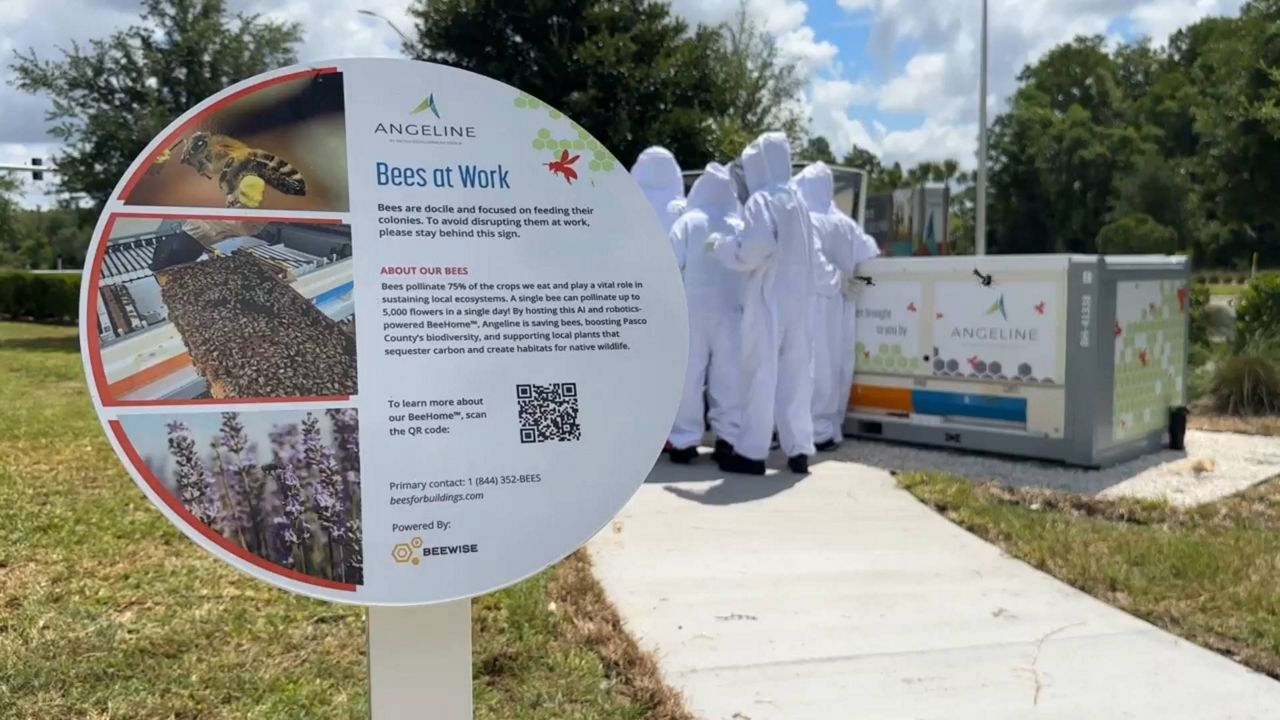
Florida community Angeline installs AI-powered robotic beehive to protect pollinators
A Pasco County, Florida community called Angeline has installed a robotic beehive system equipped with AI technology, becoming the first mas
 baynews9.com·5h ago
Study Finds Most AI Chatbots Prioritize Ad Revenue Over User Welfare in Conflict-of-Interest Scenarios
This research paper analyzes how large language models (LLMs) handle conflicts of interest when company revenue incentives (advertisements)
arxiv.org·5h ago