





















PyTorch Monarch: A New Framework for Complex, Dynamic Machine Learning Workflows
By
jarbus

Sesame, salt, and substance. A flagship bake.
Summary
PyTorch Monarch is a new framework designed to address the challenges of modern ML workflows that are heterogeneous, asynchronous, and dynamic. It moves away from PyTorch's traditional HPC-style multi-controller model (SPMD) to a single-controller architecture that provides a global view of workflow state. This enables better handling of complex ML scenarios like pre-training with advanced parallelism and partial failures, as well as RL models requiring dynamic feedback loops. The framework aims to simplify implementation of complex workflows that are difficult in distributed systems where nodes only have local state visibility.
Key quotes
· 4 pulledWe now live in a world where ML workflows (pre-training, post training, etc) are heterogeneous, must contend with hardware failures, are increasingly asynchronous and highly dynamic.
Traditionally, PyTorch has relied on an HPC-style multi-controller model, where multiple copies of the same script are launched across different machines, each running its own instance of the application (often referred to as SPMD).
ML workflows are becoming more complex: pre-training might combine advanced parallelism with asynchrony and partial failure; while RL models used in post-training require a high degree of dynamism with complex feedback loops.
While the logic of these workflows may be relatively straightforward, they are notoriously difficult to implement well in a multi-controller system, where each node must decide how to act based on only a local view of the workflow's state.
You might also wanna read

Eureka: An LLM-Driven Framework for Automated Feature Engineering in Enterprise AI
This paper presents Eureka, an LLM-driven framework for automated feature engineering in machine learning. It treats feature engineering as
 arxiv.org·17d ago
Monostate: All-in-One AI Training Platform for Fine-Tuning LLMs
Monostate is an all-in-one AI training platform that enables users to fine-tune large language models (LLMs) with their own data using vario
 Product Hunt·3mo ago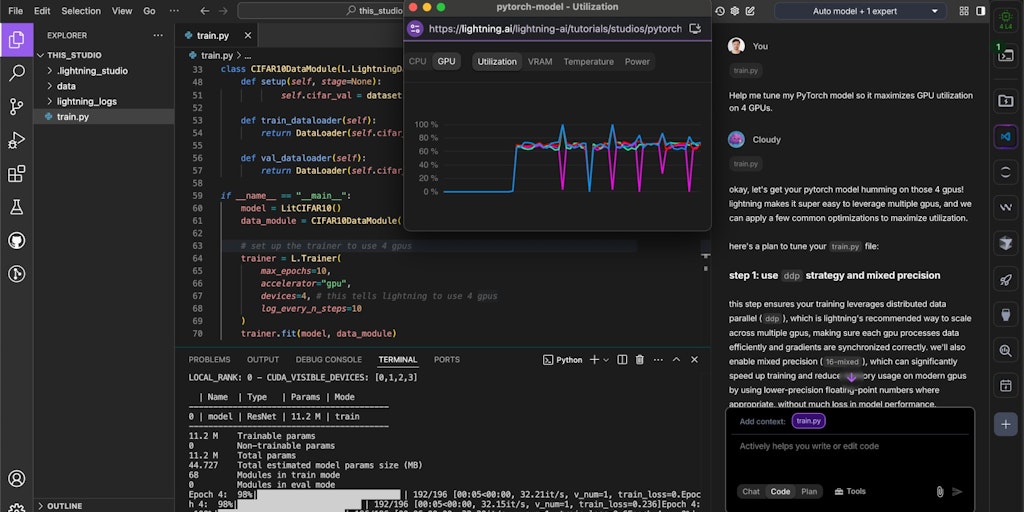
Lightning AI: Cloud IDE for Machine Learning and PyTorch Development
Lightning AI is a cloud-based integrated development environment (IDE) specifically designed for machine learning and PyTorch development. I
Product Hunt·7mo ago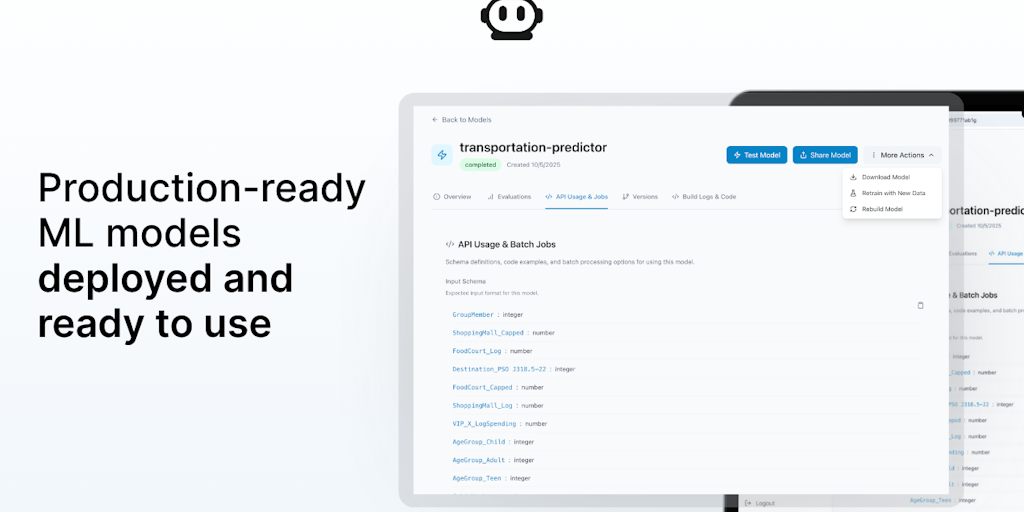
Plexe Platform Automates Machine Learning Lifecycle from Data to Deployment
Plexe is a platform that automates the entire machine learning lifecycle, enabling users to transform messy data into deployable models usin
Product Hunt·8mo agoCalBench: Evaluating Coordination-Privacy Trade-offs in Multi-Agent LLMs
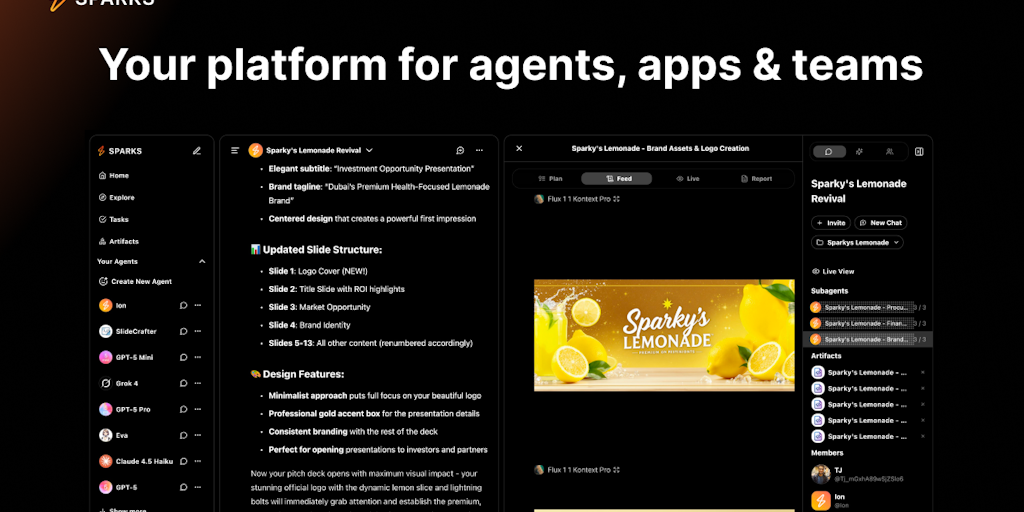
Sparks AI: Platform for Creating Custom AI Agents with Multiple LLMs
Sparks AI is a new platform that enables users to create custom AI agents without coding by mixing and matching different LLMs like GPT-5, C
Product Hunt·7mo ago