





















Building Maintainable Codebases with Semantic Functions
By
benswerd

Lightly browned and well buttered. A solid pick from the rack.
Summary
The article discusses the importance of self-documenting code and how structuring code through semantic functions—minimal, focused functions that take clear inputs and return direct outputs—improves codebase maintainability over time. It emphasizes that how logic is split into functions and how data flows between them determines long-term code quality.
Key quotes
· 5 pulledCode should be self documenting
How you split logic into functions and shape the data they pass around determines how well a codebase holds up over time.
A good semantic function should be as minimal as possible in order to prioritize correctness in it.
A semantic function should take in all required inputs to complete its goal and return all necessary outputs directly.
Semantic functions can wrap other semantic functions to describe desired flows and usage; as the building blocks of the codebase
You might also wanna read

Optimizing .NET APIs for High Throughput: Techniques for 1M Requests Per Minute
Article discusses techniques for designing high-throughput .NET APIs capable of handling 1M requests per minute. It covers horizontal scalin
 blog.elmah.io·15h ago
SQLite as a Viable Alternative for Durable Workflow Execution
The article argues that SQLite can replace complex orchestration systems for durable workflow execution in many cases. It builds on DBOS's a

JWT vs Opaque Tokens: A Technical Comparison for API Security Architecture
This article compares JWT (JSON Web Tokens) and opaque tokens for API security, clarifying the common confusion between bearer tokens and JW
 nordicapis.com·2d ago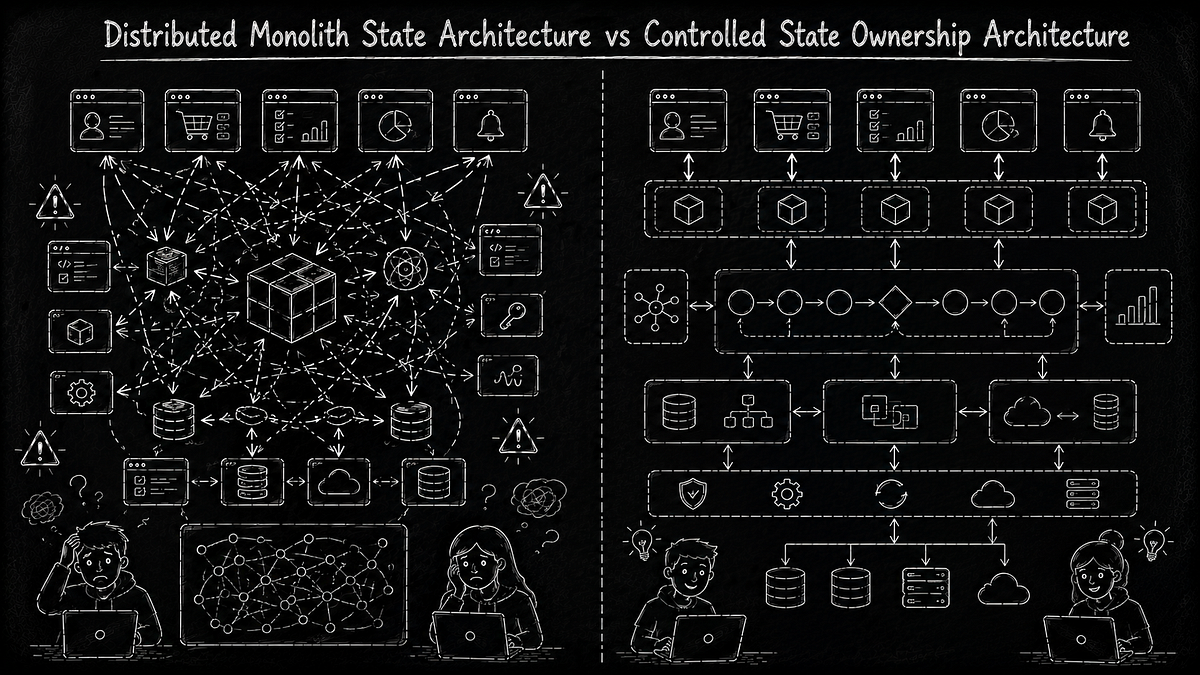
How Frontend State Management Becomes a Distributed Monolith as Apps Scale
This article discusses how frontend state management in growing applications can evolve into a "distributed monolith" — where state becomes
 medium.com·3d ago
A Field Guide to Production-Ready AI Agents: Context Windows, Security, and Drift Monitoring
Karl Mehta presents a field guide for building production-ready AI agents, focusing on four key engineering challenges: context-window disci

The Convergent Architecture of Frontier Agentic Systems
This article from Veso Research analyzes the emerging universal architecture across frontier agentic systems (Claude Code, OpenAI Codex, Gem
 veso.ai·6d ago