





















Comparing Onion, Hexagonal, Clean, and Fractal Software Architectures: A Combined Evolutionary Approach
By
Urs Enzler

If you only eat one bagel today, this is the bagel.
Summary
This article explores and compares four software architecture patterns—Onion, Hexagonal, Clean, and Fractal Architectures—focusing on how they manage dependencies. The author distills the essence of each approach, compares their advantages and challenges, and proposes a combined evolutionary approach that adapts to project needs over time. The article argues that simple layers and slices are insufficient, advocating for domain-driven modularization that improves understandability and changeability throughout the software's lifecycle.
Key quotes
· 3 pulledAfter distilling the essence of each approach and comparing the advantages and challenges, I'll show how to combine all of them into an approach to use evolutionary steps towards an architecture that fits your needs from day one until the software dies.
You'll see that layers and slices aren't enough.
A modularisation that fits the domain and simplifies understandability, changeability.
You might also wanna read

Navigating the Complex World of Software Development Tools and Dependencies
The article explores the overwhelming complexity of the modern software development ecosystem, questioning whether the proliferation of tool
binaryigor.com·8mo ago

Evolutionary vs Engineering Approaches to Complex Software Development
The article contrasts two approaches to building complex software systems: evolutionary development (starting small and gradually adding com
 theprogrammersparadox.blogspot.com·4mo ago
The Case for LEGO-Like Software Building Blocks Over Advanced Type Systems
The article argues that the software development community is overly focused on advancing type systems (like dependent types and effect syst
 programmingsimplicity.substack.com·4mo ago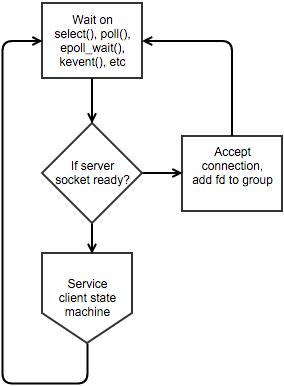
Evolution of Network Server Programming Patterns: From Fork() to Worker Threads
The article discusses a popular network-server programming pattern that has become the canonical approach for writing network servers. It de

Modular Software Design with MIM AA: An Alternative to Prescriptive Architectural Templates
The article advocates for a modular software design approach called MIM AA (Module Infrastructure-Module Architecture) as an alternative to
 codingfox.net.pl·3mo ago
The Problem with Edge-Case First Library Development in Software Ecosystems
The article critiques the trend in software development where libraries are built to handle edge cases first, leading to bloated dependency