





















JWST Discovers Mysterious 'Little Red Dots' in Early Universe, Possibly New Celestial Objects
By
rbanffy
10mo ago· 6 min readenNews

100/100
Golden Brown
Bagelometer↗
Hand-rolled, kettle-boiled, baked to perfection. Worth every minute at the bakery.
Score100TypenewsSentimentpositive
Summary
NASA's JWST telescope has discovered hundreds of 'little red dots' in the early universe, which may represent a new type of celestial object—colossal balls of bright, hot gas larger than the Solar System. These findings challenge conventional astronomical explanations and suggest a novel class of cosmic entities.
Key quotes
· 3 pulledSince NASA’s JWST observatory began peering into the distant universe in 2022, it has discovered a rash of 'little red dots'—hundreds of them, shining within the first billion years of the 13.8-billion-year-old universe.
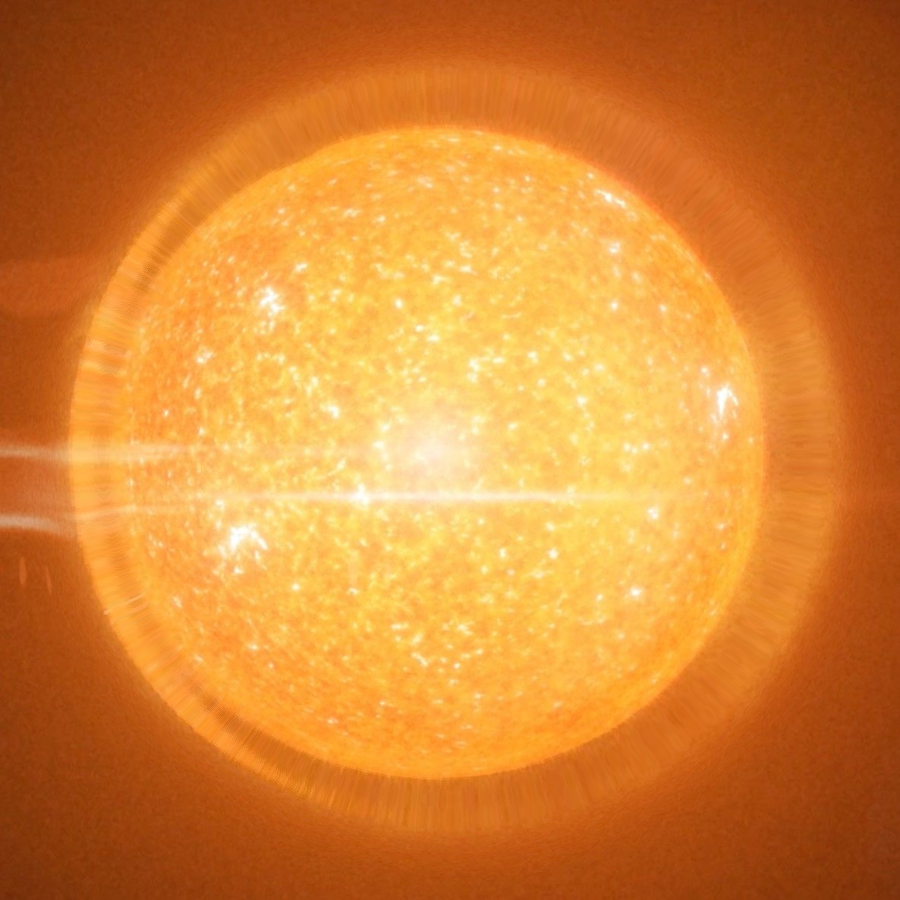
The little red dots, astronomers say, may be an entirely new type of object: a colossal ball of bright, hot gas, larger than the Solar System.
It’s as if the baby universe had caught a case of measles.
Puzzling objects spotted by NASA’s JWST telescope may be entirely new class of celestial entity
You might also wanna read

JWST observes normal AGB stars at Cosmic Noon through 5000x gravitational lensing
This article discusses a scientific study where researchers used the James Webb Space Telescope (JWST) to observe a galaxy magnified 5000 ti
 astrobites.org·4d ago
JWST's COSMOS-Web Survey Maps the Cosmic Web and Galaxy Evolution to Redshift z~7
Astronomers used the largest JWST survey (COSMOS-Web) to map the cosmic web — the large-scale structure of the Universe — tracing galaxy evo
astrobites.org·5d ago